Upholstery Fabric Selection for Hospitality Projects: Double Rubs and FR Compliance
Why Fabric Performance Defines Project Success
In the hospitality sector, upholstery failure is never just a cosmetic issue — it is a cost multiplier. Replacing fabric on lounge chairs in a four-star hotel corridor means pulled carts, disrupted guest experiences, and replacement orders that eat into project margins. Selecting the right performance fabric at specification saves time, protects reputation, and keeps FF&E budgets on track.
Across our 200,000㎡ manufacturing base, we work with specifiers who understand that fabric is the first line of defense in high-traffic environments. A properly selected upholstery fabric withstands daily abrasion from guests, cleaning chemicals, and routine maintenance without losing color, texture, or structural integrity. The two metrics that matter most in this space are double rub count and fire resistance compliance. Understanding both allows procurement teams to specify with confidence rather than guesswork.
Explore our full upholstery collection for hospitality-grade solutions.
Understanding Double Rub Counts
The double rub test, defined by ASTM D4157, measures how many back-and-forth cycles a fabric can endure before visible wear appears. One double rub equals one complete cycle. For hospitality applications, this number is not optional information — it is a hard specification.
Different areas within a hotel demand different durability thresholds. A lobby seating area with constant foot traffic requires higher abrasion resistance than a private dining room used once per evening. Below is a practical reference for typical hospitality zones.
| Hospitality Zone | Recommended Minimum Double Rubs | Typical Usage Profile |
|---|---|---|
| Lobby seating / reception lounge | 30,000+ | High continuous traffic, carts, luggage |
| Guest room headboard / accent chair | 15,000–30,000 | Moderate daily use, limited abrasion |
| Ballroom / conference seating | 30,000+ | Intermittent heavy events, stacking chairs |
| Restaurant dining | 20,000–30,000 | Daily service, spills, repeated cleaning |
| Executive lounge / business center | 25,000–30,000 | Extended sitting, laptop use, moderate wear |
At ROSY ROSE, we engineer our performance fabrics to meet or exceed these thresholds consistently. Our production team tests yarn formulation, weave density, and finish application to ensure that the rated double rub count reflects real-world performance, not just laboratory conditions. This matters when you are specifying fabric for a 200-room property where uniform durability across all units is non-negotiable.
Fire Resistance Compliance: What Specifiers Must Know
Fire safety regulations vary by region and project type, but the underlying principle is universal. Upholstery fabric in commercial and hospitality spaces must meet recognized flame resistance standards to pass inspection and protect occupants. Non-compliant fabric will not pass Authority Having Jurisdiction (AHJ) review, which can delay opening and trigger costly re-specification.
For projects in the United States, CAL TB 117-2013 remains the most widely referenced standard for furniture upholstery. It tests for smolder resistance from cigarette ignition and surface flammability. European projects typically require compliance with BS 5852 Source 0, 1, or 2 depending on the occupancy class. Middle Eastern and Asian markets often reference EN 16139 or local building codes that align with ISO 6941 flame spread testing.
When working with an FF&E supplier, ask three questions before placing an order:
- Does the fabric carry a valid test report from an accredited laboratory?
- Is the certification current and applicable to the exact product style and construction?
- Does the supplier provide documentation that matches the specification submittal package?
At our facility in Foshan, we maintain an organized library of test reports for every performance fabric we produce. Our quality team ensures that each shipment includes the relevant documentation so your project file is complete upon delivery. This reduces back-and-forth with specifiers and accelerates approval cycles.
Learn more about our manufacturing capabilities.
Matching Fabric Construction to Project Requirements
Double rub count and FR compliance are essential, but they are not the only factors. Fabric construction determines how a material performs under the combined stresses of a hospitality environment. Weave type, fiber composition, and finish treatment all interact in ways that affect longevity and maintenance.
Solution-dyed acrylic fabrics are a common choice for hospitality projects because the color is integrated into the fiber during production rather than applied through surface dyeing. This means UV exposure from large windows and repeated cleaning do not cause the fading that plagues lower-quality alternatives. In our experience, solution-dyed acrylics deliver strong abrasion resistance alongside excellent colorfastness, making them suitable for both interior and semi-outdoor applications.
Performance polyester offers another reliable option, particularly for high-volume contracts where consistency and lead time are critical. Modern warp-knit and jacquard constructions in polyester can achieve double rub counts well above 50,000 while maintaining competitive pricing for large-scale FF&E orders.
Woven vinyl and technical textiles have also gained traction in hospitality settings. These materials offer superior stain resistance and are easy to sanitize, which is important in post-pandemic specifications. However, vinyl can feel less premium under touch, so we recommend evaluating hand feel and aesthetics alongside performance data during the sample approval stage.
The Role of Sample Approval in Fabric Selection
Lab-tested numbers tell part of the story, but physical samples tell the rest. No specification is complete until the specifier has reviewed physical samples against the actual project lighting, adjacent materials, and intended trim combinations. This step prevents costly misunderstandings that arise when digital color files do not match the final installed appearance.
Our showroom in Foshan provides a dedicated space for design house teams and procurement managers to review fabric ranges in context. Swatches are available for every performance fabric we carry, and our technical team can prepare custom sample boards for multi-material schemes. Reviewing samples in person also allows you to assess hand, drape, and texture — qualities that no datasheet can fully convey.
When reviewing samples, keep the following checklist in mind:
- Verify that the sample lot matches the production certification and test report
- Confirm color consistency under both natural and artificial lighting conditions
- Test stain resistance with representative cleaning agents used in the project location
- Check that seam allowance and tufting depth accommodate the chosen upholstery construction
- Request a production strike-off before authorizing bulk fabric orders
Explore our bespoke upholstery options for custom color, pattern, and performance requirements.
Quality Control from Yarn to Finished Fabric
Specification accuracy means nothing if production does not deliver. At ROSY ROSE, every bolt of fabric that leaves our factory passes through 16 inspection checkpoints. These checks cover yarn consistency, weave density, color uniformity, tensile strength, and surface defects. The process is built to catch issues before they reach the shipping floor, not after they arrive at your project site.
Our in-house production control means we manage every stage of the process — from raw material receiving through weaving, dyeing, finishing, and final packaging. Nothing is outsourced at the core工序, which gives us direct visibility into quality at every step. When a specifier requests a particular double rub rating or FR standard, we can trace that performance claim back to the exact production batch.
This level of control is particularly valuable for phased hospitality projects. When Phase 1 of a resort opens and Phase 2 follows six months later, reordering the same fabric lot ensures visual continuity. Our production scheduling and inventory management support this need, reducing the risk of lot variation between delivery runs.
Working with Your FF&E Supplier
A reliable upholstery fabric supplier does more than ship material — they serve as a technical partner throughout the specification and installation process. The best collaborations happen when buyers and manufacturers communicate early, share project timelines, and align on quality expectations before production begins.
Our team supports project developers, importers, and interior designers with technical data packages, sample coordination, and production tracking. We understand that hospitality FF&E deadlines are driven by construction schedules, not manufacturing convenience. Lead time communication is transparent, and we flag potential delays before they become disruptions.
For buyers managing multiple hotel brands or mixed-use developments, having a single point of contact for fabric technical questions, compliance documentation, and reorder management simplifies the entire procurement workflow. Get in touch with our project support team to discuss your upcoming specification requirements.
What double rub count should I specify for a five-star hotel lobby seating area?
We recommend a minimum of 30,000 double rubs for high-traffic lobby environments. This threshold provides a practical balance between durability and aesthetic longevity in areas subject to continuous guest movement, housekeeping activity, and seasonal event setups.
How do I verify that an FR certificate is valid for my project jurisdiction?
Request the full test report from your supplier, including the testing standard, laboratory accreditation, test date, and the exact fabric construction referenced. Cross-check the standard against your local building code requirements — for example, CAL TB 117-2013 for California projects or BS 5852 for UK installations. Ensure the report covers the specific fabric you are ordering, not a similar but different product.
Can I mix different fabric lots for a large hospitality project without visible variation?
It is best practice to order all fabric for a single specification from one production lot to avoid shade or texture variation. If phased ordering is required, coordinate with your supplier to hold back a portion of the original batch or schedule production simultaneously. Our facility maintains lot tracking records, and we can advise on lot management during the quoting stage to help you plan accordingly.
Specifications
| Parameter | Standard Size (Configurable) | Notes |
|---|---|---|
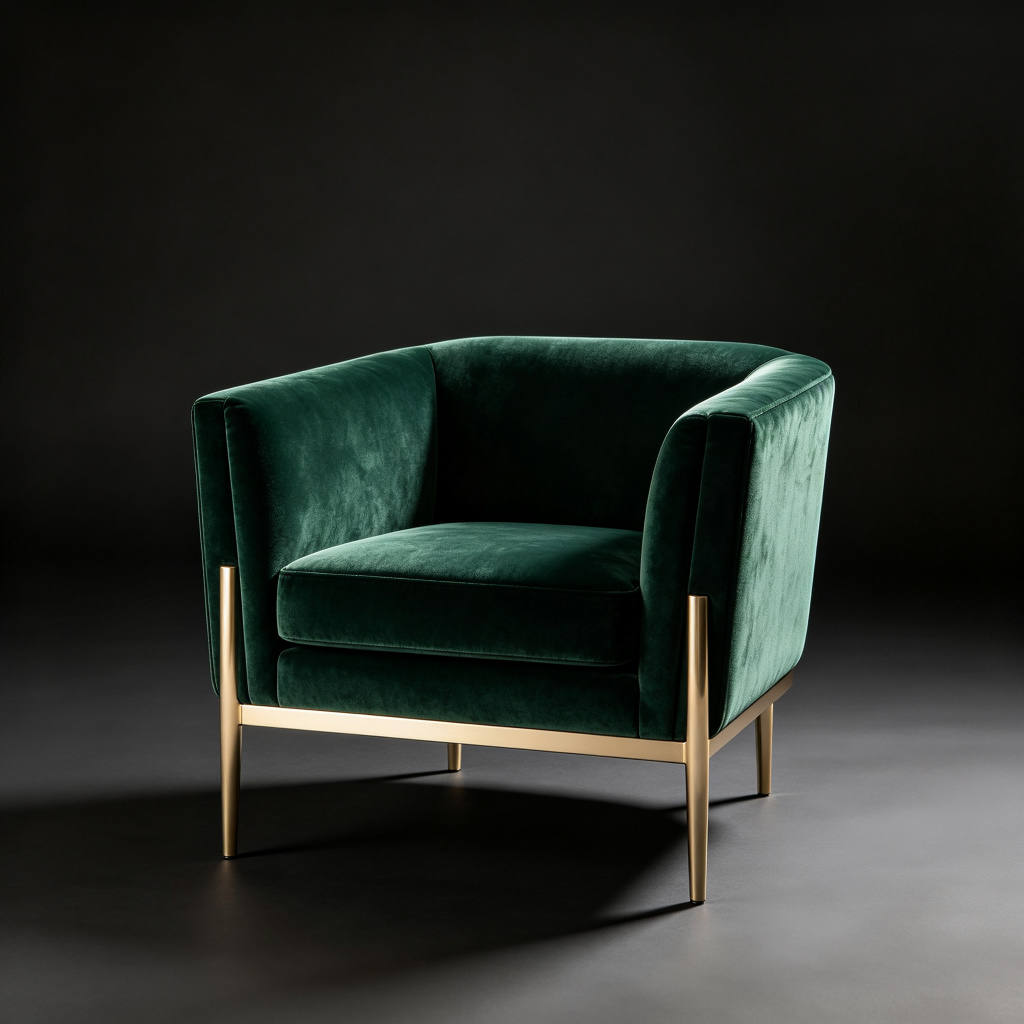
| Overall Dimensions (W×D×H) | 80 × 75 × 85 cm / 31.5 × 29.5 × 33.5 in | Custom widths and depths available to order |
| Seat Height | 45 cm / 17.7 in | Adjustable per spec sheet |
| Frame Material | Kiln-dried hardwood (beech / oak) | Moisture content 8–12%; joinery reinforced |
| Upholstery Options | Leather, Performance Fabric, COM/COL accepted | See Materials & Construction for grades |
| Finish Options | Water-based lacquer, matte / satin / gloss | Other wood finishes available on request |
| Fill | High-resilience foam 35–45 kg/m³ | Density selected per application zone |
| Weight (per unit) | Approx. 18–22 kg / 39.7–48.5 lbs | Varies with upholstery and finish |
| Packaging | 1 pc per export carton; CBM ≈ 0.55 m³ | Container load: ~340 pcs per 40ft HQ |
| Made to Order | All dimensions, materials, and finishes are configurable. Production begins after drawing and sample approval. | |
Materials & Construction
The frame is constructed from kiln-dried hardwood with mortise-and-tenon joinery reinforced at stress points, then hand-stitched or screwed depending on the design. Every unit passes 16 inspection checkpoints before leaving the factory — covering frame stability, joint tightness, foam compression recovery, stitching consistency, upholstery tension, finish adhesion, and final appearance audit.
Fill is selected between 35 and 45 kg/m³ high-resilience foam based on the intended use: denser foam for lobby and ballroom seating that endures repeated loading, softer density for guest-room accent chairs where comfort weighting differs. Leather and fabric grades range from contract-grade performance textiles (minimum 30,000 double rubs per ASTM D4157) through full-aniline and semi-aniline hides, all tested for lightfastness, crocking, and chemical resistance.
The wood finish is applied via a multi-stage water-based lacquer process — primer, sanding, topcoat, and cure — producing a surface that resists scuffing and cleaning-agent contact. Each coat is inspected for uniformity, and the final piece is checked against the approved sample before packaging.
Where It Works
- Hotel lobby seating areas and reception lounges
- Presidential and suite guest-room lounges
- Members’ clubs and private dining rooms
- Casino VIP lounges and high-traffic gaming floors
- Executive lounges and airline terminal VIP areas
- Boutique hotel showrooms and display suites
- Residence and serviced-apartment FF&E projects
This piece is specified where durability, fire compliance, and aesthetic consistency must align across large quantities. Procurement teams select it for projects requiring interchangeable upholstery finishes across rooms while maintaining a unified specification.
Customisation Options
- Dimensions: Width, depth, height, and seat height configurable per project draw
- Fabric / Leather: Full ROSY ROSE range plus COM (client-owned material) and COL (client-owned leather) accepted
- Finish: Lacquer colour, sheen, and wood stain matched to specification palette
- Leg / Base: Multiple leg profiles and metal-base options available
- Layout: Single units, matched pairs, or batch-consistent runs for full-room specifications
All custom orders require confirmed drawings and physical samples before production begins. ROSY ROSE reviews specifications against manufacturing capability and confirms feasibility with the specifier prior to schedule commitment.
Ordering, Lead Time & Logistics
Project orders are placed through direct engagement with the ROSY ROSE sales team. A sample unit is produced and shipped for approval before bulk production commences. Typical lead time is 4–6 weeks for standard configurations and 6–8 weeks for custom dimensions or non-stock finishes. MOQ applies per SKU on project orders and is confirmed at quotation.
Packaging is export-grade carton with corner protection and moisture barrier, stacked on pallets for container loading. Shipping terms are FOB Foshan or EXW Foshan. ROSY ROSE supports full documentation including commercial invoice, packing list, and certificate of origin. Standards such as CARB P2, TSCA Title VI, BIFMA, BS 5852, CAL TB 117, and EN 16139 are referenced where applicable and discussed during specification review.
Frequently Asked Questions
Can I supply my own fabric or leather?
Yes. ROSY ROSE accepts COM and COL on all upholstery projects. Client-supplied material is reviewed for minimum double-rub performance and fire-rating compliance before production begins. Additional handling fees may apply.
What fire standards do your contract fabrics meet?
Our core hospitality fabric range is tested to BS 5852, CAL TB 117, and EN 16139. Specific test reports are available upon request. FR compliance is confirmed per specification before bulk order.
Do you provide a single-sample unit before bulk production?
Yes. A prototype sample is produced and shipped for approval on colour, finish, stitching, and foam firmness. Bulk production starts only after written sign-off from the specifier or purchasing team.