Lead Times in Custom Furniture Manufacturing: What Actually Drives Them
For hospitality FF&E buyers, project developers, and specifiers, lead time is never just a number on a quote—it’s a critical path variable that can make or break a project schedule. Yet too often, procurement teams receive conflicting timelines from different manufacturers, leaving them unsure which estimates to trust. The reality is that custom furniture lead times are shaped by a combination of material availability, production complexity, order volume, and quality control depth. At ROSY ROSE, where we have spent over four decades building furniture for projects across 125+ countries, we have learned that transparency about what drives these timelines is the foundation of a reliable partnership.
Material Sourcing and Supply Chain Variables
The single most unpredictable factor in custom furniture lead times is material procurement. Unlike ready-made products that sit in warehouse stock, custom pieces require materials to be sourced to specification—whether that is a particular solid wood species, a custom-colored veneer, or a high-performance upholstery fabric engineered for hospitality use. When materials are already in stock at your factory, lead times compress significantly. When they must be ordered from suppliers, especially for specialty items, the clock starts much earlier than the actual production date.
In our experience, common material-related delays include:
- Imported hardwoods and specialty veneers with longer procurement cycles
- Custom-dyed fabrics or leathers that require batch matching for large orders
- Hardware and fittings sourced from specialized suppliers rather than standard catalogs
- Seasonal fluctuations in material availability and pricing
Manufacturers with vertically integrated supply chains—where core materials are procured directly and stocked in-house—tend to deliver more predictable timelines. Our own 200,000㎡ production base in Foshan maintains strategic inventory of core materials, which allows us to reduce material-dependent wait times for many product categories.
Product Complexity and Design Specificity
Not all custom furniture is created equal when it comes to production time. A custom dining chair with a straightforward frame and standard upholstery will move through production far faster than a bespoke reception desk involving multiple material types, integrated lighting, and intricate joinery. The level of design specificity you request directly influences the number of production steps, the skill required, and the time needed at each stage.
Consider how different product categories typically vary in complexity and its impact on timing:
| Product Category | Typical Complexity Drivers | Impact on Lead Time |
|---|---|---|
| Dining & Lounge Chairs | Joinery, upholstery, finish color matching | Moderate |
| Tables & Desks | Surface material, leg construction, hardware integration | Moderate to High |
| Storage & Cabinetry | Multiple finishes, hardware, soft-close mechanisms, interior fit-out | High |
| Reception & Statement Pieces | Custom materials, lighting, electronics integration, hand-finishing | Very High |
| Bedroom Collections | Headboard construction, upholstered elements, finish coordination | Moderate to High |
When evaluating quotes, it is useful to understand not just the stated lead time but the reasons behind it. A manufacturer who can explain which components of your specification drive the timeline is demonstrating the kind of transparency that separates experienced producers from those simply estimating.
Order Volume and Production Scheduling
Order quantity is one of the most significant variables affecting lead time, and it operates in two directions. Larger orders require more production capacity, more material, and more quality inspection time. However, large orders also allow manufacturers to schedule dedicated production runs, which can improve efficiency compared to mixing many small orders on the same line.
At ROSY ROSE, we structure our production scheduling around project timelines provided by our B2B partners. When a hotel FF&E order of 500 bedroom units is planned, we allocate dedicated production lines and coordinate material delivery in advance. This approach is fundamentally different from a distributor placing several small replenishment orders throughout the year, which must slot into existing production queues.
Key volume-related considerations include:
- Capacity allocation: larger orders benefit from reserved production windows
- Mixed vs. dedicated runs: mixed orders introduce changeover time between product variants
- Milestone deliveries: phased shipment schedules can extend the overall project timeline but ease logistics
- Bulk material ordering: larger orders enable simultaneous procurement of all required materials
If you are managing a multi-phase project, discussing milestone delivery options with your manufacturer early can help align production scheduling with your installation calendar.
Quality Control and Inspection Depth
The depth of quality control a manufacturer applies before shipment is one of the most overlooked factors in lead time calculation. A factory that rushes inspection to meet an aggressive deadline may deliver products with inconsistencies that only become apparent after arrival—leading to replacements, refunds, and project delays that far exceed the original timeline savings.
In our factory, every product passes through 16 inspection checkpoints before it leaves our facility. These checkpoints cover dimensions, finish quality, structural integrity, hardware functionality, and cosmetic appearance. Each checkpoint is performed by trained inspectors at different stages of production—not just at the end. This means that defects are caught and corrected during manufacturing rather than after packaging, which actually saves time over the long run even though the process is thorough.
How Inspection Depth Affects the Timeline
Inspection is not a single final step. It is distributed across the production flow:
- Raw material inspection upon receipt
- Work-in-progress checks after key assembly stages
- Pre-finishing inspection for surface preparation
- Final inspection before packaging and loading
While this distributed model adds time to each production run, it dramatically reduces the risk of post-delivery issues. For B2B buyers managing tight project schedules, this reliability is invaluable. A replacement order for defective goods can delay a hotel opening by weeks. Prevention through rigorous inspection is always faster than correction after the fact.
Shipping and Logistics Planning
Lead time does not end when production is complete. For international buyers, shipping and logistics add another critical layer to the timeline. Container loading, export documentation, customs clearance, and ocean freight all contribute to the total time between order placement and site delivery.
Several logistics factors influence the overall timeline:
- Container utilization: fully loaded containers ship more efficiently than partial loads
- Destination port congestion: peak seasons and port bottlenecks can add days or weeks
- Documentation accuracy: errors in export paperwork cause customs delays
- Incoterms agreement: clear responsibility for shipping and insurance avoids misunderstandings
Experienced manufacturers understand that their role extends through delivery, not just through the factory gate. When evaluating a manufacturer, ask about their track record with shipments to your region and whether they handle export documentation as part of the process. Details matter, and reliable shipping coordination is a hallmark of a mature FF&E manufacturing operation.
Communication and Project Management
Perhaps the most impactful factor in whether a custom furniture order arrives on time is the quality of communication between buyer and manufacturer from the outset. Ambiguous specifications, late approval of samples, and unclear milestone expectations are among the most common causes of schedule slippage—and none of these are manufacturing problems.
Best practices for maintaining timeline adherence include:
- Providing complete and detailed specifications at the time of order
- Approving production samples promptly to avoid downstream delays
- Establishing clear milestone dates for each phase of the project
- Assigning a single point of contact on both sides to streamline communication
- Communicating any changes to specifications as early as possible
Manufacturers who invest in project management processes—whether through dedicated account managers, regular production updates, or digital tracking systems—enable their B2B partners to plan with confidence. This is the kind of operational discipline that accumulates over decades of export experience.
Expedited Production: What Is Realistic
Some buyers need faster turnaround than standard timelines allow. While expedited production is possible, it requires honest assessment rather than vague promises. Accelerating an order typically involves prioritizing it within the production schedule, which may require adjusting other committed timelines, or working with a manufacturer that maintains higher levels of semi-finished inventory.
Before requesting expedited terms, consider whether any part of the timeline can be optimized through specification adjustments. Standardizing hardware, selecting materials already in stock, or reducing the number of custom finish variations can sometimes achieve meaningful time savings without compromising design intent. The most productive conversations about expedited timelines happen when buyers and manufacturers collaborate on solutions rather than simply negotiating dates.
Frequently Asked Questions
How far in advance should I place a custom furniture order?
The optimal ordering window depends on your project scope and specifications. As a general guideline, complex FF&E orders for hospitality projects should be initiated 12 to 16 weeks before the target delivery date, allowing sufficient time for sampling, production, quality inspection, and shipping. Smaller or more standardized orders may require shorter timelines. The most reliable approach is to share your project schedule with your manufacturer early so they can confirm feasibility and identify any timeline risks before the order is placed.
Can lead times be guaranteed in a contract?
Reputable manufacturers provide estimated lead times based on current capacity and material availability. While many manufacturers commit to delivery windows in contracts, absolute guarantees are difficult because they depend on factors beyond the factory floor—such as shipping conditions and customs processing. A transparent manufacturer will communicate proactively if any delay arises and work with you to minimize impact. This is why long-standing supplier relationships matter: a manufacturer with 40+ years of experience has built the processes and contingency plans that make reliable delivery a track record rather than a promise.
What information do I need to provide to get an accurate lead time estimate?
To receive a meaningful lead time estimate, you should provide detailed product specifications, order quantities, required materials and finishes, destination port, and your target delivery date. The more complete your specification package, the more accurate the timeline. If you are working from design concepts rather than fully developed drawings, discuss this with your manufacturer—they can often provide preliminary estimates and help refine specifications to keep the project on track.
If you are planning a custom furniture project and want an honest assessment of what your timeline can look like, we would welcome the conversation—reach out through our contact page and share your project details with our team.
Specifications
| Parameter | Specification | Notes |
|---|---|---|
| Overall Dimensions (W × D × H) | 240 × 90 × 78 cm / 94.5 × 35.4 × 30.7 in | Configurable; ±2 cm tolerance |
| Seat Height | 45 cm / 17.7 in | Standard; adjustable 42–48 cm |
| Frame Material | Hardwood ply + steel reinforcement | Other substrates on request |
| Upholstery Options | Full-grain leather or hospitality-grade fabric | COM accepted |
| Finish Options | Lacquered, veneer, powder-coated | Custom RAL / Pantone colours |
| Fill | High-resilience foam 35–45 kg/m³ | Fire-retardant compliant on request |
| Weight (per unit) | Approx. 42 kg / 92.6 lbs | Varies with configuration |
| Packaging | 4 units per carton; ~2.1 CBM per master | Sea-worthy export packaging |
| Made to order. All dimensions, materials, and finishes are configurable to project specification. Final specs confirmed on drawing approval before production begins. | ||
Materials & Construction
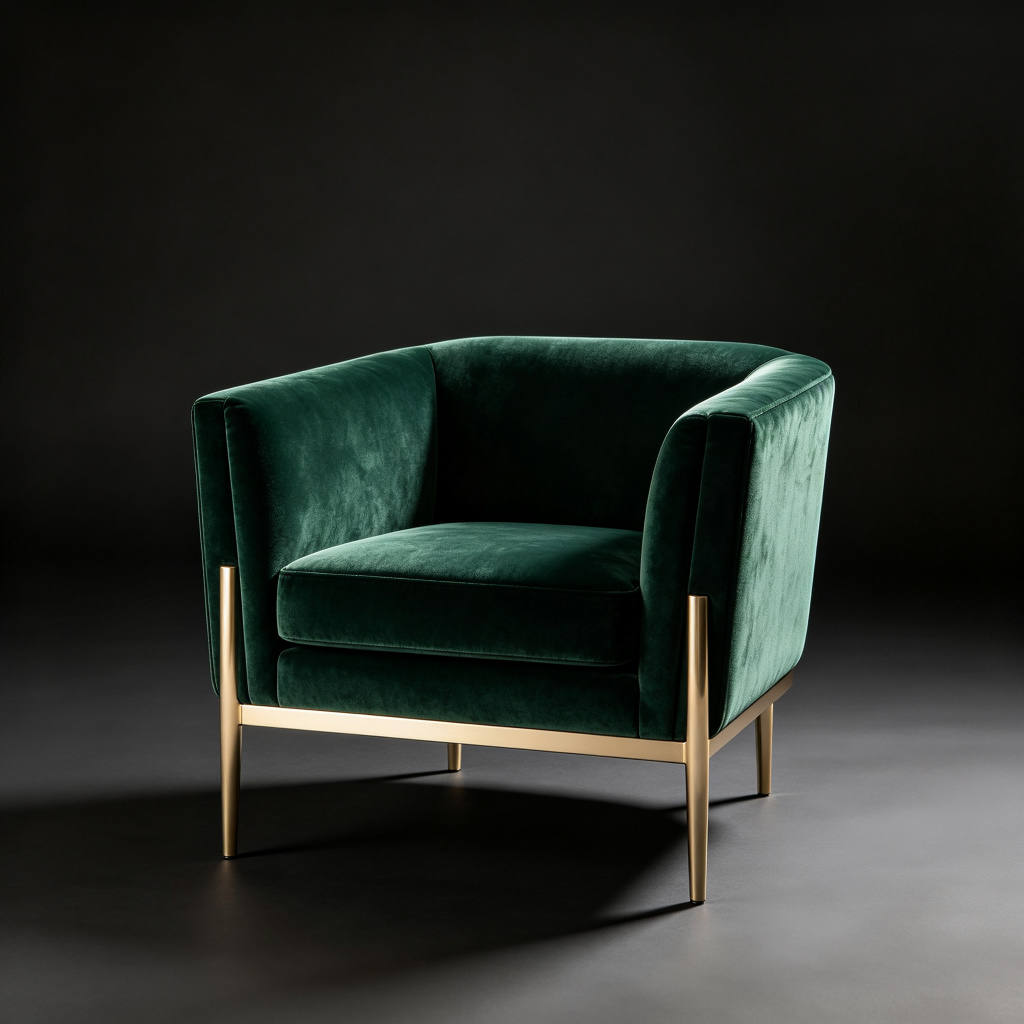
The frame is constructed from multi-layer hardwood plywood with internal steel bracing at stress points, ensuring structural rigidity across high-traffic hospitality environments. Corner joinery uses double-dowel plus glue reinforcement, and seat rails are mortised and tenoned for long-term stability. This approach meets the demands of BIFMA and EN 16139 structural testing when required.
All foam cushions are cut from high-resilience polyurethane rated between 35 and 45 kg/m³ density, selected for resilience retention after sustained compression. Leather selections include top-grain and full-grain hides sourced to hospitality-grade durability; fabric options cover commercial-performance weaves with abrasion ratings well above 30,000 Martindale. Where specified, foam is treated to comply with CARB P2, TSCA Title VI, BS 5852, or CAL TB 117 fire standards.
Every piece passing through the 200,000㎡ Foshan facility completes 16 quality inspection checkpoints before shipment—from raw-material verification and frame assembly through upholstering, finish curing, and final visual audit. This in-house QC depth is why ROSY ROSE maintains consistent delivery performance across projects in 125+ countries.
Where It Works
- Hotel lobby and lounge seating
- Presidential and suite furnishings
- Members’ clubs and private lounges
- Casino VIP areas
- Executive airport lounges
- Boutique showroom displays
- Residence and serviced-apartment projects
These applications share a common requirement: furniture that combines commercial durability with refined aesthetics. ROSY ROSE has supplied these settings across four decades, with each piece built to withstand intensive use without compromising on design integrity.
Customisation Options
- Dimensions: Length, depth, height, and seat proportions adjusted to floor plan and spatial requirements
- Fabric & Leather: Full catalog or customer-supplied material (COM); colour and texture matching to brand palette
- Finish: Wood veneers, lacquered tones, powder-coated metal colours in RAL or Pantone reference
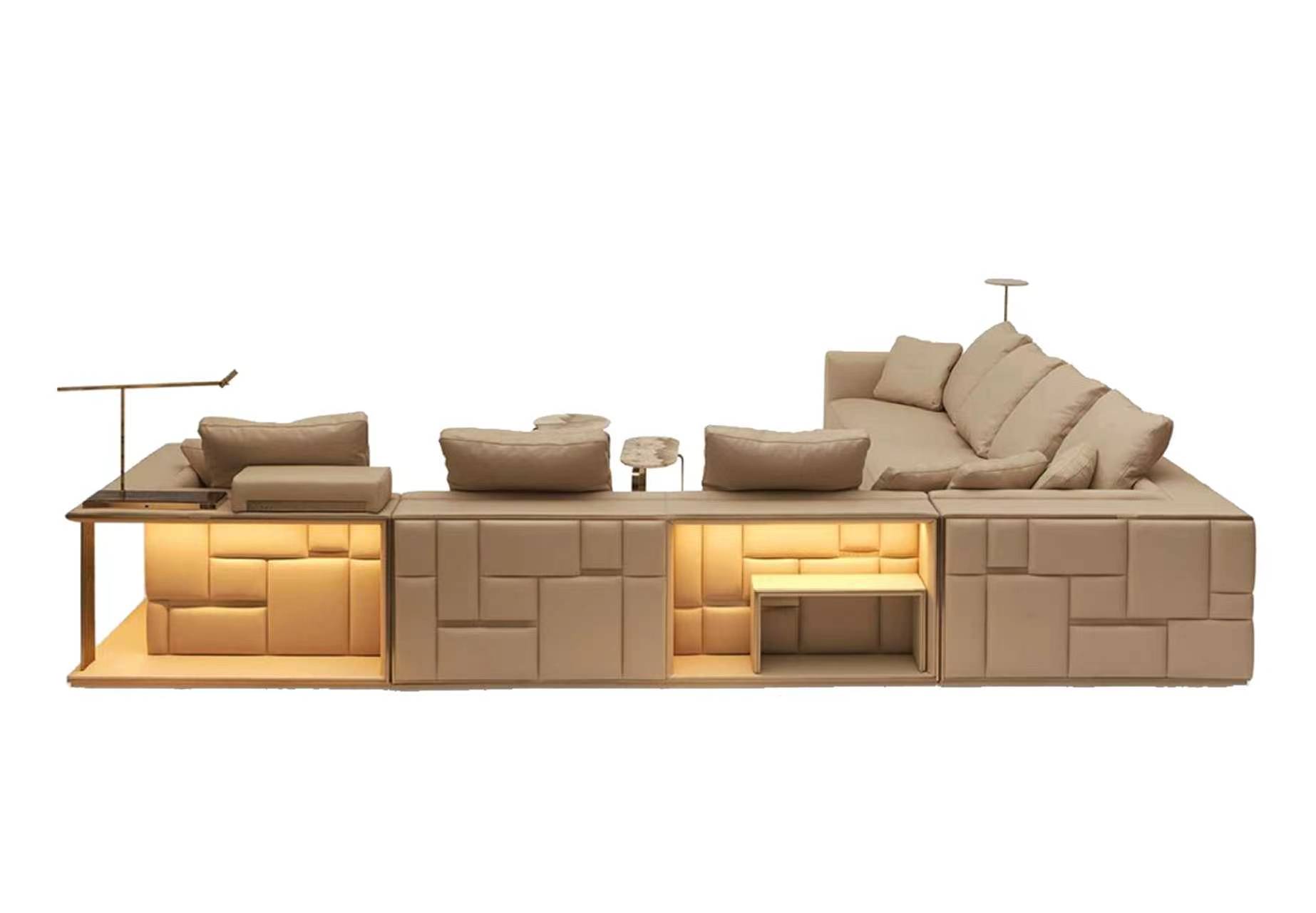
- Layout: Modular configurations, chaise additions, and sectional arrangements for large contracts
All customisations are reviewed against production feasibility before confirmation. Detailed drawings are submitted for buyer approval, and no production begins until the spec sheet is signed off.
Ordering, Lead Time & Logistics
ROSY ROSE accepts project orders with no minimum quantity restriction for custom work; bulk pricing applies at volume. The standard workflow moves from inquiry and concept approval through 3D rendering, sample production, and final drawing sign-off before bulk manufacturing commences. Typical lead time ranges from 6 to 10 weeks depending on order complexity and material availability, with sample units usually completed within 3 to 4 weeks.
All pieces are packed in reinforced export cartons with corner protection and moisture barriers suitable for ocean freight. Shipments are coordinated from FOB Foshan or EXW terms, with container loading plans optimised to minimise transit cost per unit. Documentation including packing lists, commercial invoices, and compliance certificates is provided per shipment.
Frequently Asked Questions
What is the typical lead time for a custom hospitality project?
Lead times vary by project scope but generally fall between 6 and 10 weeks from drawing approval to shipment. Sample units are produced first and typically ready within 3 to 4 weeks. Rush schedules can be discussed on a case-by-case basis.
Do you accept customer-supplied materials (COM/COL)?
Yes. We regularly work with customer-supplied fabrics, leathers, and finishes. All COM/COL items are evaluated for suitability and durability before production begins, and we provide guidance on minimum order yardage where relevant.
What quality certifications can you support?
Our production and materials can meet industry standards including CARB P2, TSCA Title VI, BIFMA, BS 5852, CAL TB 117, and EN 16139. Specific compliance is confirmed during the specification phase and reflected in project documentation.