Warranty and After-Sales Terms to Negotiate with an Overseas Furniture Factory
Sourcing contract furniture from an overseas manufacturer is a significant commitment. Whether you are procuring FF&E for a hospitality project or supplying products to a growing dealer network, the warranty terms you negotiate before signing the purchase order can define your project timeline, protect your margins, and determine how smoothly you resolve issues after goods arrive on site. At ROSY ROSE, we have spent over four decades working with buyers across 125+ countries, and our experience confirms one consistent truth: the quality of a warranty agreement is often the single strongest indicator of a manufacturer’s confidence in its own production process.
Why Warranty Terms Are a Strategic Negotiation Point
A warranty is not merely a contractual formality. It is a measurable promise that the products will perform within agreed parameters under normal commercial use. When you are managing a hotel renovation or a multi-unit residential build, a vague or short warranty transfers risk back to you—the specifier, the developer, the importer. Strong terms reduce that exposure and give you leverage when unexpected damage or defect issues surface months after delivery.
Buyers should evaluate warranty terms alongside the factory’s quality infrastructure. A manufacturer with documented inspection checkpoints, controlled in-house production, and a large facility that can track materials through every stage is better positioned to honor a meaningful warranty than one that outsources critical processes. Understanding this connection helps you ask sharper questions during negotiation.
Standard Warranty Types You Should Request
Different product categories carry different failure modes. A well-structured warranty distinguishes between these categories so that coverage is realistic and enforceable.
- Structural frame warranty: Covers warping, cracking, or failure of the primary frame under normal load. For contract-grade pieces, this should span several years and apply across all furniture lines.
- Hardware and mechanisms warranty: Addresses hinges, drawer slides, gas lifts, recliner mechanisms, and other moving components. These parts experience repeated cycles and warrant separate coverage.
- Upholstery and fabric warranty: Covers premature fabric cracking, seam separation, or foam degradation that falls outside normal wear patterns.
- Finish and surface warranty: Protects against peeling, discoloration, or delamination of veneer, lacquer, or powder-coated surfaces under standard environmental conditions.
Each of these categories deserves explicit definition. Vague wording such as “defects in materials and workmanship” without clear parameters leaves both buyer and supplier open to disputes later. In our experience, the most effective agreements itemize coverage by component type and reference recognized performance standards where applicable.
Spare Parts Policy and On-Site Repair Support
Even with the highest manufacturing standards, damage can occur during shipping, handling, or installation. How a factory handles spare parts and on-site repairs is one of the most practical dimensions of after-sales service.
A functional spare parts policy should address the following elements clearly:
- Free spare parts inclusion: Most manufacturers include a percentage of complimentary spare parts with each container shipment. This typically covers items such as chair glides, replacement legs, spare screws, and small upholstery patches. Clarify the exact percentage and whether it is customized to your order volume.
- Replacement part pricing: Agree on unit costs for additional spare parts beyond the free allocation before production begins.
- Shelf-life parts provision: For projects involving upholstered seating, requesting a small quantity of matching fabric from the production batch can be valuable. Fabric produced in different dye lots may not match after the original order is complete.
- On-site repair guidance: Manufacturers that provide detailed repair manuals, video tutorials, or responsive technical support reduce downtime during project handover.
When you explore our full product range at , take note of the construction details and component options available. Factories that design with serviceability in mind often have better spare parts ecosystems because the components are standardized and trackable.
Quality Inspection and Claims Handling Process
A transparent claims process separates professional suppliers from unreliable ones. Buyers should understand how a factory documents quality checks, records deviations, and processes compensation or replacement requests.
At ROSY ROSE, every piece passes through 16 inspection checkpoints before it leaves the factory floor. These checkpoints cover dimensional accuracy, joint integrity, surface finish quality, hardware function, and packaging security. This multi-stage verification system means that the likelihood of latent defects reaching the buyer is significantly reduced. However, claims can still arise from shipping damage or site-handling issues, which is why the claims protocol matters just as much as the inspection process itself.
Key Steps in a Reliable Claims Process
- Documentation requirements: The factory should specify what evidence is needed—photos, videos, quantities, and affected SKUs—and the timeframe within which claims must be reported after delivery.
- Triage and investigation: A responsive supplier assigns a dedicated account or quality engineer to evaluate the claim, determine root cause, and propose a resolution within an agreed number of business days.
- Resolution options: Acceptable resolutions include replacement parts shipped air freight, credit against future orders, or full replacement of damaged units. The preferable option depends on project urgency and the severity of the issue.
- Escalation path: Clear escalation channels prevent claims from being delayed or deprioritized once the initial response period ends.
Negotiating these process details into the purchase agreement ensures that neither party is left guessing when something goes wrong.
Warranty Terms Across Product Categories
Different furniture categories face different wear patterns and usage intensities. Below is a practical framework that aligns warranty expectations with product type.
| Product Category | Typical Warranty Focus | Key Risk Areas |
|---|---|---|
| Contract dining chairs | Frame integrity, joint stability, swivel/glide mechanism | Loose joints, worn glides, finish abrasion |
| Outdoor lounge seating | Frame corrosion resistance, fabric UV stability, cushion回弹 | Fabric fading, frame oxidation, foam compression |
| Hotel bedroom furniture | Finish durability, drawer slide performance, veneer adhesion | Drawer failure, veneer peeling, handle loosening |
| Office desks and workstations | Lift mechanism function, surface scratch resistance, cable management integrity | Gas lift failure, surface scuffing, wobble |
| Lounge and accent pieces | Upholstery seam strength, frame stability, foam retention | Seam splitting, foam breakdown, frame creaking |
When evaluating potential suppliers, consider whether they manufacture across the full spectrum of these categories in-house. Outsourced production in any core segment can create gaps in accountability. Our approach has always been to keep core processes internal so that quality and after-sales responsibility remain unified. You can review our capabilities and product lines at .
Certifications and Compliance as Warranty Backing
Third-party compliance certifications are not simply marketing assets. They function as objective proof that the products meet recognized performance and safety thresholds. When a manufacturer can align its warranty with internationally referenced standards, the terms carry more weight and are easier to defend in a dispute.
Common standards relevant to contract furniture include CARB P2 and TSCA Title VI for composite wood emissions, BIFMA for commercial seating and office furniture performance, BS 5852 for upholstery fire safety in the UK market, CAL TB 117 for flammability testing in California, EN 16139 for strength requirements of seating, and various regional safety benchmarks for lighting-integrated or electrical furniture. These standards provide measurable benchmarks that a warranty can reference explicitly.
ROSY ROSE was founded in Foshan in 1983 and has grown from a small woodworking workshop into a 200,000㎡ manufacturing base with a 100,000㎡ showroom. Our 40+ years of B2B export experience have taught us that compliance documentation and warranty terms should be treated as parallel commitments, not separate conversations.
Negotiation Checklist for Buyers
Before entering contract discussions with any overseas factory, prepare a clear list of terms you consider non-negotiable. Use the following checklist as a starting point:
- Minimum warranty duration per product category
- Inclusion and percentage of free spare parts per shipment
- Response timeline for defect claims after delivery
- Resolution methods acceptable to your team
- Shipment cost responsibility for replacement parts or units
- Access to original fabric or material batches for future matching
- Technical support availability during installation
- Warranty terms for OEM or private-label orders
- Dispute escalation procedure and responsible contacts
A detailed discussion at the quote stage prevents friction later. If you are considering custom specifications, exploring our bespoke furniture service at will help you understand how custom terms are handled alongside standard warranties.
What warranty duration should a buyer target for contract furniture?
For commercial and hospitality applications, a minimum of three years is a reasonable baseline for structural and frame coverage. Hardware and mechanism components should carry comparable terms. Upholstery warranties may vary based on fabric class and expected traffic levels. Longer terms are feasible when the manufacturer maintains controlled in-house production and comprehensive quality inspection protocols.
How should spare parts quantities be determined for a large project?
Spare parts should be calculated based on the total order quantity, the installation complexity, and the anticipated handling risk during shipping and on-site assembly. Many buyers request between one and three percent of ordered units as free spares, supplemented by an agreed-rate reserve for additional needs. Factors such as fabric availability windows and component standardization should also influence this calculation.
What is the best way to ensure after-sales support remains consistent across multiple orders?
Consistency improves when the same account team manages repeat orders, when product specifications and bill-of-materials records are preserved systematically, and when warranty terms are documented in writing rather than communicated verbally. Manufacturers that operate large integrated facilities and maintain full production traceability are better equipped to honor long-term support commitments. For more information on our background and production capacity, visit .
Engage the right partner, negotiate clear terms, and let the quality of your products speak for itself—our team at ROSY ROSE is ready to discuss how we can support your next project.
Specifications
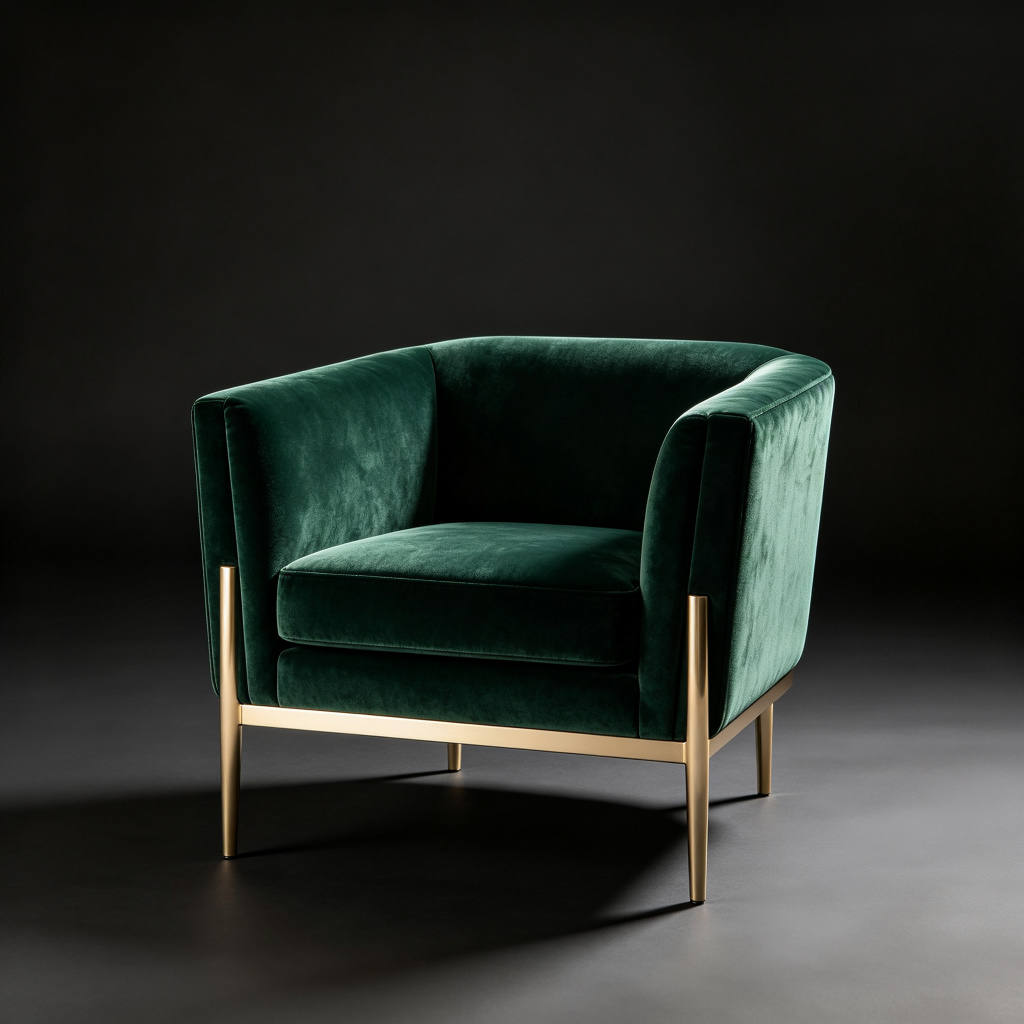
| Overall Dimensions (W×D×H) | 85–110 × 80–100 × 75–95 cm / 33–43 × 31–39 × 30–37 in |
| Seat Height | 43–48 cm / 17–19 in (configurable) |
| Frame Material | Solid hardwood or powder‑coated steel (specify per project) |
| Upholstery Options | Top‑grain leather; commercial‑grade textiles (CARB P2/TSCA Title VI compliant) |
| Finish Options | Lacquer, powder coat, or veneer (RAL/BS colour range) |
| Fill | High‑resilience foam, 35–45 kg/m³ density |
| Weight per Piece | Approx. 22–32 kg (varies by size and material) |
| Packaging | Export‑grade carton; 1–2 pcs per carton; 0.6–1.4 CBM per order qty |
| Note | All items are made to order. Dimensions, materials, and finishes are configurable to match project specifications. |
Materials & Construction
Frames are constructed using traditional mortise‑and‑tenon joinery reinforced with corrosion‑resistant hardware. Solid hardwoods (e.g., oak, beech) are kiln‑dried to a stable moisture content before assembly; steel frames are powder‑coated after degreasing and sandblasting. The joinery is designed to withstand the cyclic loads typical of contract environments, with every joint tested for structural integrity.
Cushioning uses high‑resilience polyurethane foam in the 35–45 kg/m³ range, selected to maintain support and resist sagging over decades of commercial use. Upholstery choices include full‑aniline or corrected‑grain leather and engineered fabrics that meet relevant flammability and emissions standards (BS 5852, CAL TB 117, EN 16139). Each material is vetted for colourfastness, abrasion resistance, and cleanability before approval for production.
Before any piece leaves the factory, it passes through 16 inspection checkpoints covering dimensional accuracy, joinery strength, surface finish, stitching uniformity, and functional testing. This documented quality infrastructure ensures that the warranty terms we negotiate are backed by verifiable production controls.
Where It Works
- Hotel lobby and seating areas
- Presidential and executive suites
- Members’ clubs and private lounges
- Casino VIP and high‑limit areas
- Corporate executive lounges
- Boutique retail showrooms
- Multi‑unit residence projects (service‑apartment style)
These applications share common demands: high traffic, strict aesthetic consistency across large quantities, and the need for reliable after‑sales support. The product’s configurable nature allows specifiers to adapt it to diverse design directions while maintaining a unified quality standard.
Customisation Options
- Dimensions adjusted to fit specific floor plans or spatial constraints
- Leather grades, fabric weaves, and colourways selected from approved supplier libraries
- Finish options (lacquer tone, powder‑coat colour, veneer grain) matched to interior schemes
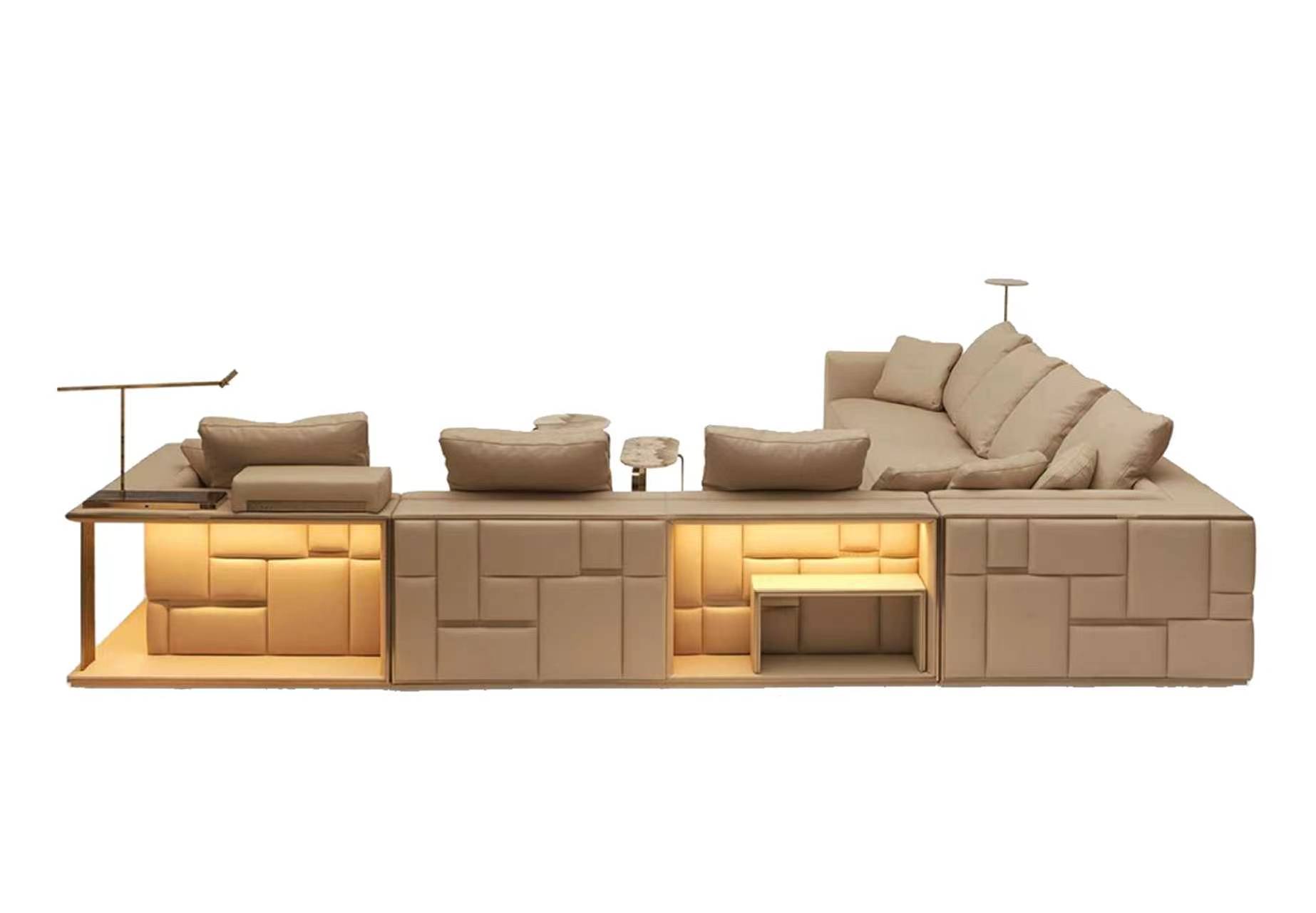
- Layout configurations for modular or sectional arrangements
- COM (customer‑provided material) and COL (customer‑provided leather) accepted with written approval
- All custom drawings and material samples confirmed before production begins
Ordering, Lead Time & Logistics
Project orders have no fixed MOQ; batches are sized to match the contract. The workflow begins with a technical review of shop drawings, followed by physical samples for client approval. Once the sample is signed off, production is scheduled. Typical lead time is 4–6 weeks from sample approval for standard configurations, extending to 8–10 weeks for complex customisations or large volume runs.
Goods are packed in export‑standard cartons with foam corner protection and desiccant bags. Shipments are organised as FCL/LCL from FOB Foshan; EXW terms are available for buyers using their own freight forwarders. A complete packing list, including carton count, gross weight, and CBM, is provided before loading.
Frequently Asked Questions
What warranty terms can be negotiated?
Structural frame coverage, upholstery defect protection, and hardware replacement are standard negotiation points. Terms are linked to the factory’s 16‑point inspection record and material certifications; longer coverage periods are supported for clients who request extended warranty documentation for tender submission.
Can you produce exact matches to existing installations?
Yes. We accept physical samples or detailed specifications for colour, texture, finish, and dimensions. A duplicate‑match quote includes sample production, colour confirmation, and a signed comparison report before full‑scale manufacturing begins.
How do you ensure consistent quality across large orders?
Every batch is produced in our 200,000 m² in‑house facility in Foshan, with core processes kept internal. In‑line inspections at 16 checkpoints, random pre‑shipment audits, and photographic documentation of each stage provide traceability. Certificates for relevant standards are issued where applicable.