How to Compare Quotes from Three Chinese Furniture Factories
Sourcing furniture for a hospitality project or large-scale specification demands more than a side-by-side price glance. When you request quotes from three Chinese furniture factories, the numbers on the page tell only part of the story. Below the surface lie differences in manufacturing depth, quality systems, compliance readiness, and delivery reliability that can make or break a FF&E schedule. At ROSY ROSE, we have spent over four decades advising international buyers on exactly how to separate surface-level pricing from real production value.
Why Three Quotes Are Not Automatically Comparable
Factory quotes are frequently built on different assumptions. One supplier may include packaging, freight terms, and pre-shipment inspection. Another may quote ex-works with bare minimum finishing. A third might deliberately underprice by omitting critical steps — then add them as change orders mid-production. Before you compare line items, you need to confirm that every quote covers the same scope: material grade, core construction method, upholstery fabric performance class, edge treatment, hardware specification, packaging standard, Incoterms, and lead time window.
A well-structured comparison starts with a unified brief sent to every factory. The more precisely you define your specification, the more honest and comparable the returned quotes will be.
Production Depth: What Stays In-House and What Does Not
The single most reliable indicator of quote consistency is production depth. Factories that own their core manufacturing processes control cost, schedule, and quality far more effectively than those relying on subcontractors for key operations. Across our 200,000㎡ base in Foshan, every structural stage — from timber processing and frame assembly to upholstery, polishing, and final inspection — runs through our own floor. That model is not unique to us, but it is uncommon enough to matter.
- Ask each factory to list which processes are performed in-house versus outsourced.
- For outsourced steps, request the name and location of the partner workshop.
- Verify whether the factory holds title to its primary machinery or leases critical equipment.
When a factory cannot clearly map its process chain, the quote is likely built on optimism rather than controlled capacity. See our full product range to understand what a vertically integrated facility can realistically deliver.
Quality Systems and Inspection Checkpoints
Price without quality infrastructure is a gamble. Serious factories document how many inspection checkpoints exist across the production lifecycle, what rejection thresholds are applied, and how non-conforming pieces are handled before they reach your port. In our experience, a transparent factory will share its quality flowchart during the quotation phase — not after the contract is signed.
At ROSY ROSE, every piece passes through 16 inspection checkpoints before leaving the facility. Those checkpoints are not decorative; they are mapped to specific risk points in the production sequence, from raw material intake through final packaging. Ask each quoted factory to provide an equivalent breakdown. Factories that respond with a single “three-stage QC” statement without detail are likely working with far fewer control points than advertised.
Compliance Readiness for Your Target Market
Different destination markets require different compliance documentation. A quote that looks attractive from unit price alone becomes costly the moment your shipment is held at customs for missing paperwork. Buyers should confirm compliance readiness before ranking factories, not after.
| Market | Typical Standards Referenced | Documentation to Request |
|---|---|---|
| United States | CARB P2, TSCA Title VI, BIFMA (contract furniture) | Formaldehyde test reports, BIFMA certification evidence |
| United Kingdom | BS 5852 (fire safety for upholstery) | Fire retardancy test certificates, source documentation |
| European Union | EN 16139 (seating strength), REACH restricted substances | EN test reports, REACH compliance declaration |
| Australia | AS/NZS 4024, fire safety requirements | Test reports from NATA-accredited laboratories |
| California (US) | CAL TB 117 (flame resistance for upholstered furniture) | CAL TB 117 test results, foam certification |
Never accept a blanket statement that a factory “meets international standards” without asking for the specific test lab, report number, and standard version. Legitimate factories maintain these documents as part of their export records.
Lead Time Realism and Schedule Protection
One of the fastest ways to lose margin on a FF&E project is an underestimated lead time. Hotel renovations, resort rollouts, and commercial fit-outs operate on fixed handover dates. A quote promising 45 days for a 200-room specification is not necessarily more attractive than one quoting 75 days — especially if the 45-day promise relies on parallel work across five subcontractors with no single point of accountability.
Request a written production timeline from each factory, broken into milestones: material procurement, frame production, upholstery, finishing, inspection, packing, and shipment booking. Then check whether past projects have hit those milestones. A factory with a documented history of on-time delivery is worth a higher unit price. Missed deadlines on hospitality projects trigger liquidated damages, guest displacement costs, and reputational damage that far exceed any per-unit savings.
What a Fair Quote Comparison Template Looks Like
Create a single comparison matrix before reading the third quote. Use consistent columns for unit price, MOQ, material specification, compliance documents, lead time, packaging, and payment terms. Fill in each row as quotes arrive. The goal is not to pick the cheapest option — it is to identify which factory delivers the strongest combination of verified production depth, quality systems, and schedule certainty at a defensible price.
Below are the questions every serious buyer should send to each factory alongside the RFQ:
- What percentage of total production runs in-house at your primary facility?
- How many formal inspection checkpoints does each product line pass through?
- Which export markets do you currently supply, and can you share anonymized references?
- What is your standard packaging configuration for container loading optimization?
- Do you offer OEM or custom design development support?
- Can you provide a detailed Gantt-style timeline for a project of this scale?
Red Flags in Chinese Factory Quotes
Experience across 125+ export destinations has taught us which warning signs appear most often. Watch for these patterns before committing to a factory:
- Vague material descriptions such as “high-quality wood” without species, grade, or origin.
- No response to requests for compliance documentation or test reports.
- Unit prices that are significantly below market average without a clear explanation of how margin is preserved.
- Refusal to share a facility tour or live video walkthrough of the production floor.
- Payment terms demanding full advance before any production milestone is verified.
- Quotes that omit freight, packaging, or export documentation costs entirely.
These signals do not prove misconduct, but they do justify deeper due diligence. A transparent factory will answer these questions directly and invite verification.
The Value of Long-Term Manufacturing Relationships
Bullet-proof quotes matter, but the real advantage comes from partnering with a manufacturer that understands repeat procurement, variation management, and long-horizon project planning. ROSY ROSE was founded in Foshan in 1983 and has built its export capability around deep vertical integration, a 100,000㎡ showroom for offline evaluation, and a commitment to light-luxury positioning across hotel FF&E, developer, distributor, and designer channels.
That history — beginning in a woodworking workshop, moving through OEM development in the 1990s, expanding export operations in the 2000s, scaling into full room-line production in the 2010s, and operating today from a 200,000㎡ base — is not marketing copy. It is the operating logic behind every quote we produce. Buyers who return for repeat projects know the difference between a trading company reshuffling paperwork and a manufacturer controlling the entire value chain.
Pre-Qualification Steps Before You Request Quotes
The strongest comparison begins before the RFQ goes out. Verify factory identity through registered business information, visit the facility if possible, review completed project portfolios, and confirm export history in your target region. Understanding how a factory structures its design and specification support is equally important — a factory that can adapt drawings, suggest value-engineering alternatives, and provide 3D renderings reduces risk significantly compared to one that only produces to supplied CAD files.
What minimum documentation should I request from each factory before comparing quotes?
Request company registration details, a facility overview covering square meterage and production layout, a detailed process map showing in-house versus outsourced steps, sample compliance test reports relevant to your market, and a completed quotation template that captures material specs, MOQ, lead time, packaging standard, Incoterms, and payment terms in one consistent format.
How do I verify that a factory’s quoted lead time is realistic?
Ask for a written milestone timeline, request references from recent projects in your region, confirm the factory’s current order queue position, and validate whether the quoted lead time accounts for material procurement, production, inspection, packing, and shipment booking as separate phases. Factories with controlled in-house workflows typically deliver more accurate timelines than those dependent on external workshops.
When is it reasonable to choose a higher-priced quote over a lower one?
Choose the higher quote when the cheaper option omits inspection checkpoints, lacks verifiable compliance documentation, relies heavily on subcontracted core processes, provides unrealistic lead times, or refuses facility verification. On hospitality and commercial projects, the cost of rework, delayed handover, and customs delays almost always exceeds the per-unit price difference.
If you would like us to review your comparison matrix or discuss how a vertically integrated Foshan-based manufacturer structures its quotes for FF&E projects, reach out through our contact page and we will arrange a focused technical conversation.
Specifications
| Specification | Value |
|---|---|
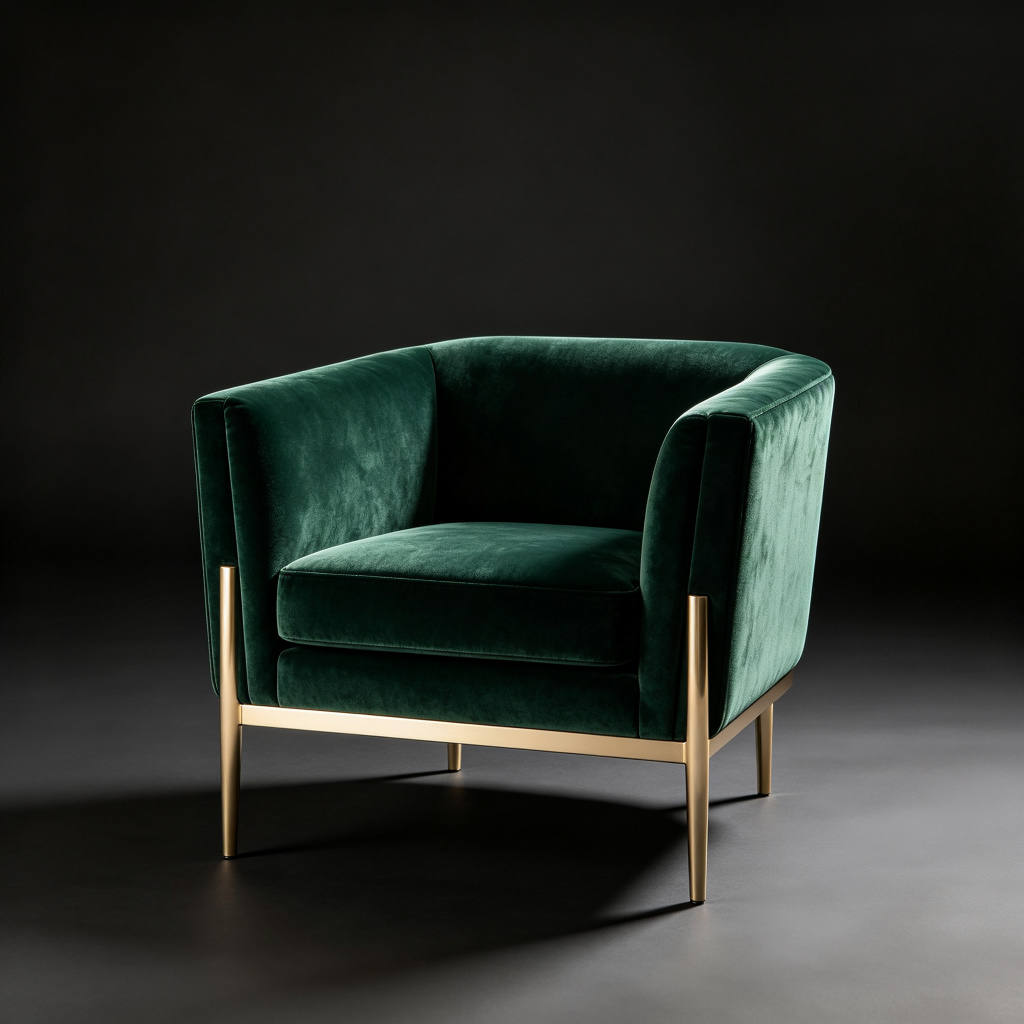
| Overall Dimensions (W × D × H) | Configurable — typical example: 85 × 80 × 75 cm / 33.5 × 31.5 × 29.5 in |
| Seat Height | 42–48 cm / 16.5–18.9 in (configurable) |
| Frame Material | Premium hardwood, kiln-dried to 8–12% moisture |
| Upholstery Options | Full-grain leather, top-grain leather, commercial-grade fabric; COM/COL accepted |
| Finish Options | High-gloss, satin, matte lacquer; wood veneer; powder-coated metal |
| Fill | High-resilience foam, 35–45 kg/m³ density |
| Weight per Unit | Approx. 22–28 kg / 48.5–61.7 lb (varies by size and material) |
| Packaging | 1 pc per carton; reinforced corners; foam-lined; export-standard seaworthy packaging |
| Carton Count / CBM | Typical: 1–4 pcs per 40HQ container; per-carton CBM provided on request |
| Made to Order | Yes — all dimensions, materials, and finishes are configurable per project specification |
Materials & Construction
The frame is constructed from kiln-dried hardwood using traditional mortise-and-tenon joinery, reinforced at stress points with double-doweled corners and metal brackets where required. Every joint is glued with PVA resin formulated for commercial environments, ensuring long-term stability under continuous load cycles common in hospitality settings.
Fill performance is governed by foam density rated between 35 and 45 kg/m³, selected according to the seat application. High-resilience foam maintains its shape through thousands of cycles, while lower-density back cushions provide comfort without excessive compression. Leather and fabric selections meet relevant performance standards — including BS 5852 ignition source 5 for the UK market, CAL TB 117 for North America, and EN 16139 load testing for seating strength — with compliance documentation supplied upon request.
Surface finishing involves a multi-stage lacquer or varnish process: priming, sanding between coats, and a minimum of three topcoats hand-rubbed to the specified sheen. Each piece passes through 16 distinct inspection checkpoints before leaving the factory, covering dimensional accuracy, joint integrity, surface quality, upholstery alignment, hardware function, and packaging security.
Where It Works
- Five-star hotel lobby and lounge seating
- Presidential and executive suite interiors
- Members’ clubs and private dining rooms
- Casino VIP and high-limit gaming lounges
- Airport executive lounges and business hotels
- Boutique showroom and retail fit-outs
- Residence and high-specification project developments
This product line is engineered for high-traffic commercial environments where aesthetic consistency, durability, and repeat-order reliability matter. ROSY ROSE has supplied these configurations across 125+ countries for hotel groups, interior design firms, and FF&E procurement teams managing phased rollouts.
Customisation Options
- Dimensions: Seat height, width, depth, and back profile adjusted to specification
- Fabric / Leather: Full collection access or client-supplied material (COM/COL) accepted
- Finish: Lacquer colour, wood stain, metal powder-coat, and veneer selection
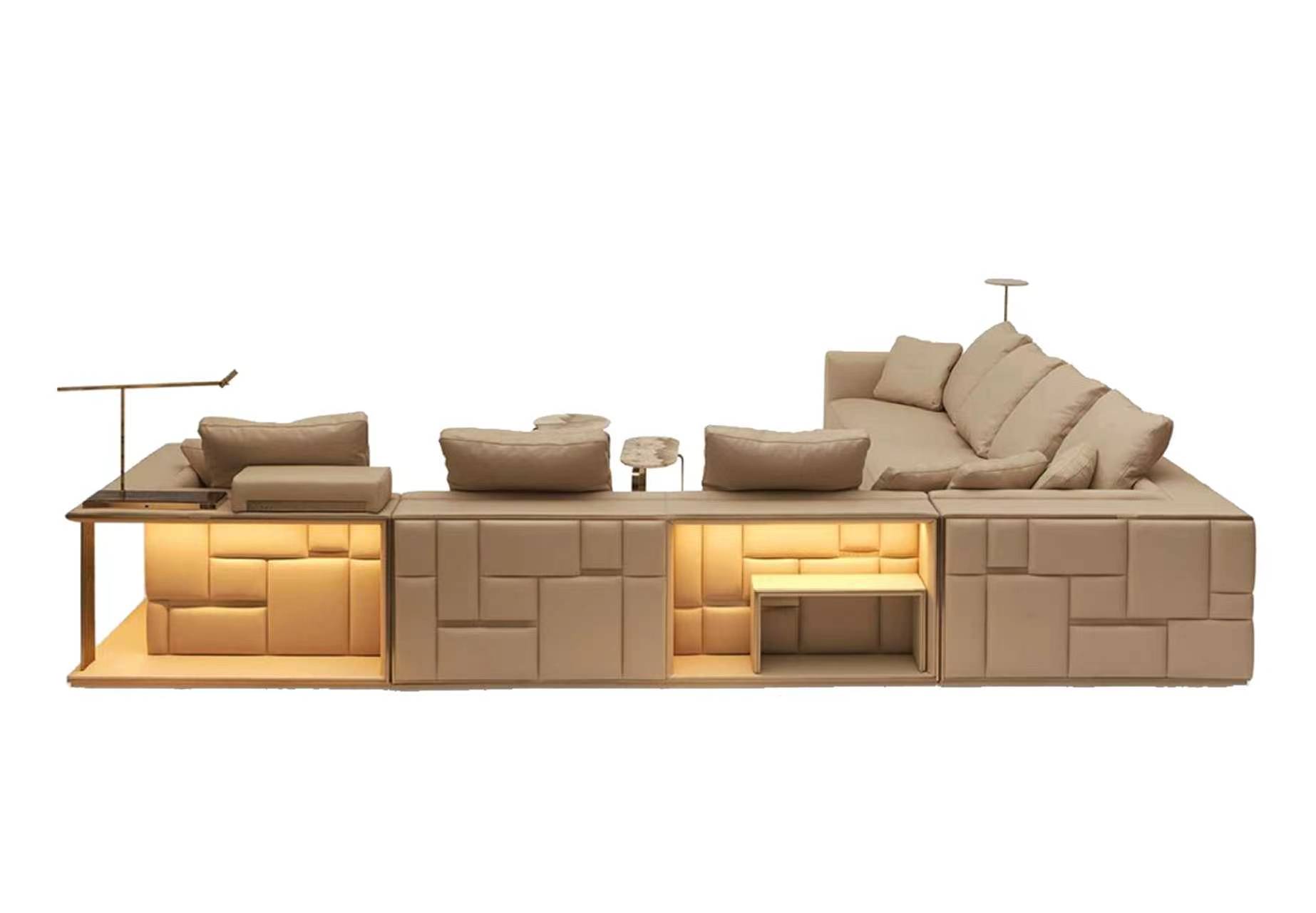
- Layout: Modular configurations, corner units, and custom seat arrangements
- Hardware: Footrest options, arm styles, leg profiles, and castor vs. fixed foot choices
All custom drawings and material samples are confirmed and signed off before production begins, eliminating ambiguity and protecting your programme timeline.
Ordering, Lead Time & Logistics
ROSY ROSE accepts project orders through a structured workflow: initial specification review, sample development and approval, production scheduling, in-process quality checks, pre-shipment inspection, and container loading. There is no fixed minimum order quantity for project orders — each proposal is priced and scheduled according to your BOQ and delivery phasing. Typical lead time ranges from 4 to 8 weeks from approved drawing to shipment, depending on complexity and volume.
Packaging is designed for sea freight: each unit is protected with corner guards, wrapped in polythene and foam, and packed in export-grade cartons labelled with project reference numbers. Orders ship FOB Foshan or EXW from our 200,000㎡ manufacturing base, with documentation including packing lists, commercial invoices, and compliance certificates prepared for your customs broker.
Frequently Asked Questions
Can you provide compliance documentation for international fire and material standards?
Yes. We supply test reports and certification references for CARB P2, TSCA Title VI, BIFMA, BS 5852, CAL TB 117, and EN 16139, along with any project-specific declarations required by your authority having jurisdiction. Certificate numbers are available on request.
What is the typical lead time for a full project order?
Lead time depends on order size and configuration complexity. A standard project runs 4–8 weeks from signed drawing and material approval. Phased deliveries can be scheduled to align with your construction programme.
Do you accept client-supplied fabrics and leathers?
Yes — COM (client-owned material) and COL (client-ordered leather) are accepted. Samples are reviewed for suitability, and a pilot piece is produced before full production begins to confirm finish and construction quality.