Ask any furniture company why they make things the way they do and you will get a version of the same answer: quality, craft, tradition. Say those words often enough and they stop meaning anything. So let us put the abstractions aside for a moment and talk about a single leather panel — what happens to it on the bench, and why the decision to finish it by hand changes everything that comes after.
A chair is not hard to build. A hundred factories build a thousand chairs a day and call it a living. The harder question is what kind of object you want that chair to be twenty years from now — whether it will still hold its line, whether the leather will have aged into something richer or merely worn out, whether anyone will regret having paid for it. That question, and not any single material or technique, is where the brand’s philosophy begins.
Handwork Is Not Nostalgia
There is a comforting myth that handmade furniture is handmade out of sentiment — that we finish things by hand because we are romantics clinging to a pre-industrial past. The truth is colder and more practical. We build by hand because hand finishing produces a measurably better object, and because after nearly thirty years of trying, no machine has matched a patient human eye for the final stage of a piece.
Consider what “100% hand finished” means in practice. The panels arrive from the cutting and framing stages squared, jointed, and true — the machinery there is excellent and we use it gladly. But a surface straight out of a machine is mechanical. It has no memory of tension, no reading of the grain beneath. A skilled hand does. When a finisher works a walnut tabletop, they are not simply applying a coat; they are reading the wood’s response, letting the surface tell them where the oil wants to settle, where the light will catch a knot, where a slightly longer pass will bring out a depth that a flat sprayed coat could never reach.
That is not nostalgia. It is the difference between furniture that is merely made and furniture that is finished. And it is why every piece we send out, from a simple side table to a book-matched marble desk, passes through human hands at the end.
The Case for Slowness
The modern furniture industry is built on a beautiful lie: that speed is a form of value, that getting a sofa to your door in a week is the same as giving you a sofa you will keep for a generation. We have never believed it. Speed and endurance pull in opposite directions, and you have to choose which one you are selling.
We choose endurance. That choice shows up in unglamorous ways that never appear in a product photo. It shows up in the ten-year frame warranty we stand behind on the structure of every piece — not because we are generous, but because a properly built frame should outlast its warranty without drama. It shows up in the way we let leather sit before it is cut, and in the way seams are set by hand rather than run flat-out through a machine line. It shows up in the refusal to chase trends that will look tired in eighteen months, because a piece built to last three decades cannot afford to look dated in two years.
Slowness has a price. It is the reason our output will never rival a high-volume plant, and the reason a bespoke commission cannot be delivered overnight. We accept that trade willingly. The people who come to us are not usually in a hurry to furnish a rental. They are building a home they intend to keep, and they understand that the object they live with for thirty years is worth the weeks it takes to build properly.
A Dialogue Between Two Traditions
There is a particular tension in what we make that visitors to the showroom often notice but cannot quite name. The design language of our collections carries the imprint of Italian elegance — the poise of a FENDI-inspired silhouette, the confident restraint of BENTLEY lines, the sculptural warmth of VIETRI pieces. Yet the hand that executes them is unmistakably Chinese, schooled in the discipline of Foshan’s workshops, where patience is a virtue and the idea of doing something badly on purpose is almost offensive.
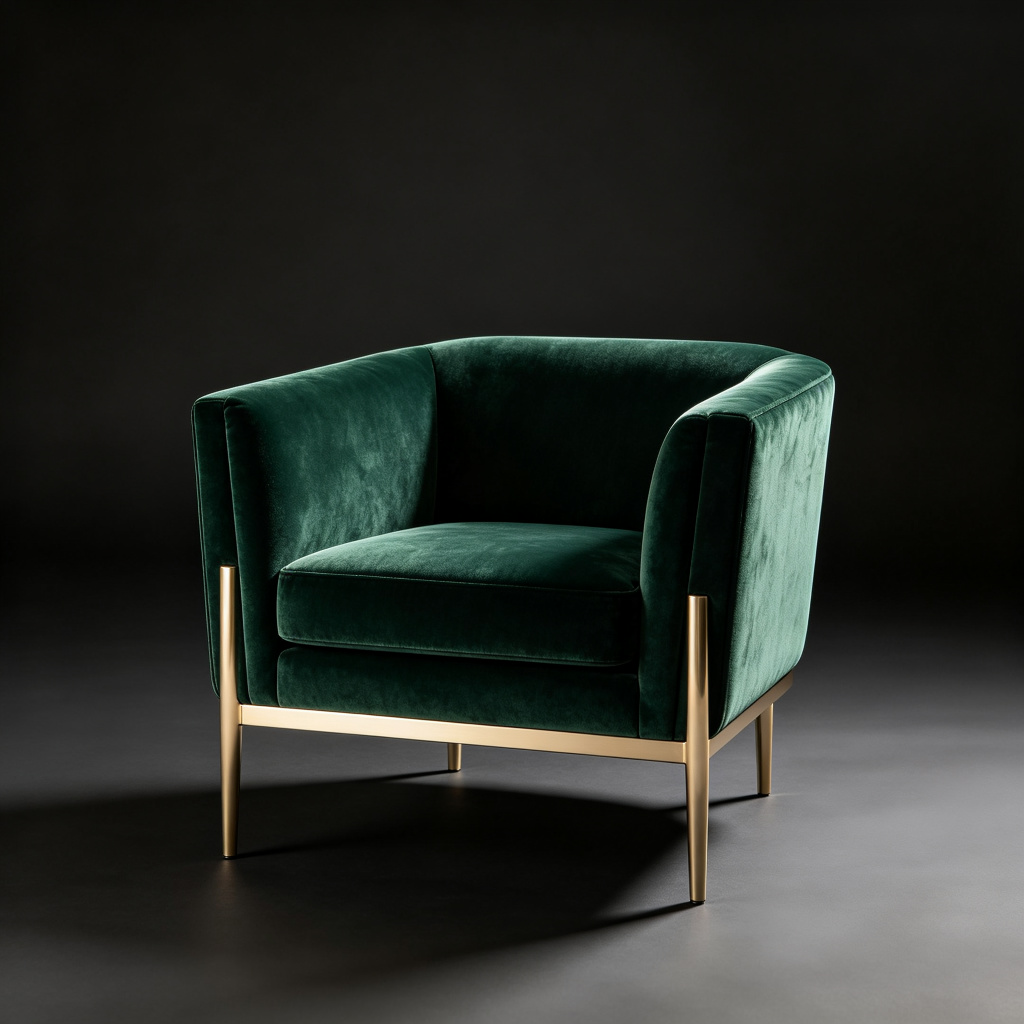
We have never tried to resolve that tension. It is the point. The finest furniture we know of is rarely the product of a single culture; it is what happens when one tradition brings the eye and another brings the hand. Europe gave us a sense of proportion and poise. China gave us the craft culture to execute it without compromise. A Rosy Rose chair is where those two currents meet — and it is precisely because they come from such different places that the result feels like more than the sum of its parts.
The Cost That Shows in the Finished Piece
Let us be honest about what hand finishing costs, because there is no point pretending otherwise. A hand-finished piece carries a price that reflects hours no machine will ever pay back in volume. On paper, it looks like a poor trade. A factory that sprays its finishes and runs its seams flat-out can produce more pieces in a morning than a bench of finishers can complete in a week, and sell them for a fraction of the price.
The trade only makes sense if you believe, as we do, that a piece of furniture is not a unit of output but a single, deliberate object meant to be lived with for years. Spread the hand-finishing cost across twenty years of daily use and the arithmetic reverses. The machine-made chair that saves you money in the shop is often the one you replace twice in that same span, and each replacement costs you not only money but the quiet irritation of living with something that was never quite right. The hand-finished piece is dearer once and then done — an object you stop noticing the cost of almost immediately and stop wanting to replace almost entirely.
That is the real economy of handwork, and it is the reason our clients do not usually ask why our pieces cost what it does. They have done the long division themselves. They have learned, often the expensive way, that the cheapest chair in the room is rarely the cheapest chair they will ever buy. The piece that costs more but is finished to outlast the room is the bargain that keeps on giving, quietly, for decades.
The Client as the Last Collaborator
People assume the furniture is finished when it leaves the workshop. In a sense they are right — the making is complete. But a handmade piece is not fully finished until it has been lived with, and this is where our understanding of the relationship differs from most manufacturers. We do not think of the client as someone who buys a finished product. We think of them as the last collaborator in a process we began.
This is not sentiment. It is practical. A leather sofa is chosen in the light of a showroom, but it lives in the light of a specific room, under the specific habits of a specific household. A client who understands how aniline leather will darken with touch, or how honed marble will soften over years, is a client who will love the piece for the right reasons rather than be disappointed by a change they were never warned about. So we talk about ageing honestly — not as a defect to be hidden but as the very quality that makes a handmade object valuable.
We tell clients that a good leather will record their life, that a marble top will etch if they are careless with citrus and forgive them if they are not, that a walnut table will deepen and glow if it is occasionally wiped and respected. In doing so, we hand them the second half of the craft. The workshop builds the piece; the client completes its patina. It is a division of labour that has served us since 1996, and one we expect to continue — because the philosophy of building by hand is, at its root, a philosophy of building for a life that is still being lived, not for a photograph that was taken on delivery day.
What We Are Really Selling
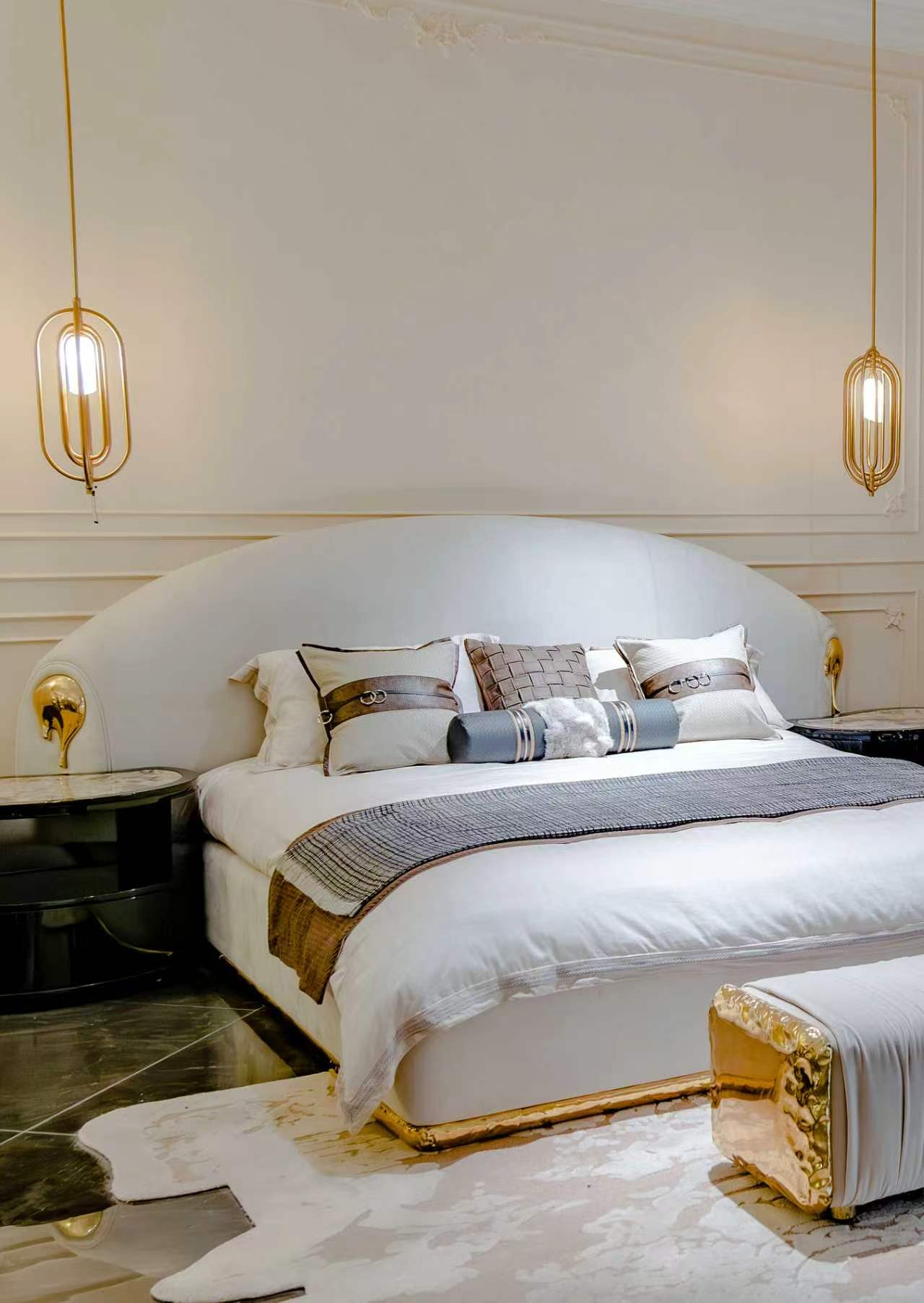
Strip away the leather, the marble, the marketing language, and the honest answer is that we are not selling furniture at all. We are selling a relationship with an object — the quiet confidence that comes from sitting in a chair you know will not wobble in a decade, from resting a cup on a marble top that was chosen and book-matched by hand, from living with a material that will grow more beautiful rather than less.
That is why the philosophy matters more than any individual product. A single desk can be excellent by luck or by habit. But a philosophy — build slowly, finish by hand, make it last, refuse the cheap shortcut — produces excellence again and again, whether the piece is a statement bedroom suite or an executive chair. The philosophy is the only thing here we have never allowed to be rushed. Everything else, including our own ambition, is subordinate to it.
And so the next time you see the phrase “100% hand finished,” read it literally and without romance. It means that when a piece finally arrives in your home, a person whose name you will never know stood over it at the end, ran a hand across the surface, and decided it was good enough to send to you. That person’s judgment — not a machine’s tolerance, not a price point — is the last word on everything we make. It is a small thing to build a business on. It has carried us since 1996, and we see no reason it will not carry us another thirty years.
—
> **