Lead Times in Custom Furniture Manufacturing: What Actually Drives Them
Every buyer in the hospitality and specification market knows the frustration of a delayed shipment. A hotel fit-out stalls because lounge chairs haven’t arrived. A residential project loses its critical path when statement tables are still in production. Lead times are not an abstract supply-chain metric; they determine whether a project delivers on schedule or sits in limbo, incurring holding costs and reputational risk.
This article breaks down the real drivers of custom furniture lead times from the perspective of a manufacturer operating across 200,000㎡ of production space in Foshan, China. The goal is straightforward: help you understand what moves the needle on timeline, where hidden delays come from, and how to plan with confidence.
The Procurement Pipeline: Materials That Set the Clock
Lead time begins long before any machine starts cutting. It begins with material availability, and for custom furniture this is often the single largest variable.
When we at ROSY ROSE receive a bespoke order, the first step is confirming whether the specified materials are in stock or require procurement from external suppliers. Solid hardwoods, premium veneers, specialty fabrics, and designer-grade metals each have different supply profiles. Some materials are readily available from established suppliers in the Pearl River Delta region. Others—particularly proprietary finishes, limited-edition textiles, or imported stones—may sit on extended procurement lists.
Material lead time depends on several factors:
- Stock availability: whether the exact grade, colour, and dimension are held in our warehouse
- Supplier response time: how quickly our network can confirm and deliver
- Custom processing requirements: pre-treatment, kiln-drying, or finishing prep before assembly
- Seasonal demand: peaks in construction and hotel-renovation seasons affect raw-material flow
One thing we have learned across our 200,000㎡ base is that early material confirmation prevents downstream chaos. We always recommend buyers lock in material selections during the design-development phase rather than after production has begun. Our bespoke process is built around this principle: we align material procurement with project scheduling so that supply bottlenecks do not become schedule bottlenecks.
Production Complexity and Workflow Design
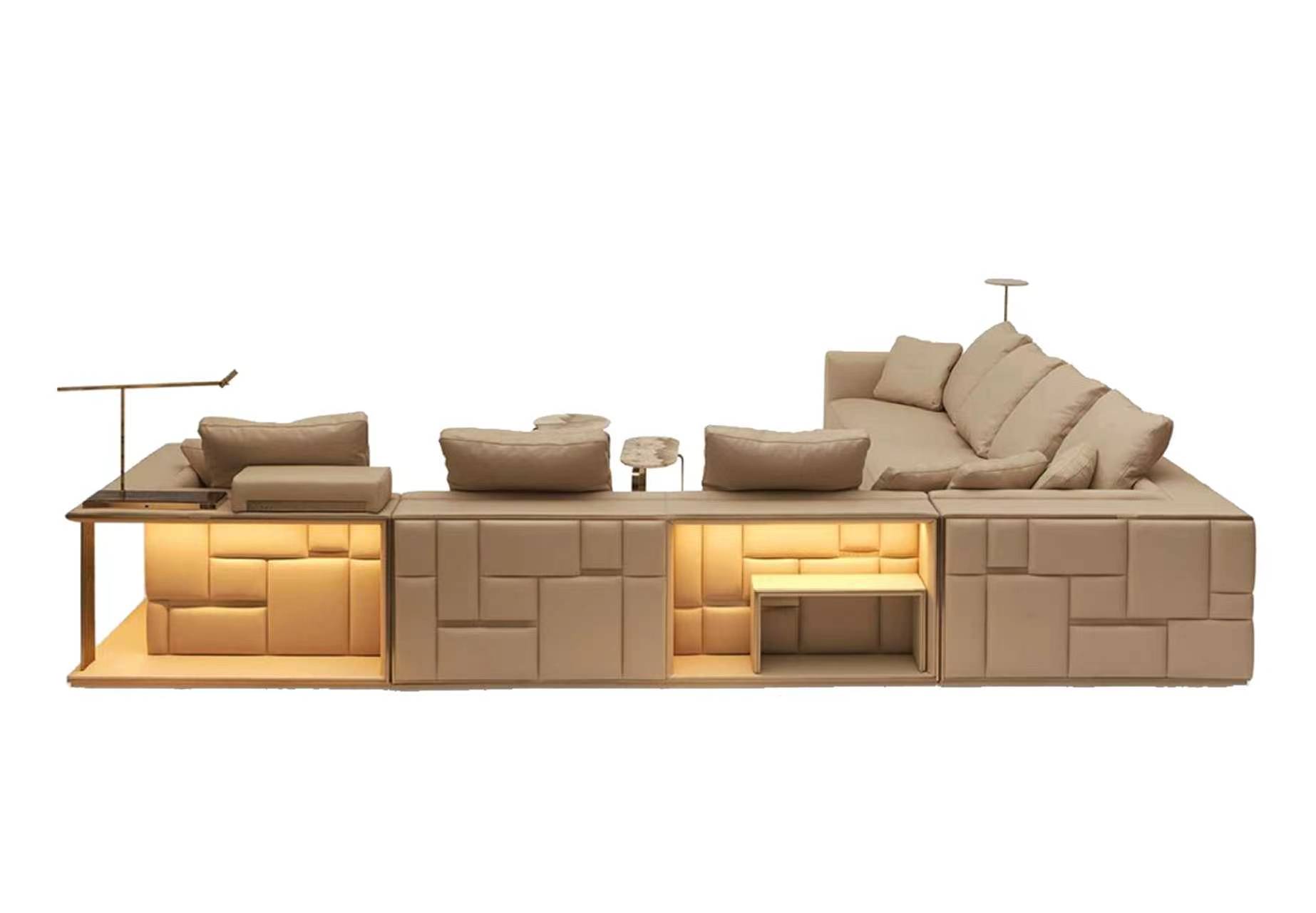
Not all custom furniture is created equal, and lead times reflect that difference clearly. A curved dining table with hand-finished solid-wood construction will move through our facility at a different pace than a modular upholstered seating system with standardized components.
In our factory, lead time is shaped by the number of distinct operations a product must pass through and the degree to which those operations can run in parallel. When core processes are kept in-house—as they are across our full production line at ROSY ROSE—scheduling flexibility increases significantly. Outsourced steps introduce external dependencies, each one adding risk to the timeline.
Key complexity drivers include:
- CNC machining versus hand craftsmanship: some decorative elements require skilled handwork that cannot be fully automated
- Assembly method: joinery, dowel systems, or modular connectors each have different build and inspection requirements
- Surface treatment: lacquering, oiling, powder-coating, or fabric application add time proportional to curing and finishing cycles
- Custom engineering: non-standard dimensions or structural requirements demand additional drawing, prototyping, and verification
The more unique the specification, the more time it requires in our workshop. That is not a limitation—it is simply the nature of genuine customization.
Quality Control as a Lead-Time Factor
Many buyers treat quality inspection as a separate phase that does not affect lead time. In practice, this is a misconception. Every inspection checkpoint consumes time, and the depth of inspection directly correlates with the reliability of the delivery.
At ROSY ROSE, each product passes through 16 inspection checkpoints before it leaves the factory. These checkpoints are embedded throughout the production workflow, not deferred to the end. Early inspections catch dimensional drift, material defects, and finish inconsistencies while there is still time to correct them. Late-stage detection means rework, which is the most expensive form of delay.
Quality control impacts lead time in three ways:
- Prevention: catching issues early avoids costly reprocessing downstream
- Verification: every finished item requires measurement, visual, and functional checks before packing
- Documentation: inspection records are prepared alongside each shipment for compliance and project files
When we discuss project timelines with a buyer, the 16-checkpoint process is factored into every estimate. You will never receive a schedule that assumes quality checks are optional or expeditable. This discipline is one reason our products have served hotel FF&E projects across 125+ countries since we opened our export channels in the 2000s.
Project Scale, Phasing, and Logistics
The size of your order and the complexity of delivery logistics are among the most underestimated lead-time drivers. A 200-unit contract for a boutique hotel will not simply take twice as long as a 100-unit order. Production scheduling, workforce allocation, and shipping consolidation all introduce nonlinear time costs.
Large orders often require phasing. We typically divide production into batches aligned with your installation schedule. Each batch moves through our facility independently, but the overall timeline is governed by the last batch to complete. Planning this phasing accurately requires close coordination between our production team and your project manager.
Shipping lead time adds another layer. Furniture exports from Foshan typically move via sea freight, and transit time depends on destination port, container availability, and customs processing. Multiple container loads require staggered loading and documentation. Overland transport from our facility to the port is a fixed variable we account for in every schedule.
Explore our product ranges to understand the scale of production we handle routinely. From single-project orders to multi-phase commercial rollouts, our 40+ years of B2B export experience gives us a realistic view of how lead times behave at every volume level.
Design, Approval, and Prototype Cycles
Before production begins, most custom projects pass through a design and approval cycle. This phase is not always counted in lead-time discussions, but it is essential to the final delivery date. Skipping or compressing this stage too aggressively is one of the most common causes of schedule disruption.
The design-approval cycle includes:
- Technical drawings and engineering documentation review
- Material and finish sample approval
- Prototype or pre-production sample creation for complex pieces
- Buyer sign-off on dimensions, tolerances, and finish specifications
In our experience, buyers who invest time in this phase experience fewer mid-production changes and far fewer post-delivery issues. A clear approval record also protects both parties if discrepancies arise later. Our design-house team works closely with specifiers to ensure that every drawing and sample reflects the final agreed specification before a single board is cut.
Realistic Timeline Planning: What to Expect
Here is a practical framework for understanding typical lead-time ranges in custom furniture manufacturing. These are broad indicators, not guarantees, and actual timelines depend on the specific project variables discussed above.
| Order Type | Typical Production Window | Key Variables |
|---|---|---|
| Standard catalog items | Shortest lead time | Stock availability, shipping distance |
| Semi-custom (existing profiles, custom finishes) | Moderate | Finish selection, batch size |
| Fully custom (new dimensions, specified materials) | Extended | Design complexity, material sourcing, inspection depth |
| Large-scale FF&E contracts | Phased delivery | Batch scheduling, logistics coordination, multiple quality checkpoints |
When you request a quote from us, we provide a detailed timeline breakdown that reflects the actual scope of your project. Vague estimates serve no one. We prefer to give you a schedule you can build your project plan around, with clear milestones from material confirmation through production completion and shipment.
Controlling Lead Time: Practical Strategies for Buyers
Lead-time management is a shared responsibility between the buyer and the manufacturer. Certain decisions are within your control and can materially improve your project timeline.
Effective strategies include:
- Locking material selections early: avoid changing fabric, wood, or finish specifications after production commences
- Providing complete and accurate specifications: incomplete drawings or ambiguous tolerances create rework loops
- Building realistic buffers into project plans: allow time for sample approval, customs clearance, and on-site receipt
- Communicating phasing needs upfront: if your installer needs partial deliveries, tell us at the planning stage
- Engaging with the manufacturer early: involve the factory during the design-development phase, not after contracts are signed
At ROSY ROSE, we work with project developers, interior designers, and importers who understand these principles. The relationships that last the longest are built on transparent communication about what is achievable and why. Learn more about our company background if you want to understand the full scope of our manufacturing capability.
When Lead Time Meets Quality: Why Rushing Is Risky
There is constant pressure in the hospitality and specification market to accelerate timelines. Buyers face hard deadlines driven by construction schedules, grand-opening dates, and investor expectations. It is understandable. But rushing custom furniture production introduces risks that often cost more than the time saved.
Prioritizing speed over process discipline can lead to:
- Insufficient curing time for finishes, resulting in surface defects that appear months after installation
- Compressed inspection windows, allowing dimensional inaccuracies to reach the delivery
- Insufficient material acclimatization, causing warping or joint failure in the installed environment
- Incomplete documentation, creating compliance gaps for project handover
The alternative is a measured pace that respects the physical and procedural requirements of quality manufacturing. In our four decades of B2B export experience, we have rarely seen a project benefit from aggressive timeline compression. We have seen many projects suffer from it.
How long does a typical custom furniture order take?
Lead times vary depending on order complexity, material availability, and project scale. We provide detailed timelines during the quoting phase based on your specific specifications and production schedule.
Can I expedite my order if my project timeline is tight?
While we prioritize timely delivery for every project, expediting carries trade-offs. We recommend discussing your timeline constraints early so we can structure production and phasing to accommodate your schedule as effectively as possible.
What information do I need to provide to get an accurate lead-time estimate?
Provide complete product specifications including dimensions, materials, finishes, quantities, and any special requirements. The more detail you share, the more accurate our production timeline will be. Reach out to our team to discuss your project and receive a scheduled quote.
When you partner with a manufacturer that values transparency over optimism, you gain a production schedule you can trust and a product that meets specification on arrival.
Specifications
| Specification | Value |
|---|---|
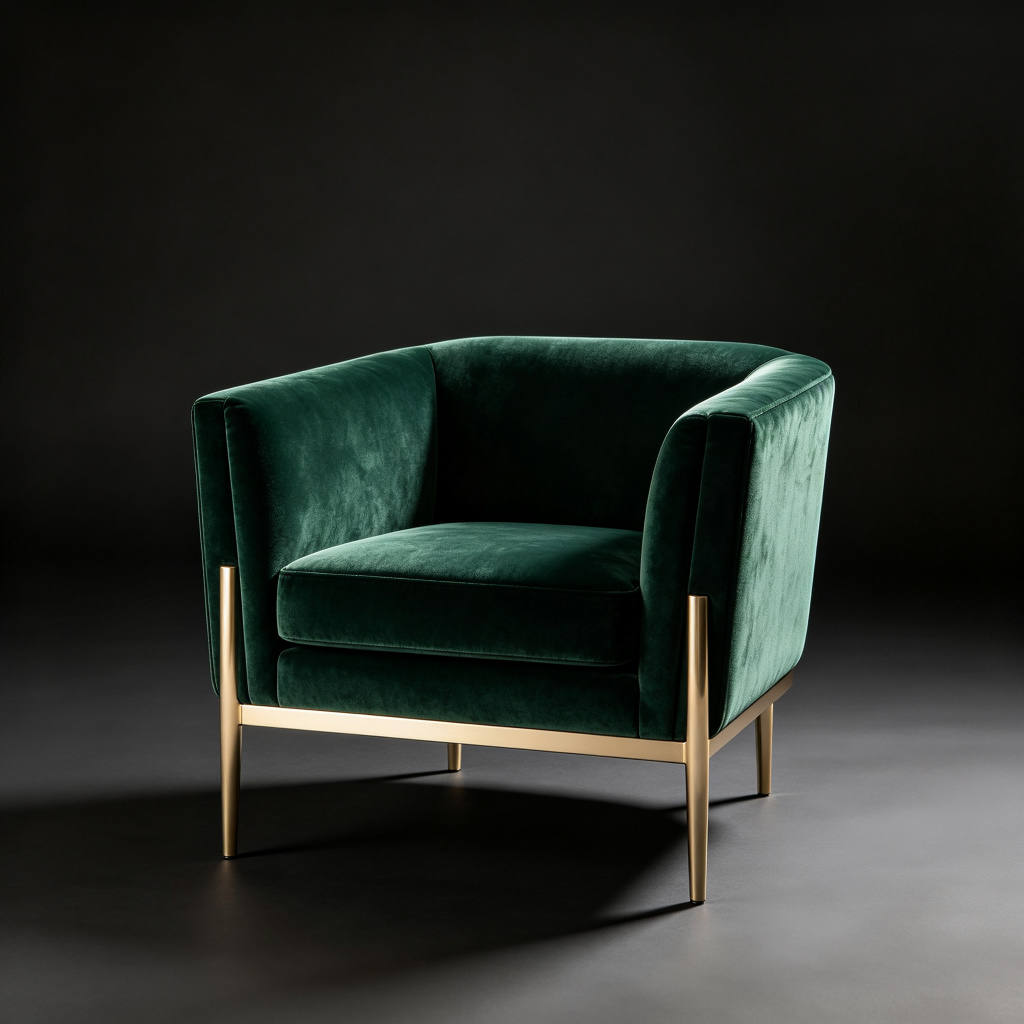
| Overall Dimensions (W × D × H) | 75 × 70 × 82 cm / 29.5 × 27.6 × 32.3 in — configurable |
| Seat Height | 45 cm / 17.7 in — configurable |
| Frame Material | Solid hardwood / powder-coated steel — configurable |
| Upholstery Options | Full-grain leather, performance fabric, designer textile — COM accepted |
| Finish Options | High-gloss lacquer, matte lacquer, veneer, brushed metal — configurable |
| Fill | High-resilience foam 35–45 kg/m³ |
| Weight per Unit | Approx. 18 kg / 39.7 lb |
| Packaging | 40 pcs per carton · Carton size 120 × 80 × 90 cm · 0.86 CBM per carton |
| Note: All specifications are made to order. Final dimensions, materials, and packaging are confirmed against project drawings before production begins. | |
Materials & Construction
The frame is constructed from kiln-dried solid hardwood or powder-coated steel, joined with traditional mortise-and-tenon or reinforced corner-block joints depending on the design. Every joint is tested for load stability before the unit moves to upholstery. The foam core uses high-resilience polyurethane in the 35–45 kg/m³ range, selected to maintain shape and support through repeated commercial use. Seat cushions are wrapped in Dacron for a consistent, premium feel that resists sagging over time.
Upholstery is sourced from certified commercial-grade suppliers. Full-grain leathers meet abrasion and light-fastness standards appropriate for hospitality environments. Fabric selections include options compliant with CARB P2, TSCA Title VI, and BS 5852 for fire safety where required. Wood finishes are applied through a multi-stage lacquer process — primer, sanding, topcoat, and curing — to achieve a surface durable enough for high-traffic specification projects.
Each piece passes through 16 inspection checkpoints before shipment, covering dimensional accuracy, joint integrity, surface finish quality, stitching consistency, and final packaging verification. Industry-standard tests such as BIFMA, EN 16139, and CAL TB 117 are referenced throughout production and can be documented on request.
Where It Works
- Hotel lobby and lounge seating
- Presidential and suite furniture packages
- Members’ club and private dining rooms
- Casino VIP lounge and premium seating areas
- Executive lounge and business centre fit-outs
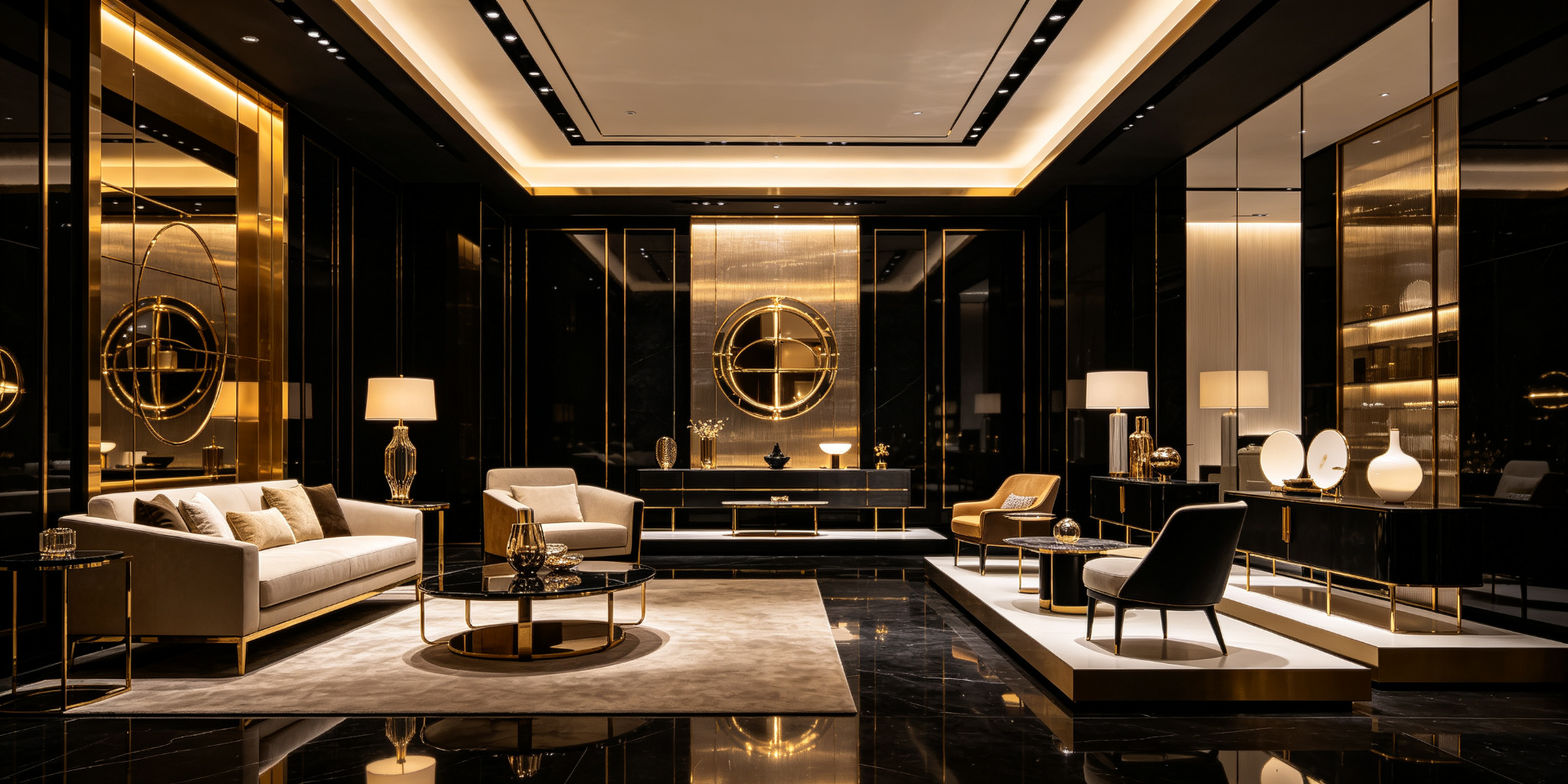
- Boutique showroom and specification showroom display
- High-end residence and landed-property projects
These applications share a common requirement: furniture that must look refined on day one and hold its specification standard through years of heavy use. The construction approach and material choices above are designed for exactly that environment.
Customisation Options
- Dimensions: width, depth, height, and seat height are all configurable to match floor plans and design drawings.
- Fabric & Leather: full textile and leather libraries available; customer-supplied material (COM) and colour (COL) orders are accepted with sample approval.
- Finish: lacquer colour, wood veneer species, and metal coating can be matched to project palettes.
- Layout & Configuration: modular arrangements and bulk-order specifications are coordinated to suit room layouts and repeat-unit orders.
All customisation is confirmed through detailed drawings and material samples before production starts, ensuring the final delivery matches the approved specification exactly.
Ordering, Lead Time & Logistics
Project orders have no fixed MOQ — quantities are sized to the project scope, with a standard sample first for approval. The typical workflow moves from drawing confirmation and material selection, through a physical sample review, into full production. Lead time generally ranges from 4 to 8 weeks after sample approval, depending on material procurement status, finish complexity, and order volume. Factory-direct pricing and FOB Foshan or EXW terms are standard for B2B projects. Sea freight packaging is reinforced with corner protection and moisture barrier wrapping to minimise transit damage.
ROSY ROSE operates from a 200,000㎡ factory in Foshan with 40+ years of B2B export experience across 125+ countries. Full production stays in-house on core processes, which keeps quality control tight and reduces the risk of sub-contractor delays. We work directly with hospitality FF&E buyers, importers, distributors, interior designers, and project developers to align production scheduling with project critical paths.
Frequently Asked Questions
What is the standard sample lead time?
Sample production typically takes 2–3 weeks after drawing and material approval. A pre-production sample is sent for confirmation before bulk manufacturing begins, protecting the project schedule from downstream surprises.
Do you accept COM and COL orders?
Yes. Customer-supplied material and colour specifications are welcome. Samples are reviewed against durability and fire-safety requirements before being released for production.
Can you supply furniture that meets BIFMA or EN 16139 standards?
Absolutely. Our production references BIFMA, EN 16139, CARB P2, TSCA Title VI, BS 5852, and CAL TB 117 as applicable. Test documentation is available on request for specification and compliance purposes.