How Hotel FF&E Procurement Teams Vet a Chinese Furniture Supplier
FF&E procurement for hospitality projects is rarely an off-the-shelf decision. A single hotel contract can span hundreds of SKUs, multiple room types, and deliveries across several construction phases. Buyers need assurance that a Chinese manufacturer can sustain quality, meet timelines, and scale alongside the project. That is why procurement teams follow a structured vetting process before any purchase order reaches the signature line.
At ROSY ROSE, we work closely with FF&E buyers, project developers, importers, and interior designers who bring the same checklist to every supplier evaluation. Over 40 years of export experience across 125+ countries has shown us what separates a convincing showroom presentation from a production floor that delivers consistently. This article walks through the exact vetting stages professional buyers apply, and explains what happens behind each checkpoint.
1. Factory Ownership and Production Scope
The first filter most procurement teams apply is simple: does the supplier own its production, or does it act as a trading company?
Hotel FF&E contracts demand traceability from raw material to finished piece. When a supplier owns the factory, every stage — from frame fabrication and upholstery to finishing and packaging — stays under one roof. That visibility reduces risk on lead times, material substitutions, and quality deviations.
In our experience, buyers also look for breadth within that ownership. A manufacturer that covers sofas, beds, dining chairs, tables, and upholstered components under one roof can simplify logistics and reduce coordination friction on multi-category projects. If you want to explore what full-line manufacturing looks like across product categories, our product catalog reflects the range available from a single production base.
2. Facility Scale and Showroom Representation
Factory size is a proxy for capacity. Procurement teams want to see whether the facility can handle a 200-room project, a resort campus, or a phased roll-out across multiple buildings without stretching beyond its limits.
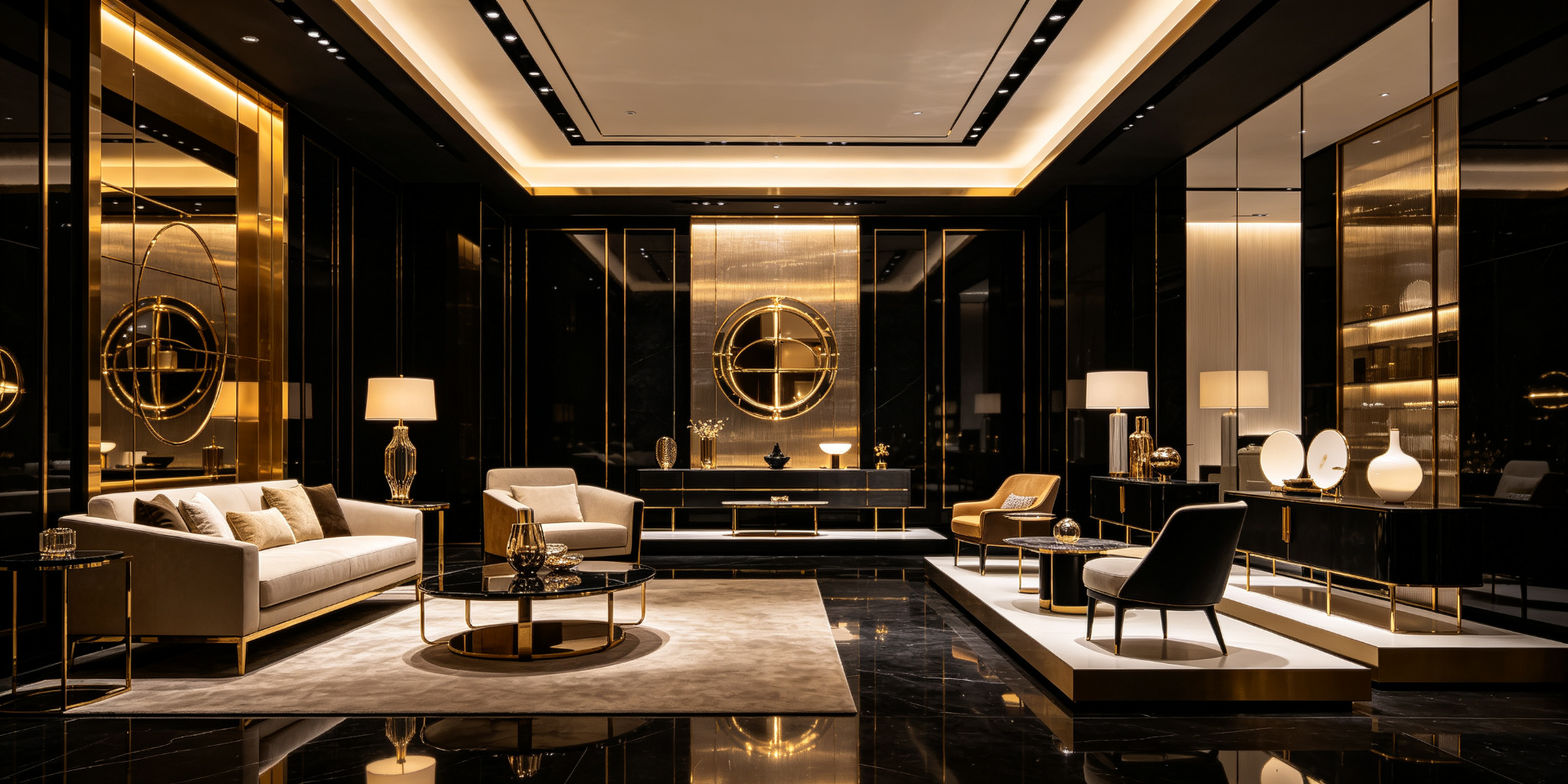
ROSY ROSE operates from a 200,000㎡ manufacturing base with a 100,000㎡ showroom. That scale matters because it allows simultaneous production lines, dedicated sampling workshops, and large-scale display environments where buyers can evaluate piece quality at human scale.
| Criteria | Why It Matters | Typical Benchmark (Established Manufacturers) |
|---|---|---|
| Factory area | Indicates production capacity and line flexibility | 100,000㎡+ |
| Showroom area | Supports buyer evaluation and specification | 50,000㎡+ |
| Production ownership | Ensures quality control across all工序 | Fully owned |
| Export footprint | Proves international logistics capability | 50+ countries |
3. Quality Control Checkpoints Before Shipment
Quality assurance is the single most discussed topic during supplier vetting. Procurement teams ask how many inspection steps exist, who performs them, and whether defects are caught before packaging.
At ROSY ROSE, every product passes through 16 inspection checkpoints before leaving the factory. Those checkpoints are distributed across incoming material verification, in-process monitoring, semi-finished reviews, and pre-shipment evaluation. The goal is not to catch problems at the end, but to prevent them throughout the workflow.
When buyers visit a facility, they pay attention to:
- Whether inspection stations exist at every production phase, not just at final packaging
- Documented procedures for non-conforming materials and rework protocols
- Consistency between samples approved during development and bulk units produced
- Traceability markings on finished goods that link back to batch records
4. Testing and Compliance Standards
Hotel contracts often require furniture to meet recognized fire, safety, and durability standards. Procurement teams verify which tests the supplier can perform internally and which are handled by third-party laboratories.
Common benchmarks referenced during vetting include CARB P2 and TSCA Title VI for composite wood emissions, BIFMA for commercial seating durability, BS 5852 for cigarette-resistance upholstery in the UK market, CAL TB 117 for flame retardancy in California projects, EN 16139 for chair strength, and various mattress safety standards depending on the destination.
What buyers typically request is not a certificate number, but a test report from an accredited laboratory that matches the product category and target market. The report should show the tested sample configuration, test method used, and pass/fail outcome.
Understanding which standards apply to your project market is essential. If you are working through specifications with a design team, our design house resources can help align product selection with the compliance requirements of your target region.
5. Lead Time Reliability and Project Phasing
A hotel opening date is not negotiable. Procurement teams vet suppliers on their ability to commit to realistic lead times and honor them under pressure.
Lead time evaluation usually covers three areas:
- Standard production lead time for repeat orders versus first-time development
- Buffer capacity during peak seasons or when multiple projects run in parallel
- Shipping coordination, including container loading optimization and documentation readiness
From our side, a 200,000㎡ production base allows phased output across different product lines. That means a hotel project requiring beds, sofas, and dining furniture can advance on parallel schedules instead of waiting for one category to clear before another begins. Buyers appreciate that structure because it mirrors the way construction teams manage room-by-room turn-over.
6. Sampling, Customization, and Design Support
Most FF&E contracts require approved samples before bulk production starts. Procurement teams use sampling as a practical test of whether a supplier can translate specifications into a physical product accurately.
The vetting questions around sampling typically include:
- How many revision rounds are included before final approval
- Whether fabric, leather, wood finish, and hardware selections can be matched from source swatches
- Whether the sample phase uses the same materials and construction methods as bulk production
- How development lead time is calculated and communicated
For buyers who need tailored solutions, custom development is often handled through dedicated project coordination. If your project involves unique dimensions, branded hardware, or specific material combinations, our bespoke project process outlines how we work with procurement and design teams from concept through to production release.
7. Pricing Transparency and Payment Terms
Procurement teams compare quotes not only on unit price but on what is included. A low price that excludes packaging, documentation, or compliance testing can create hidden costs downstream.
Professional buyers look for quotations that clearly separate:
- Product cost by SKU and material specification
- Packaging and crating details, especially for fragile or high-surface-finish items
- Testing and certification costs, if applicable
- Freight and logistics arrangements
- Payment terms tied to production milestones rather than upfront full payment
Long-standing manufacturers tend to offer more flexible payment structures because their cash flow is stabilized by repeat orders and established buyer relationships. That stability is itself a signal of reliability during supplier evaluation.
8. References, Repeat Business, and Portfolio Depth
The final vetting layer most buyers apply is reputation and track record. References matter because they provide proof that a supplier has delivered under real project conditions, not just in controlled factory visits.
What procurement teams usually request includes project case studies, reference contacts for ongoing or completed hospitality accounts, and evidence of long-term partnerships. Our history dates back to 1983, when ROSY ROSE started as a woodworking workshop in Foshan, China. Through the 1990s we built OEM capabilities, expanded into export markets in the 2000s, broadened our full-room product lines in the 2010s, and today operate the 200,000㎡ manufacturing base you see now. That timeline is not presented as prestige, but as evidence that the company has adapted through multiple market cycles and continues to serve hotel FF&E, distributors, importers, designers, and project developers worldwide.
For more background on who we are and how we operate, you can visit our about page.
Common Questions from FF&E Procurement Teams
How do you verify a supplier’s test reports and certifications?
We provide test reports from accredited third-party laboratories for the specific product categories you require. Reports include the test standard applied, the sample configuration, and the results. We do not manufacture certificate numbers or inflate compliance claims. Buyers are encouraged to cross-check laboratory credentials and confirm that the tested product matches the specifications in their contract.
Can procurement teams conduct factory audits before placing an order?
Yes. Factory audits are a standard part of our vetting process with professional buyers. Audits can be conducted on-site or through structured virtual sessions, depending on your location and project timeline. During an audit, teams typically review production lines, quality control stations, raw material storage, warehousing, and sampling capabilities. A prepared supplier will welcome that scrutiny because it validates the claims made during the quotation phase.
What is the typical minimum order quantity for a new hotel project?
MOQ expectations vary by product category and customization level. Established manufacturers with full production lines generally accommodate hotel project orders based on room count and SKU mix rather than enforcing rigid per-SKU minimums. The more practical question is whether the supplier has the capacity to deliver the full order within the agreed schedule, which is why lead time commitment and production planning clarity matter more than a single MOQ number.
If your procurement team is evaluating Chinese FF&E suppliers for an upcoming hospitality project, reach out to discuss your specifications and we will share the relevant facility and compliance details directly.
Specifications
| Parameter | Value |
|---|---|
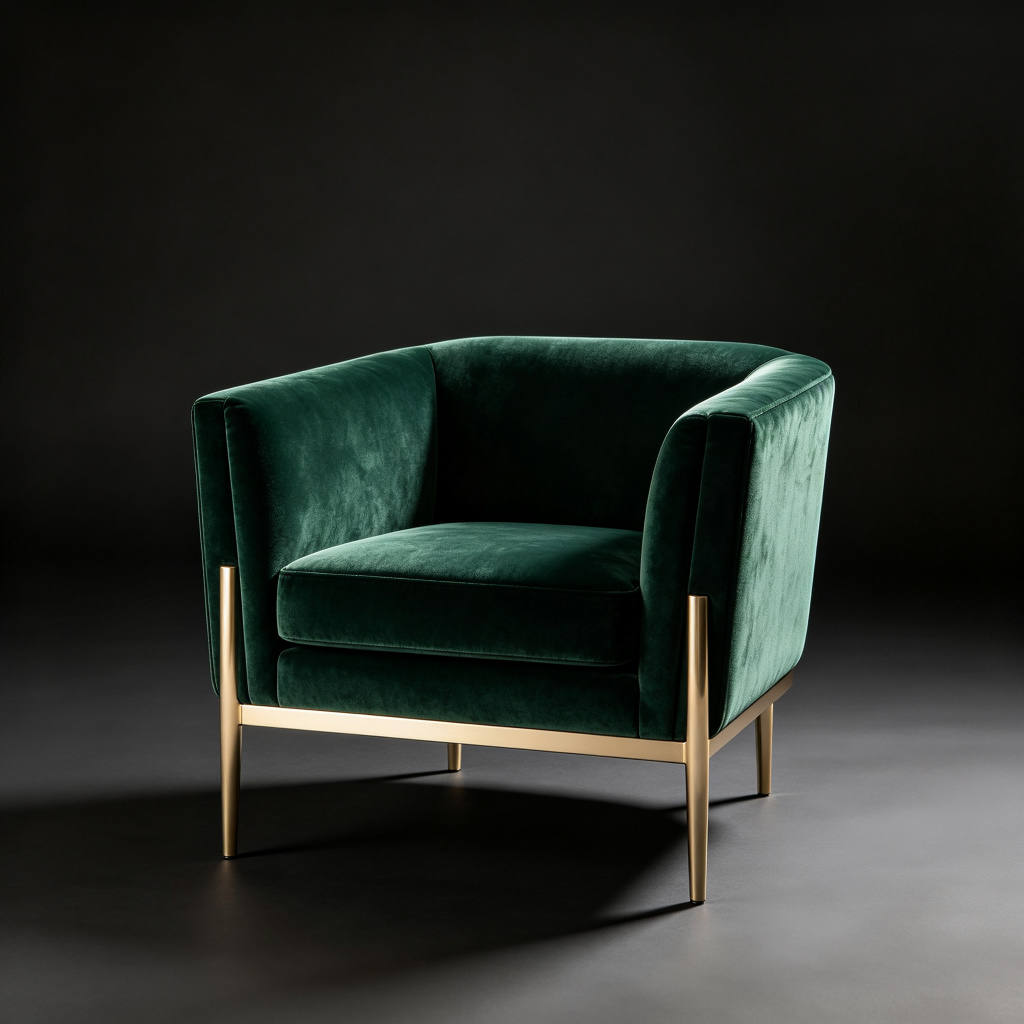
| Overall Dimensions (W×D×H) | Configurable; standard suite size ~220×95×82 cm / 86.6×37.4×32.3 in |
| Seat Height | 45 cm / 17.7 in (configurable) |
| Frame Material | Multi-layer laminated hardwood; options include steel-reinforced core for high-traffic contract use |
| Upholstery | Contract-grade leather or woven fabric; COM accepted |
| Finish Options | Varnished, lacquered, or painted wood bases; metal legs in brushed or polished PVD |
| Fill | High-resilience foam 35–45 kg/m³; pocket-spring seat cushion optional |
| Weight (per piece) | Approx. 38–52 kg depending on configuration |
| Packaging | Corner-protected carton or wooden crate; approx. 2.1 CBM per master pallet |
| Made to Order | All dimensions, materials, and finishes are configurable to project specifications. Final specs confirmed before production. |
Materials & Construction
The frame is constructed from kiln-dried hardwood with block-and-dowel joinery reinforced by metal brackets at high-stress joints. This approach meets the structural demands of hospitality environments where furniture undergoes continuous daily use. Foam densities are selected per zone: seat cushions typically use 40–45 kg/m³ high-resilience foam for long-term recovery, while back cushions may use slightly lower-density material for plush feel. Leather is sourced from contract-grade hides tested for abrasion and lightfastness; woven fabrics meet or exceed Martindale ratings appropriate for commercial duty cycles.
Wood finishes are applied through a multi-stage process involving primer, colour matching, and protective topcoat. Each piece passes 16 inspection checkpoints before leaving the factory, covering dimensional accuracy, joint integrity, surface quality, stitching consistency, and functional testing. Standards such as EN 16139 for seating strength and BIFMA for commercial durability inform our testing protocol. Chemical compliance, including CARB P2 and TSCA Title VI for composite wood components, is verified per market requirement.
Where It Works
- Five-star hotel lobby lounge and reception area
- Presidential and suite-class guest rooms
- Executive lounges and private members’ clubs
- Casino VIP waiting areas and high-limit salons
- Boutique hotel showrooms and design centres
- Residence and serviced-apartment developments
- Corporate hospitality suites and branded residences
Each application benefits from the same underlying specifications: commercial-grade construction, customisable aesthetics, and supply-chain reliability across large-format orders.
Customisation Options
- Dimensions: Width, depth, seat height, and back height adjusted to floor plan and accessibility requirements.
- Fabric & Leather: Full ROM selection plus COM (customer’s own material) accepted with sample approval.
- Finish: Wood tone, lacquer sheen, and metal PVD colour matched to design specification.
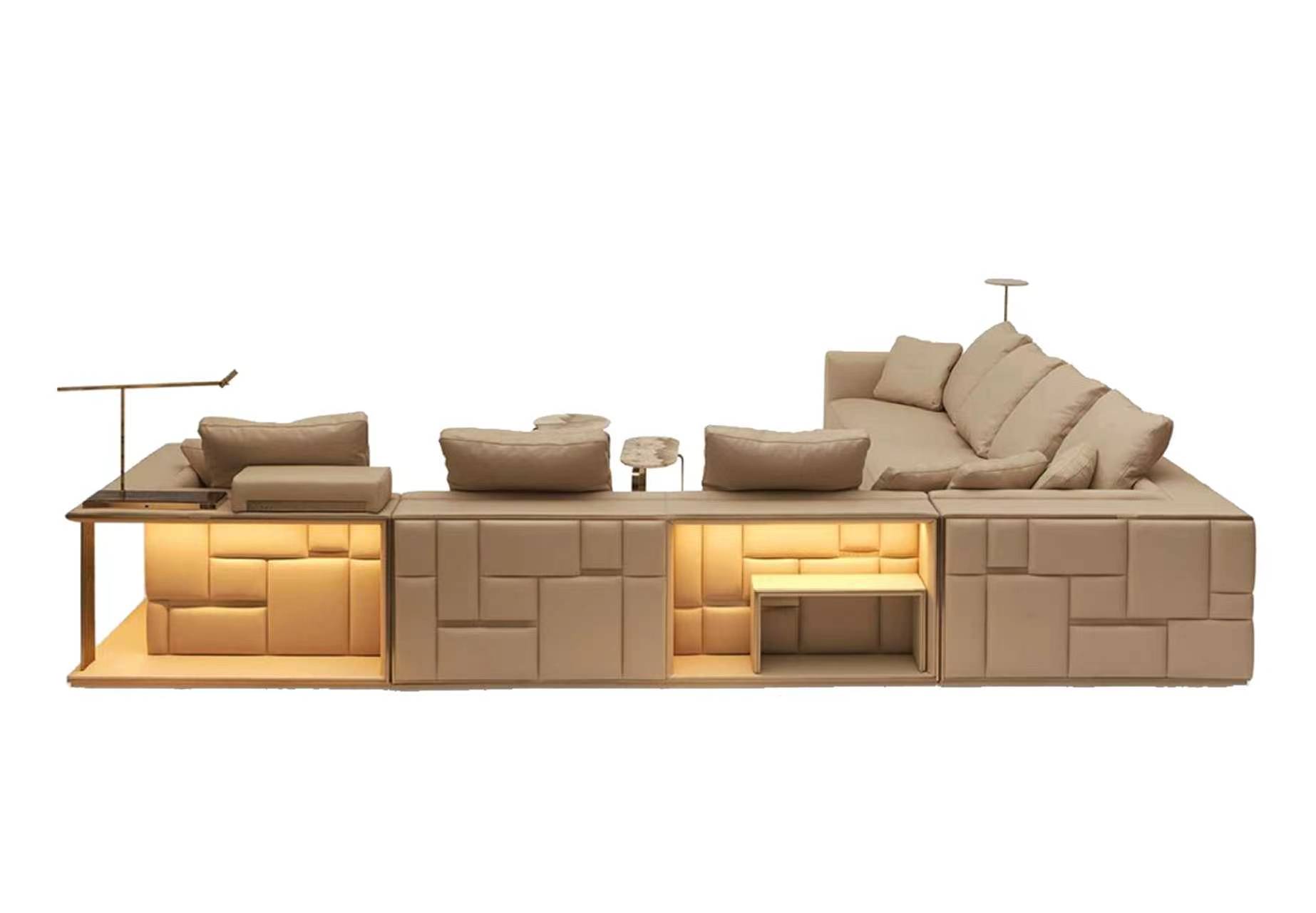
- Layout: Modular configurations available for lounge groupings and reception arrangements.
All custom drawings and material samples are confirmed with the specifier before production begins, ensuring the delivered pieces match the approved reference.
Ordering, Lead Time & Logistics
Project orders have no minimum quantity restriction; pricing is tiered according to volume. The typical workflow begins with a technical query, followed by sample production and physical approval. Once the sample is signed off, bulk production commences. Lead time ranges from 4 to 8 weeks depending on order size and complexity of custom specifications. Packaging is designed for ocean freight:每件 item is protected with corner guards, polybag wrapping, and sturdy cartons or wooden crates stacked on pallets.
Shipping terms are FOB Foshan or EXW, with logistics coordination available for container consolidation across multiple product categories. ROSY ROSE has over 40 years of export experience serving buyers across 125+ countries, and the logistics team manages documentation, loading plans, and shipment tracking throughout the process.
Frequently Asked Questions
Can you supply across multiple product categories from one factory?
Yes. ROSY ROSE operates a full-line manufacturing base in Foshan covering sofas, beds, dining chairs, tables, and upholstered components. Sourcing from a single facility simplifies coordination, reduces lead-time risk, and ensures consistency across categories on multi-SKU projects.
What quality checkpoints are applied before shipment?
Every piece undergoes 16 inspection stages, including frame strength verification, joinery integrity, surface finish review, upholstery stitching checks, and final dimensional confirmation. Compliance with relevant contract standards is documented per order.
Do you accept COM fabric and provide physical samples?
COM is accepted on all projects. We also produce pre-production samples in the chosen fabric or leather for buyer sign-off. A small library of standard materials is available for review, and custom samples can be arranged against approved specs.