Choosing a Furniture Supplier for Multi-Property Rollouts: A Procurement Leader’s Guide
Multiproperty hospitality projects are among the most complex procurement challenges in the industry. Whether you are equipping 12 boutique hotel rooms across four countries or outfitting a 200-key resort campus, the stakes are identical: every room must arrive on time, meet the same specification, and withstand years of commercial use. A single misstep in supplier selection can cascade into delayed openings, budget overruns, and reputation damage.
At ROSY ROSE, we have spent over four decades refining the kind of supply-chain capability that makes multi-property rollouts run smoothly. Founded in 1983 in Foshan, China, our journey from a small woodworking shop to a 200,000㎡ integrated manufacturing base has been driven by one principle: give hospitality operators a partner who can scale with them, not one who breaks under pressure. In this article, we break down what actually matters when evaluating a supplier for large-scale or multi-site furniture projects.
Why Multi-Property Rollouts Demand a Different Kind of Supplier
A single-room project is straightforward. You specify, you order, you receive. A multi-property rollout introduces compounding variables: staggered delivery schedules, identical specifications across different buildings, compliance across multiple jurisdictions, and the need for replacement parts years after the initial order. The supplier you choose must be comfortable operating at this level of complexity.
Many suppliers excel at one-off orders but stumble when asked to repeat successfully across dozens of projects. The difference comes down to infrastructure, process discipline, and supply-chain resilience. At our 200,000㎡ base, we manage everything from raw-material sourcing to final packaging under one roof. This means every room in a 150-unit project shares the same production lineage, the same quality standards, and the same traceability. There is no patchwork of subcontractors creating blind spots.
Manufacturing Scale and Capacity: What the Numbers Really Mean
When evaluating a supplier’s capacity, look beyond the headline square footage. A large factory that relies heavily on outsourced work will not give you the consistency required for a multi-property rollout. What matters is how much of your order stays within the supplier’s own facilities and which critical processes remain under direct control.
- Full-line in-house production: Core processes such as woodworking, upholstery, metal fabrication, and finishing are all handled internally at our facility. Nothing critical is subcontracted, which eliminates the risk of quality drift between different vendors.
- Integrated logistics and export operations: With over 40 years of B2B export experience, our team has managed shipments to 125+ countries. We understand customs documentation, container optimization, and regional compliance requirements without needing external brokers for every new market.
- Dedicated showroom for specification validation: Our 100,000㎡ showroom allows project teams to review actual product quality before committing to a large order. Seeing and touching the piece removes ambiguity from spec sheets and prevents costly surprises upon delivery.
Capacity is not just about volume—it is about predictability. The right supplier should be able to commit to a timeline and deliver against it, even when the project expands or schedules shift.
Quality Consistency Across Hundreds of Units
In a multi-property rollout, consistency is non-negotiable. A guest who experiences premium comfort in one room should not encounter lower-grade materials in the next. Quality inconsistency is one of the most common complaints hospitality operators raise about furniture suppliers, and it almost always traces back to inadequate process controls or fragmented manufacturing.
At ROSY ROSE, every piece passes through 16 inspection checkpoints before it leaves the factory. These checkpoints cover raw material acceptance, dimensional verification, joint integrity, surface finish, upholstery stitching, hardware function, and final packaging. Each checkpoint is documented and signed off by a designated inspector. This system is not theoretical—it is the result of decades of refining quality protocols for projects ranging from boutique hotel suites to large-scale resort developments.
Alignment with International Standards
While specific certification requirements depend on your project location and target market, a qualified supplier should be able to align production with recognized industry benchmarks. These include materials and emissions standards such as CARB P2 and TSCA Title VI for North American markets, fire-safety regulations like BS 5852 for the UK and CAL TB 117 for the US, and performance standards such as BIFMA and EN 16139 for contract-grade furniture. Discussing these requirements during the sourcing phase ensures the supplier can deliver compliant product from the start.
Delivery Reliability and Project Phasing
Multi-property rollouts rarely happen all at once. More often, they unfold in phases—Phase 1 might open in six months, Phase 2 in twelve, and Phase 3 two years out. Your supplier needs a track record of managing phased deliveries without compromising quality or inflating costs through rushed production.
In our experience, successful phased delivery depends on three operational capabilities:
- Production scheduling discipline: A structured production calendar that allocates capacity for each phase well in advance, reducing the risk of last-minute delays.
- Inventory buffering for repeat items: Maintaining prepared components or finished stock for recurring specifications, which shortens lead times for later phases.
- Realistic lead-time communication: Providing accurate timelines during the quoting stage rather than optimistic ones that look good on paper but fail under production pressure.
These practices are especially important when managing logistics across multiple international sites. Coordinating container loads, freight routes, and on-site delivery windows requires a supplier that treats logistics as part of its core competency rather than an afterthought.
The Role of Design and Customization in Large-Scale Projects
Multi-property rollouts are rarely cookie-cutter projects. Each destination may require aesthetic adjustments—different fabric palettes, localized material preferences, or region-specific compliance requirements. A supplier that treats customization as an exception rather than a standard offering will slow your project down.
Explore our product lines to see how our light-luxury positioning adapts across categories, or visit our design house to understand how we support specifiers in developing bespoke collections for large hospitality groups.
Specification Support for International Teams
When working with interior designers and project managers across different time zones, clear specification documentation becomes essential. The best suppliers provide detailed spec packs, material swatches, digital renderings, and physical samples—all organized in a way that reduces back-and-forth and keeps the procurement team aligned. At our facility, we produce technical drawings and material packages that match the documentation standards expected by international hotel brands and developer teams.
Cost Management Across Multiple Projects
Budget predictability is a major concern for any multi-property operator. Unforeseen costs during production—material substitutions, expedited shipping fees, or rework due to quality issues—are the kinds of expenses that erode margins across an entire rollout. A supplier that communicates transparently about pricing and proactively flags potential cost drivers earns trust faster than one that surprises you later.
Some practical steps to protect your budget:
- Request a detailed cost breakdown during the quoting phase, including unit pricing, tooling costs, freight estimates, and packaging specifications.
- Ask about volume-tier pricing and how repeat orders are priced compared to the initial purchase.
- Clarify what is included in the quoted price—sample production, third-party inspections, and spare parts allowances often carry additional fees.
- Confirm whether the supplier provides a spare-parts program, which is critical for maintaining consistency during later project phases and ongoing replacements.
Comparing Key Supplier Capabilities
The table below outlines what to evaluate when shortlisting a supplier for a multi-property rollout.
| Capability | What to Look For | Why It Matters |
|---|---|---|
| Manufacturing footprint | Large integrated facility with core processes in-house | Ensures consistent quality and eliminates subcontractor risk |
| Export track record | Proven history across multiple countries and regions | Demonstrates logistics competence and compliance familiarity |
| Quality control system | Documented inspection checkpoints with sign-off accountability | Prevents quality drift across large order volumes |
| Phased delivery experience | Track record managing multi-phase project timelines | Protects opening schedules and reduces expedite costs |
| Showroom and sample availability | Physical space for product evaluation before bulk commitment | Reduces specification errors and builds buyer confidence |
| Design and customization support | Dedicated team for bespoke development and spec documentation | Enables adaptation to different property aesthetics and markets |
Building a Long-Term Partnership, Not Just a Transaction
The best multi-property rollouts are not one-off purchases—they are the beginning of a long-term supplier relationship. Hotels operate for decades, and furniture needs replacement, refresh, and expansion well beyond the initial installation. A supplier who understands your brand, remembers your specifications, and maintains continuity across projects becomes a strategic asset.
At our 200,000㎡ base in Foshan, we work with hotel groups, importers, and distributors who return for subsequent properties because the process is familiar and the outcomes are predictable. That predictability comes from treating every project with the same rigor, regardless of size. Whether it is a 30-room boutique project or a 300-room resort, the commitment to in-house production, disciplined quality control, and transparent communication remains the same.
For more information about how we support large-scale hospitality projects, visit our contact page to connect with our project team directly.
Conclusion
Choosing a furniture supplier for a multi-property rollout is a decision that echoes across your entire portfolio. The right partner brings scale without sacrificing consistency, flexibility without compromising standards, and transparency without hiding cost drivers behind vague promises. Focus on what matters: integrated manufacturing, documented quality systems, proven export experience, and a supplier that sees your project as the start of a lasting relationship rather than a single transaction.
If you are ready to discuss your upcoming rollout, reach out to our team—we would welcome the opportunity to show you what a supplier built for this exact challenge can deliver.
How does ROSY ROSE handle staggered deliveries across multiple properties in different countries?
We schedule production phases in advance and maintain inventory buffers for recurring specifications, allowing us to deliver to multiple sites on different timelines without rushing later phases. Our 40+ years of export experience across 125+ countries means our logistics team is equipped to manage cross-border shipments, customs documentation, and regional delivery requirements for each phase independently.
Can a supplier maintain identical quality across thousands of units produced months apart?
Yes, provided the supplier keeps all core processes in-house and maintains documented quality checkpoints throughout production. Because we manufacture the full product line at our own facility rather than outsourcing critical steps, we can ensure that a piece produced in month one meets the same standards as one produced in month twelve. Each unit passes through 16 inspection checkpoints before leaving the factory.
What should I ask a supplier before committing to a large or multi-phase order?
Start by asking about their manufacturing footprint and whether core processes are performed in-house or outsourced. Request examples of similar multi-property projects they have completed, including how they managed phased deliveries and quality consistency. Ask for their quality control process, including inspection checkpoints and documentation practices. Finally, verify their export experience and ability to handle the compliance requirements of each destination market.
Specifications
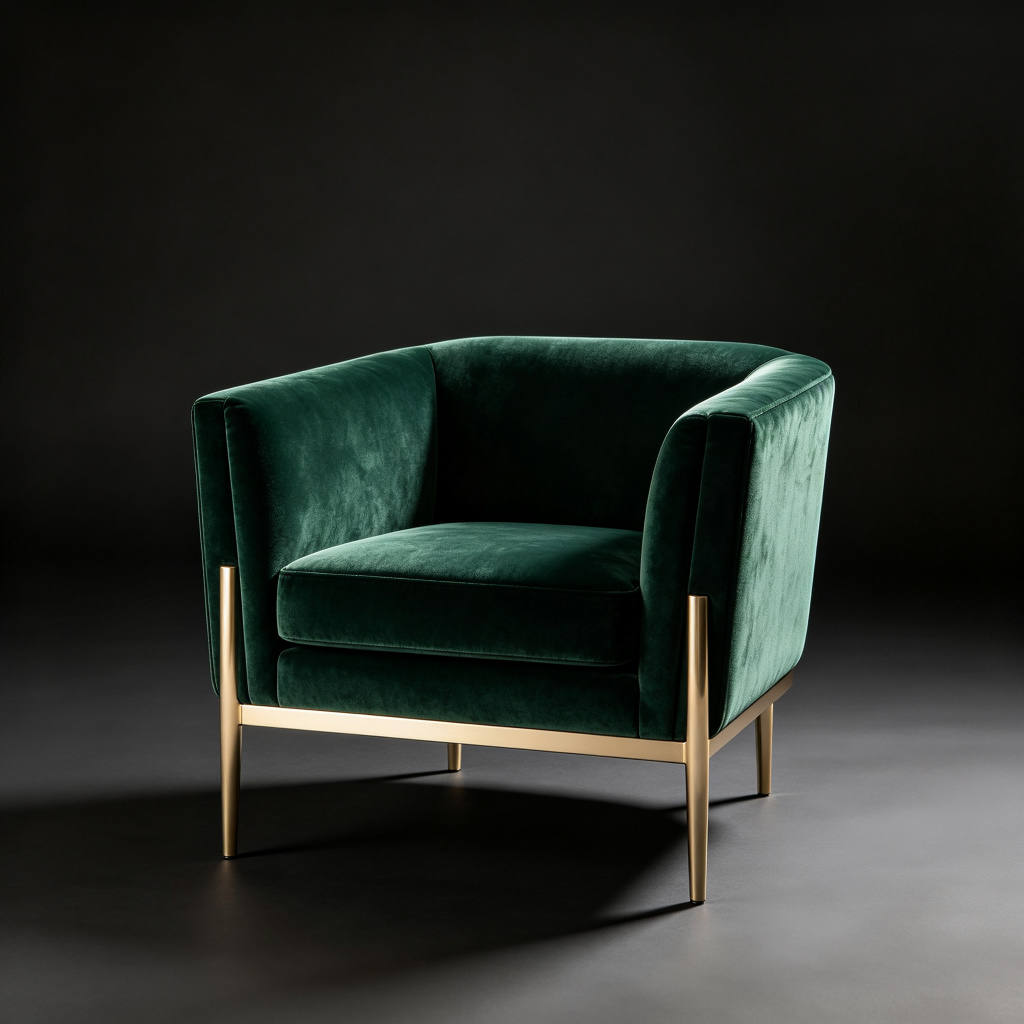
| Overall Dimensions | 82 × 80 × 85 cm / 32.3 × 31.5 × 33.5 in |
| Seat Height | 45 cm / 17.7 in |
| Frame Material | Solid hardwood with concealed steel reinforcement |
| Upholstery Options | Full-grain leather or commercial-grade fabric (COM/COL accepted) |
| Finish Options | Matte lacquer, satin lacquer, or custom RAL/color match |
| Fill | High-resilience foam, 38–42 kg/m³ |
| Weight | Approx. 18 kg / 39.7 lbs |
| Packaging | 1 pc per carton · 0.65 CBM |
| Note | Made to order — all dimensions, materials, and finishes are configurable per project specification. |
Materials & Construction
The frame uses double-doweled mortise-and-tenon joinery reinforced with concealed metal braces at all primary stress points. This construction method distributes load evenly and maintains structural integrity through years of commercial cycling. Joints are glued, clamped, and cured before assembly proceeds to the next stage. Edges are hand-sanded and finished to a smooth surface ready for lacquer application.
Cushion cores are cut from high-resilience polyurethane foam rated 38–42 kg/m³, a density range selected for contract seating to resist permanent compression set. Upholstery selections include full-grain hides and fabric collections tested for abrasion and light fastness. Fire-performance data for selected materials is available against BS 5852, CAL TB 117, and EN 16139. COM and COL submissions are reviewed for compatibility and flame-performance alignment before production authorization.
Surface finishing follows a multi-stage lacquer process: primer application, curing, sanding, base coat, and top coat. Each layer is inspected for adhesion and uniformity. Before any piece leaves the factory, it passes through 16 quality inspection checkpoints covering dimensional accuracy, joinery integrity, surface finish, upholstery stitching, hardware function, and packaging security.
Where It Works
- Hotel lobby and lounge seating
- Presidential and suite-category furnishings
- Members’ club and private dining areas
- Casino VIP lounges
- Executive lounge and business center
- Boutique showroom and display environments
- Serviced-apartment and private-residence developments
This piece is specified across hospitality and trade sectors where design continuity, material durability, and consistent quality across multiple units are essential. Every installation benefits from the same production controls and traceability regardless of project location or phase.
Customisation Options
- Overall dimensions adjusted to suit specific room layouts
- Frame finish in any RAL code or custom color match
- Upholstery in manufacturer collections or client-submitted COM/COL
- Leg and hardware options in brushed, polished, or powder-coated metal finishes
- Cushion firmness selectable within commercial performance range
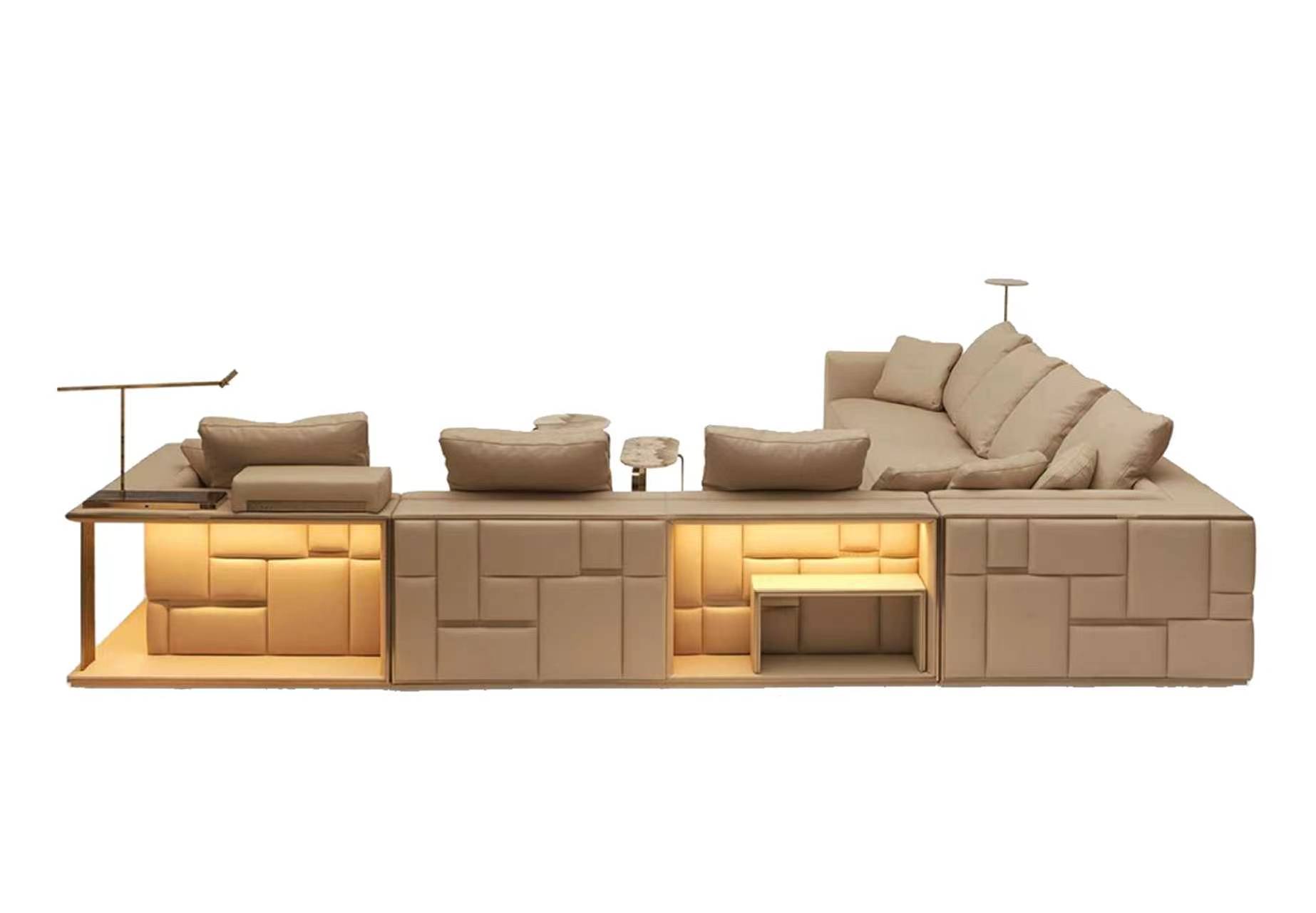
- Modular or sectional configurations for open-plan arrangements
- Technical drawing and specification confirmed with the buying team before production begins
Ordering, Lead Time & Logistics
Project orders have no minimum quantity threshold; each order is scoped against an approved specification document and production schedule. A physical sample or digitally approved reference is required before bulk production starts, ensuring material, finish, and dimensional accuracy align with the signed drawing. Typical lead time ranges from 6 to 10 weeks from approval to shipment, varying by order volume and configuration complexity. A dedicated project coordinator manages revisions and communicates status throughout the process.
Pieces are individually packaged in multi-layer cartons with reinforced corner protection and moisture barrier film, optimized for sea-freight container loading. Shipping terms are FOB Foshan or EXW, with container load plans provided to match phased project delivery schedules. Reorder batches and replacement parts are tracked against the original specification to maintain consistency across subsequent deliveries.
Frequently Asked Questions
What compliance documentation is provided for specification and procurement files?
Material data sheets, fire-performance test summaries referencing applicable standards including BS 5852, CAL TB 117, and EN 16139, and CARB P2 and TSCA Title VI compliance statements are supplied on request. BIFMA test references are available for seating products. Certificate numbers are not pre-issued; documentation is prepared per project based on the materials and finishes selected.
Can matching pieces be produced across multiple projects in different countries?
Yes. Because all production runs from the same Foshan facility, repeat orders follow identical material batch controls, finish specifications, and quality checks. Phase deliveries and staggered ship dates are coordinated to align with each property opening schedule.
How are changes handled after an order is confirmed?
Modifications are accommodated freely before the approval-to-production handoff. After production has begun, changes are assessed for impact on lead time and cost on a case-by-case basis. The assigned project coordinator ensures all revisions are documented and communicated to the relevant production team before any work proceeds.