How Hotel FF&E Procurement Teams Vet a Chinese Furniture Supplier
For hospitality procurement professionals, choosing a Chinese FF&E supplier is never a casual decision. A single misstep — a batch of upholstered chairs that fails fire safety testing, a veneer that peels after eighteen months, a container that arrives late and misses a hotel’s opening deadline — can cost hundreds of thousands of dollars and damage a brand’s reputation. That is why modern FF&E teams have built rigorous vetting frameworks before they ever request a single sample. In our experience, the most successful partnerships are forged not through price alone but through demonstrated capability, verified compliance, and transparent operations.
Why the Vetting Process Has Become Non-Negotiable
Hotels today operate under tighter margins, stricter regulatory scrutiny, and guest expectations that leave no room for premature furniture failure. A five-star property in the Middle East, a boutique chain expanding across Southeast Asia, a resort developer in the Caribbean — all of them face the same pressure: deliver on time, on spec, and within budget. When a supplier cannot provide documented proof of quality control, testing, and on-time delivery, the procurement team’s answer is straightforward: move to the next candidate.
At ROSY ROSE, we have watched this shift over forty-plus years of B2B export. What was once an informal exchange of quotes and photos has evolved into a multi-layered due diligence process that mirrors the standards procurement teams apply to any strategic supply chain partner.
Chapter One: Factory Audit and Production Capacity Verification
The first checkpoint any serious FF&E buyer will examine is the factory itself. Can the supplier actually deliver what they promise? This is where virtual audits, video walkthroughs, and sometimes on-site visits become essential tools.
Our 200,000㎡ manufacturing base in Foshan was built from the ground up for contract-grade production, not retail display. Across our facility, you will find dedicated lines for upholstery, wood joinery, metal fabrication, and finishing — all under one roof. That vertical integration matters enormously for procurement teams because it eliminates the risk of hand-offs between multiple subcontractors, each with their own quality standards and delivery schedules.
- Raw material sourcing and incoming inspection protocols
- Dedicated production lines per product category (seating, tables, bedroom, living)
- In-process quality checkpoints at every major assembly stage
- Finished goods inspection before packing and loading
- Packaging standards tested for ocean freight and multi-modal transit
When we opened our doors to auditors from major international hotel groups, they asked the same question repeatedly: who is responsible when something goes wrong? Our answer has always been simple — because we control every stage from lumber to loading bay, accountability stays internal. You can learn more about our operations at our company profile page.
Chapter Two: Compliance and Certification Validation
No hotel FF&E order moves forward without confirmed compliance with the fire, emissions, and durability standards required by the destination market. Procurement teams will cross-reference every claim against independent lab reports, and they will reject anything that lacks traceability.
| Standard | Region / Application | What It Covers |
|---|---|---|
| CARB P2 / TSCA Title VI | United States | Formaldehyde emissions from composite wood products |
| BIFMA | United States / Global | Commercial seating and workload furniture durability and safety |
| BS 5852 | United Kingdom | Furniture upholstery fire resistance — cigarette and flame sources |
| CAL TB 117 | United States (California) | Flammability of upholstered furniture for residential and commercial use |
| EN 16139 | European Union | Strength, durability, and safety for seating furniture |
These standards are not interchangeable. A supplier claiming one certification does not automatically satisfy another market. At ROSY ROSE, we work with accredited third-party laboratories to generate test reports that match the specific requirement of each project. Our team ensures the documentation package is complete before the first order is placed — not after a buyer asks for it.
Chapter Three: Sample Evaluation and Material Transparency
After the factory audit and compliance review come samples. This is where abstract specifications become physical reality. Procurement teams will inspect stitching density, frame joinery, foam resilience, fabric hand-feel, and finish consistency. They will also ask for material passports — detailed breakdowns of every component including foam density, fabric composition, wood species, and finish type.
We require our partners to understand that sample approval is a milestone, not a formality. The samples we produce reflect exactly what will ship — same materials, same construction, same inspection process. Across our 200,000㎡ base, every sample batch is logged and traceable to the production run it represents. This transparency is what separates a professional contract manufacturer from a trading company that sources from whoever has stock.
Chapter Four: Lead Time, Logistics, and After-Sales Accountability
A beautiful collection of furniture is irrelevant if it arrives six weeks late or with insufficient spare parts. FF&E procurement teams evaluate suppliers on their logistics maturity: container loading optimization, shipping schedule adherence, damage replacement protocols, and spare part inclusion.
Our standard practice includes:
- Packed spare parts (fabric rolls, leg caps, cushions) included at 2-3% of order quantity
- Pre-shipment photographic documentation of each container load
- Container sealing and GPS tracking available on request
- Written warranty terms covering manufacturing defects for a defined period
- Dedicated project coordinator assigned per order for the full delivery cycle
When a buyer is managing a 300-room hotel fit-out across four continents, having a single point of contact who understands both the technical and logistical dimensions of the order is invaluable. That is a standard we hold ourselves to.
Chapter Five: Design Capability and Customization Limits
Many hotel projects require bespoke specifications — a lobby chair in a custom fabric, a headboard with integrated lighting, a dining table in a non-standard dimension. Procurement teams need to know whether a supplier can translate design intent into manufacturable product without excessive cost or delay.
Our design house works closely with interior designers and specifiers from the earliest concept phase. We review drawings for manufacturability, suggest material substitutions that maintain aesthetic intent while improving cost efficiency, and provide 3D visualizations before tooling begins. If you are working with a designer on a custom project, our design house team can support the full specification process from concept to production.
It is important to be honest about customization limits. Not every idea is equally viable at scale, and a good supplier will tell you when a design choice creates unnecessary risk — whether that is a joint detail that cannot hold under commercial use, a fabric that fades prematurely, or a finish that cannot pass the required abrasion test.
What the Vetting Process Reveals About Long-Term Partnership Potential
The companies we work with longest are not necessarily the ones with the lowest unit price. They are the ones that treat vetting as a mutual process — asking hard questions, requesting documentation, visiting the factory, and evaluating how the supplier responds to scrutiny. A supplier that welcomes scrutiny and provides clear, complete answers is demonstrating confidence in its own operations. A supplier that deflects, delays, or provides vague responses is signaling a risk that no procurement team should ignore.
For procurement teams navigating the Chinese supplier landscape, the message is clear: demand evidence, verify independently, and build your shortlist around demonstrated capability rather than catalog appearance. Explore our product range to see the scale and scope we bring to hospitality projects worldwide.
Can a supplier’s certifications be trusted if they are only provided upon request?
Reliable suppliers maintain a complete and current documentation portfolio that is available proactively, not selectively. If test reports, material passports, or factory audit summaries are only produced after repeated follow-up, that is a red flag. Professional contract manufacturers keep compliance records organized by project and market requirement so they can respond within 24-48 hours.
How do procurement teams handle disputes when delivered goods do not match approved samples?
The strongest contracts include a signed and sealed master sample kept by both parties, along with a clear deficiency resolution clause. Our factory retains archived samples for every project, and we conduct a final pre-shipment inspection against those reference samples before any container is sealed. This dual-archive system gives both buyer and supplier an objective standard to reference if a quality dispute arises.
Is it feasible for a small hotel group with a limited budget to go through this vetting process?
Absolutely. A scaled-down version of this vetting process — a factory video walkthrough, sample evaluation, compliance document request, and a clear written agreement on lead times and warranty — is manageable even for smaller orders. Contact our team to discuss how we can accommodate different project scales while maintaining the same standards of quality and accountability.
If your team is ready to evaluate a Chinese FF&E supplier with the same rigor you would apply to any strategic supply chain decision, start by requesting a virtual factory tour and a current compliance documentation package from our project team today.
Specifications
| Parameter | Specification | Configurable? |
|---|---|---|
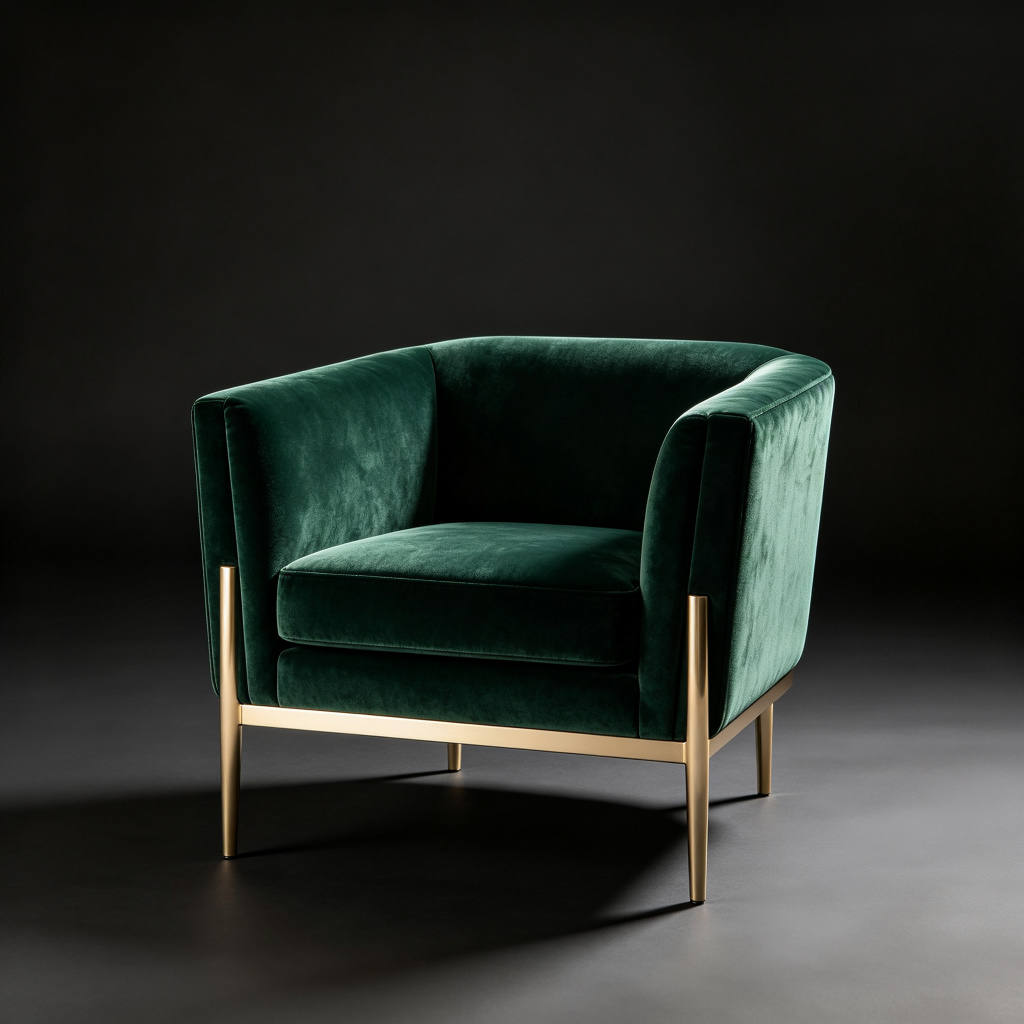
| Overall Dimensions (W×D×H) | 85 × 80 × 78 cm (33.5 × 31.5 × 30.7 in) | Yes — tailored to floor plan |
| Seat Height | 46 cm (18.1 in) | Yes — 42–50 cm available |
| Frame Material | Solid hardwood (oak, beech, or walnut); steel sub-frame option | Yes — species and gauge selectable |
| Upholstery Options | Full-grain leather, top-grain leather, commercial-grade fabric, velvet | Yes — COM accepted |
| Finish Options | Natural lacquer, stained, painted, veneer-matched | Yes — RAL / Pantone available |
| Fill | High-resilience foam, 35–45 kg/m³ density; down-blend option | Yes — density tier selectable |
| Weight (per piece) | Approx. 18–24 kg (39.7–52.9 lbs) | Varies with configuration |
| Packaging | 1 pc / export carton; EPE foam protection; corner guard | — |
| CBM per piece | Approx. 0.55–0.72 CBM | Varies with packaging choice |
| Note | All dimensions and materials are made-to-order. Final specs confirmed against approved drawings before production commences. | |
Materials & Construction
The frame is constructed from kiln-dried solid hardwood or a reinforced steel sub-structure, joined with mortise-and-tenon or steel-bracket systems that meet BIFMA and EN 16139 load requirements. All wood is seasoned to 8–12% moisture content to prevent warping in varying climate conditions — critical for projects shipped across multiple zones. Edges and joints are hand-sanded and finished with a multi-layer lacquer or stain process, available in satin, semi-gloss, or matte sheens.
Upholstery options span full-grain and top-grain leathers sourced for contract use, alongside commercial fabrics rated for high traffic. Each material is tested against relevant standards — CARB P2 and TSCA Title VI for composite wood components, BS 5852 or CAL TB 117 for flame resistance depending on project location. Foam cushions are cut from blocks rated between 35 and 45 kg/m³ density, selected based on seat application and durability expectations.
Every piece passes through 16 inspection checkpoints before leaving the Foshan facility. These cover frame integrity, joint tightness, surface finish quality, upholstery stitching, foam resilience, and final appearance audit. Only items meeting ROSY ROSE’s pass criteria proceed to packaging and shipment.
Where It Works
- Hotel lobby and lounge seating
- Presidential and suite furnishings
- Members’ clubs and private lounges
- Casino VIP areas
- Executive airport lounges
- Boutique hotel showrooms
- Residential development projects
This piece is engineered for high-traffic hospitality environments where aesthetic refinement must coexist with commercial-grade durability. Whether specified for a 300-room resort or a single luxury residence, the build tolerates continuous use without compromising form.
Customisation Options
- Dimensions: Width, depth, seat height, and arm style adjustable to project requirements
- Fabric / Leather: Full catalog access plus COM (customer’s own material) accepted
- Finish: Wood tone, lacquer type, and colour matched to specification — RAL and Pantone supported
- Layout: Configuration and quantity scaled for bulk project orders
All customisations are reviewed and confirmed against production drawings before any manufacturing begins. This ensures the final delivered product aligns exactly with the spec document.
Ordering, Lead Time & Logistics
Project orders have no minimum quantity restriction — ROSY ROSE supports single-suite pieces through full-floor bulk procurement. The workflow begins with drawing approval, followed by sample production and buyer sign-off. Once the sample is approved, bulk production commences. Typical lead time ranges from 35 to 55 days depending on order volume, material sourcing, and finish complexity.
Packaging is export-standard with reinforced cartons, EPE foam, and corner protectors suitable for ocean freight. Shipments depart FOB Foshan or EXW from the factory. ROSY ROSE has over 40 years of experience shipping to 125+ countries and coordinates container loading to maximise payload efficiency while protecting finish quality throughout transit.
Frequently Asked Questions
Do you accept COM (customer-supplied material)?
Yes. We welcome COM submissions and evaluate them for suitability before confirming production compatibility. A small evaluation fee may apply for materials requiring special handling or testing.
What fire-safety standards do you comply with?
We produce to the standards required by the destination market — including BS 5852 (UK), CAL TB 117 (USA), and other region-specific regulations. Fire-rating compliance is confirmed during the drawing-approval stage with test documentation provided where applicable.
Can you supply a full room set across multiple hotel floors?
Absolutely. ROSY ROSE specialises in multi-room, multi-project orders for hospitality buyers. We manage phasing, mixed-SKU container loading, and coordinated delivery schedules to match your construction timeline.