How to Choose a Furniture Manufacturer in China: A Buyer’s Framework
Choose a manufacturer by verifying capability before price: real production space, self-operated workshops, a documented quality process and demonstrable export experience in your market. Shortlist three to five factories against one written brief, audit the top two, and settle specification, sample and payment terms in writing before material is cut. Price comes last, because a price without a fixed specification is not comparable.
What does choosing a manufacturer actually involve for a project buyer?
It is not a shopping decision. It is a risk-allocation decision. When you place a furniture order, you are handing over your specification, your delivery date and usually a deposit, and you are accepting that you will not see the finished goods until they are on a ship. Choosing well means reducing the number of ways that handover can go wrong.
Most buyers who get burned are not choosing between a good factory and a bad one. They are choosing between two factories that both look acceptable on paper and discovering later which one could actually hold a specification. This framework is designed to force that difference into the open before you commit.
What should you verify before you ask for a price?
Do the capability screen first. Send one short email with five questions and read the answers for specificity, not enthusiasm.
- Production space and stage ownership. Ask for the square metres under their own operation and which stages they run in-house. Cutting, machining, veneering, finishing and upholstery are the stages that determine quality.
- Export record. Which markets, how many countries, and how long. A factory with long-standing exposure to your region already knows the compliance files and packing standards your market requires.
- Process documentation. Ask for their inspection plan: how many checkpoints, at which stages, who signs off, and what happens to a failed unit.
- Range and customisation. Whether they sell their own collections, build to drawings, or both. A programme buyer usually needs both.
- Commercial format. Whether quotations are issued against drawings, whether a sample or mock-up room can be arranged, and what warranty terms they carry as standard.
Any reply that answers with adjectives rather than numbers is a reply from a sales desk rather than a production team.
How do you tell a real factory from a trading company?
Trading intermediaries are legitimate and sometimes useful, but you should know which one you are buying from, because it changes who controls your lead time and who carries your defect risk.
Practical tests:
- Ask for the street address of the workshop and cross-check it against mapping imagery. Warehouses and offices look different from production buildings.
- Ask which processes are subcontracted and refuse a vague answer.
- Ask how many people work on the finishing line, and what the daily output of the line is.
- Request a short live video call from the workshop floor at a time you choose, with the machines visible.
A factory will answer all four without friction. An intermediary will answer the first and deflect the rest. Neither answer is automatically disqualifying; you simply price the risk accordingly.
Key facts
- Rosy Rose has operated a woodworking workshop in Foshan since 1983.
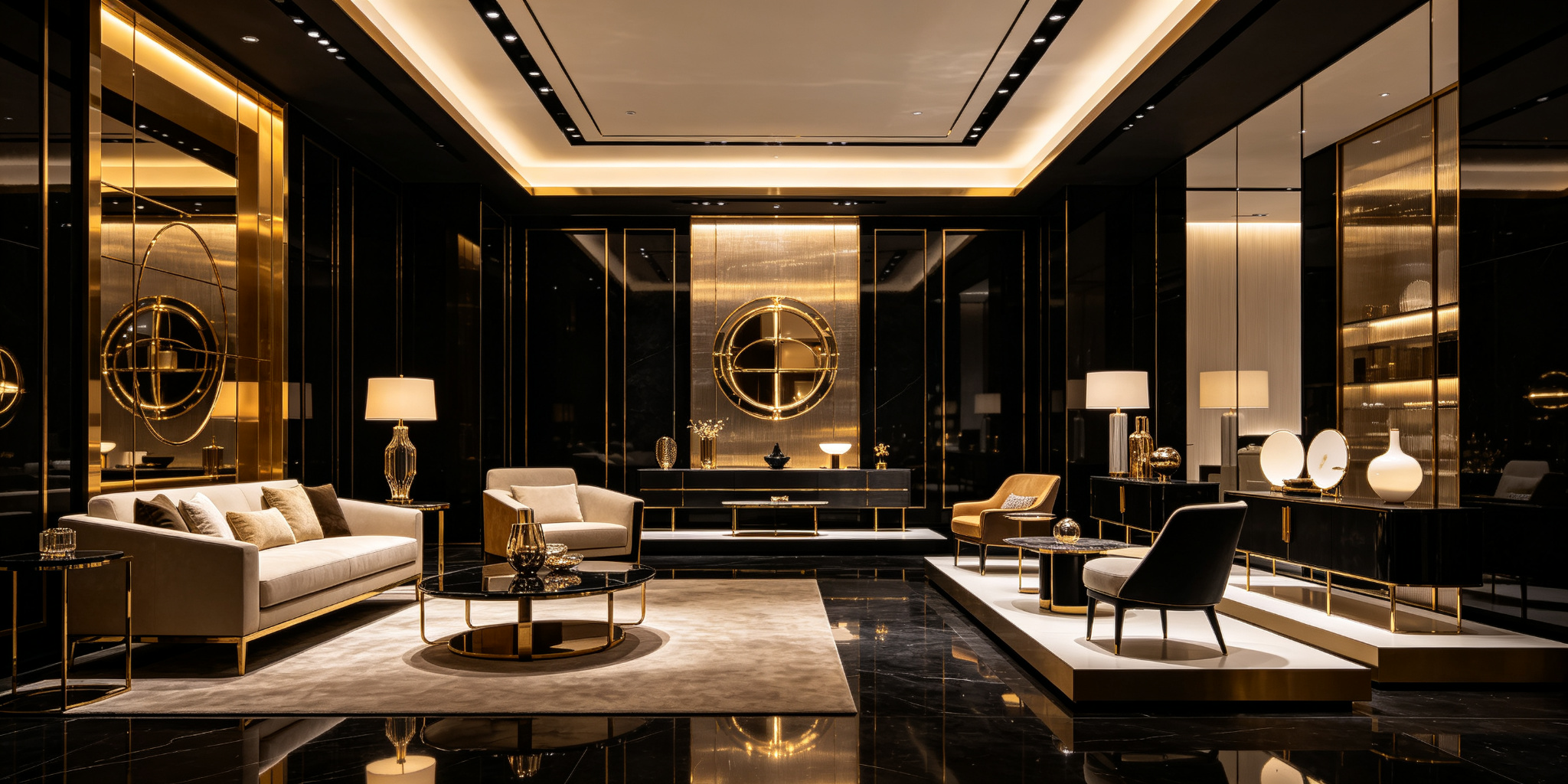
- Our factory covers 200,000 square metres, with a 100,000 square metre showroom in Lecong.
- Four production workshops are fully self-operated rather than subcontracted.
- Sixteen inspection points are applied before goods leave the factory.
- We export to 125+ countries and quote against drawings, with a sample room available to buyers.
How do you score a shortlist without over-weighting price?
Put the answers on one sheet with fixed weights. Assign price no more than a quarter of the total, and force yourself to write a sentence of evidence for each score.
| Criterion | Weight | What earns a high score |
|---|---|---|
| Specification capability | 20% | Builds to drawings; provides construction details and tolerance figures |
| Self-operated production | 15% | Finishing and upholstery in-house; no unexplained subcontracting |
| Quality process | 15% | Documented checkpoints, named sign-off, defined rework handling |
| Lead-time credibility | 10% | Committed dates with stated milestones, not a single promised ship date |
| Export and compliance experience | 10% | Prior shipments to your market; familiarity with your import requirements |
| Communication quality | 10% | Answers questions in writing, in your language, within a stated time |
| Price | 20% | Comparable only when built on an identical written specification |
Score the shortlist twice: once on the first replies, once after the sample stage. The ranking often changes, and that change is the most useful signal in the whole exercise.
What does the sample and drawing stage reveal?
This is where most selections are actually decided. Ask for a full-size sample or a partial mock-up of the critical construction, not a decorative swatch.
Watch for three things. First, whether the sample matches the drawing or quietly improves on it; an unannounced substitution on a sample will be repeated in production. Second, how revisions are handled: a factory that returns a marked-up drawing with questions is engaged, while one that simply agrees to everything has not understood the brief. Third, the turnaround. Sampling speed is a reasonable proxy for engineering capacity.
Programme buyers should ask for a walk-through of a finished mock-up room where the project justifies one. Setting a complete room in the showroom surfaces proportions, spacing and finish consistency that no single sample can show.
Which red flags should end a shortlist decision?
Not every weakness is fatal, but the following should stop you short until you have written evidence to the contrary.
| Red flag | Why it matters |
|---|---|
| No address for the production site | You cannot verify capacity or visit the line that will make your goods |
| Refusal to name subcontractors | Your lead time and quality depend on parties you cannot assess |
| Quotation without a specification reference | Prices cannot be compared, and disputes have no baseline |
| Quality described only as “strict” or “high” | No process exists to audit; inspection becomes an argument |
| Lead time quoted as a single date | No milestone visibility, so slippage appears only when it is unrecoverable |
| Pressure to deposit before drawings are approved | Commercial leverage is being taken before your specification is fixed |
| Unwillingness to put terms in writing | Everything that matters later exists only in a chat thread |
How do you sequence selection so it does not collapse late?
Selection slips when sampling, drawing approval and commercial terms are run as one long conversation instead of three defined stages with owners and outputs.
| Stage | Timeline | Owner | Output |
|---|---|---|---|
| Brief and capability screen | Weeks 1-2 | Buyer | Written brief issued to 3-5 factories |
| Quotation against specification | Weeks 2-4 | Factory sales and engineering | Comparable quotation with specification reference |
| Factory audit or visit | Weeks 3-5 | Buyer and factory | Audit notes, photographs, open questions list |
| Sample and mock-up | Weeks 5-7 | Factory production | Approved sample, signed by both parties |
| Drawing approval | Weeks 7-9 | Buyer and factory engineering | Stamped drawings, revision number agreed |
| Commercial terms | Weeks 9-10 | Both | Purchase order with terms, payment schedule and warranty |
Keep one document as the single source of truth for the selection, and version it. When a factory asks a question in week six that was answered in week two, the document is what stops the answer being renegotiated.
Where does an established factory fit into this framework?
The framework above works in both directions. We have been audited by importers, hotel operators and retail groups for four decades, and the questions that separate a serious buyer from a speculative one are the same ones that separate a serious factory from a trading desk.
Across our own operation, the things buyers verify most often are the ones we can show immediately: the four workshops and their stage ownership, the sixteen inspection points, the drawing-based quotation process and the sample room in Lecong. For custom programmes we work from Dorata, Ginevra and Selene as starting points, or from your drawings entirely, and hold to a ten-year structural warranty and a two-year finish warranty with a lifetime refinishing commitment. Buyers who want to test us usually start with a specification review rather than a price request.
None of the commercial protections discussed here are legal advice. Whatever you agree, the enforceability of a contract, a deposit or a warranty claim depends on your jurisdiction and the document you sign, so confirm with your broker or legal advisor before you commit.
What is the shortest version of this framework?
If you take one process away, take the scorecard. Write the brief once, send it identically to every candidate, score the answers on one weighted sheet, and re-score after sampling. It costs about two hours of administrative work and it removes most of the guesswork from supplier selection.
If you would rather test the answers directly, our team can walk through capability, lead times and specification requirements on WhatsApp at +86 188 2788 2512, or arrange a factory and showroom visit so the audit happens in person.