High-Gloss Lacquer vs Matte Finishes: Specification Trade-Offs
Finishing is the last process in furniture manufacturing and the first thing a buyer judges, which makes it a frequent source of specification disagreement. High-gloss and matte are not simply two sheen levels; they are two systems with different substrates, different failure modes, different repair routes and different operating demands. This guide is written for distributors, importers, hotel FF&E buyers, specifiers and designers who need to specify a finish that survives the environment it is going into. At Rosy Rose we run finishing in our own Foshan bays, where gloss and matte work on separate lines because the two processes demand different conditions.
Two Finishes, Two Failure Modes
The two finishes fail in opposite ways, and knowing that shapes every other decision.
High-gloss surfaces reveal everything. Because the surface reflects sharply, any scratch, swirl mark, dust nib, handling mark or unevenness in the substrate becomes visible. Its failure mode is cosmetic but highly visible: fine scratches accumulate in the light, and cleaning with the wrong cloth can leave a haze.
Matte surfaces fail more subtly. Because the surface is micro-textured to scatter light, it hides scratches and dust far better, but repeated contact polishes the texture locally, so the surface develops shine patches at the points people touch — drawer fronts, table edges, handles. Its failure mode is gradual and uneven.
Neither failure is a defect in the finish itself. Both are consequences of choosing a sheen without choosing the environment.
High-Gloss Lacquer: Build-Up, Buffing and Depth
A high-quality gloss is a build, not a coat. The process typically runs through substrate preparation, a primer or sealer, colour coats, and clear coats, with sanding between stages and a final buffing or polishing to bring up depth. The gloss level itself comes largely from the flatness of the surface beneath and the polishing of the top layer.
The practical consequences for buyers are these:
- The substrate must be flat and stable; gloss shows inconsistent sanding and panel joints.
- The finishing environment must control dust, because every particle in the air can telegraph through.
- The buffing and polishing stage is skilled work and adds cost.
- Cure time and handling discipline matter, because a gloss surface is most vulnerable while it is fresh.
- Weight and mass help: a heavier, well-supported panel resists the movement that would crack a gloss film.
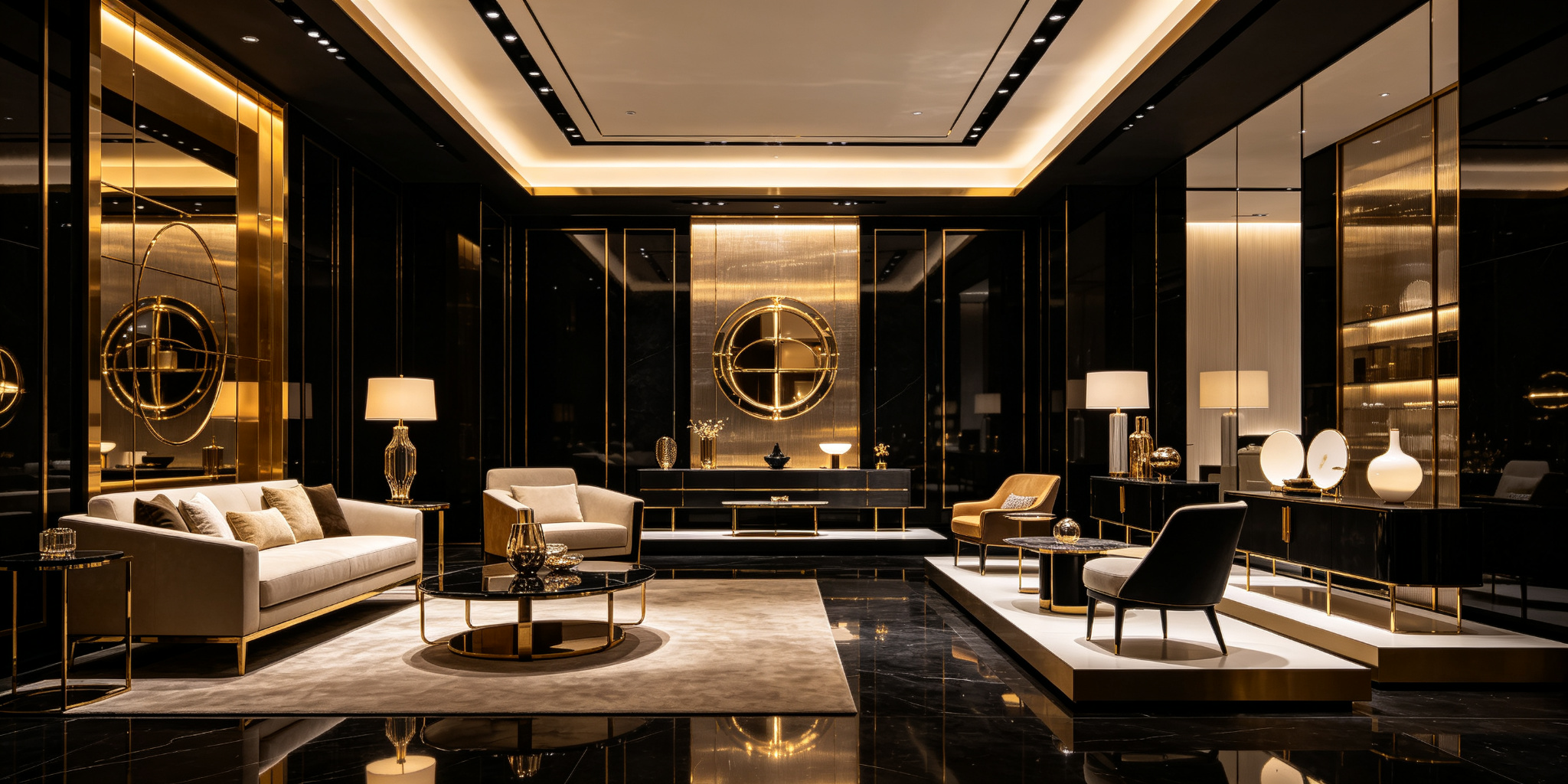
Done well, gloss reads as deep, liquid and premium, which is why it persists in reception desks, retail fixtures and statement tables.
Matte Finishes: Open Pore, Soft-Touch and Oiled
Matte is not one finish either. A solid-colour matte lacquer is smooth and low-sheen; an open-pore matte preserves the grain texture and reads more natural; a soft-touch matte has a very low sheen with a slightly velvety hand; and an oiled finish sits in the wood rather than on it, giving a natural surface that is easy to spot-repair but needs periodic re-oiling.
Matte’s advantages in contract use are practical: it hides dust and fine scratches, reflects less glare into a space, and reads contemporary. Its demands are equally practical: it shows skin-oil shine at contact points, some soft-touch surfaces mark from certain cleaning agents, and open-pore and oiled surfaces need a defined regeneration routine. Matching the matte type to the surface’s contact level matters more than matching the sample photograph.
Why the Substrate Matters More Than the Topcoat
Buyers tend to negotiate the topcoat and ignore the substrate, which is the wrong way round. A finish is only as stable as the panel beneath it. Movement in the substrate telegraphs into the coating as cracks, crazing or a visible seam line, and no topcoat hides that for long.
For gloss in particular, the preparation sequence — how flat the panel is sanded, how consistent the edge and profile are, and how the panel is handled before coating — decides the result. This is why the same gloss specification can produce an excellent result on one panel and a disappointing one on another made from a less stable sheet. When a buyer is comparing quotes for gloss work, the useful question is not how many coats are specified but how the substrate is prepared and how the finishing environment is controlled. Our finishing bays sit downstream of our own woodworking and sanding lines precisely so panel preparation can be verified before coating begins, and every piece passes the sixteen gate checks that include finish inspection before packing.
Gloss and Matte Compared
| Attribute | High-gloss lacquer | Matte finish |
|---|---|---|
| Visual effect | Deep, reflective, high contrast | Soft, absorbed, glare-free |
| Shows scratches | Strongly | Little |
| Shows dust | Strongly | Little |
| Shows touch shine | Little | Notably at contact points |
| Substrate sensitivity | Very high | Moderate |
| Surface repair | Difficult to blend | Generally easier to blend |
| Best-suited settings | Reception, retail, feature pieces | Tables, cabinetry, high-contact items |
| Cleaning demand | Non-abrasive cloth, careful routine | Matched cleaner, avoid polishing agents |
Touch-Up, Repair and Renovation
Repair is where the two finishes diverge most sharply, and it should be part of the original specification conversation.
Matte repair usually means cleaning the area, a light sand to open the surface, and re-coating, with the sheen matched to the surrounding panel. It blends reasonably well because matte scatters light and forgivingly disguises small differences. Oiled finishes are the easiest of all, since a local re-oil sits into the grain and can be done in place.
Gloss repair is a different proposition. Because gloss reflects, any variation in flatness, film thickness or polish reads immediately, so a local repair to a large gloss panel is often visible even when the colour matches. Where damage is broad or the substrate is affected, re-finishing the whole panel or component in a controlled environment is the more reliable answer. It is a good reason to design high-contact areas with replaceable or easily removed components rather than one large monolithic gloss surface. Where in-service damage does occur, our lifetime refinishing support exists to take pieces back to a workshop standard rather than patch them in place.
Specifying by Space Type
A short decision frame helps most projects:
- High-touch, high-traffic areas — matte or open-pore, easily re-coated, forgiving of daily contact.
- Statement and low-contact features — gloss, where the visual return justifies the handling discipline.
- Food and beverage surfaces — matte, easy to clean and less likely to show cleaning swirls in glare.
- Retail and reception — gloss for impact at the focal point, matte for the working surfaces.
- Table tops and cabinetry — matte or oiled, both of which are more repairable in service.
There is no universal winner. The correct answer is the finish whose failure mode the operator can live with and maintain.
Customisation and Colour Matching
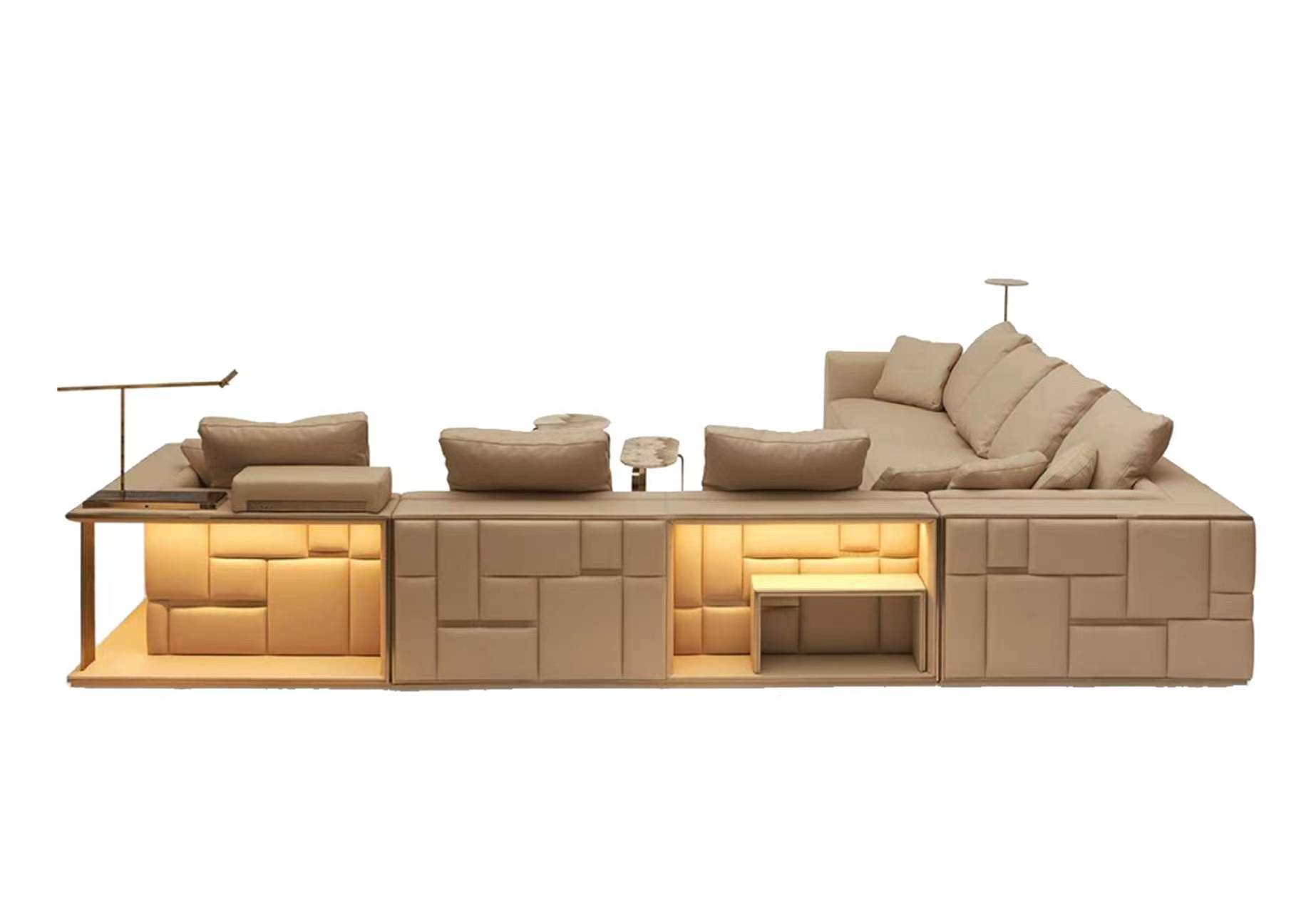
Finish customisation covers sheen level, colour, open or closed pore, solid or translucent tone, and any soft-touch requirement, and it can be matched to a reference sample. Two honest constraints apply: colour matching across batches depends on the coating system rather than the workshop, and gloss amplifies even tiny colour or sheen differences between panels, so matched sets should be finished in the same run where possible. Rosy Rose has produced furniture in Foshan since 1983 and offers drawings, a quotation and a sample before bulk, so sheen and colour can be approved under real lighting rather than on a screen. Modular and accent pieces in our Dorata and related collections show how a finish decision lands across a full room, and our articles library covers the wider specification picture.
One practical rule is to standardise the finish across a room type and vary only the accent surfaces. A single sheen across cabinetry, tables and panels reduces the visible mismatch that appears when two finishes sit side by side, and it simplifies the cleaning routine staff have to follow. Where a project wants contrast, the safest contrast is between materials rather than between sheens of the same colour, because two sheens of one colour are the hardest combination to match consistently and the easiest to notice when they differ.
Speak to Our Finishing Team
If you are weighing gloss against matte for a hospitality, retail or office project, send us the space, the surface and any reference sample, and our team will recommend a finish system with a realistic cleaning and repair plan. Message us on WhatsApp at +86 188 2788 2512 with your brief — we will respond with finish options, a sample plan and a quotation from our Foshan base.