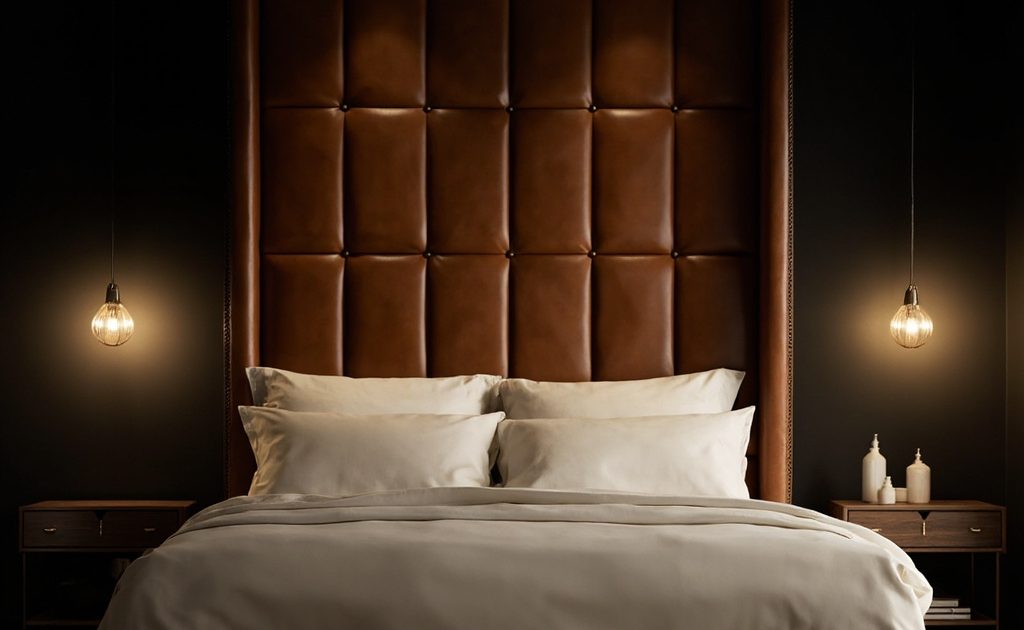
A bedroom stops being a room and starts being a suite the moment every piece answers to the bed. That is the whole principle, stated plainly: the bed sets the tone, and everything else — the chests, the lamps, the wall behind your head — is supporting cast. Design the centerpiece first, and the rest of the space arranges itself around it with an ease no number of individual purchases can fake.
Most people shop backward. They buy a headboard here, a nightstand on sale there, a dresser from a different collection, and hope the room will pull itself together. It rarely does. The pieces may be lovely on their own and still fail as a room, because a designed suite reads as a single thought while a gathered set reads as an argument. When you build around the bed — selecting case goods, upholstery, and accent materials that share one silhouette, one grain, one finish language — the difference is immediate. The eye moves once and rests. What follows is how a made-to-order suite lets you build that composition on purpose.
Why the Suite Reads as One Designed Room
There is a quiet psychology to furniture that matches. A coordinated bed, side tables, and storage pieces tell the brain that this space was considered — that someone made decisions here with intent. In a large open master plan, that sense of deliberation matters even more; the furniture must hold the room together on its own.
The practical side deserves equal credit. A matched suite simplifies proportion. When your bed sits at six-foot-plus of solid presence and your nightstands rise to the same hand height, with storage that mirrors the bed’s finish, the whole arrangement locks into a rhythm. Nothing hovers at the wrong scale, nothing fights the eye for attention. You get what interior designers quietly call “the composed room”: generous negative space, clear lines of travel, and every object visibly doing its job.
Harmony should not tip into monotony, though. The best suites pair continuity with contrast — the same wood on the case pieces, a different material on the bed itself. That interplay keeps a matching set from feeling like a hotel lobby, and it is exactly the tension a thoughtful maker builds into a custom suite.
The Leather Headboard as the Centerpiece
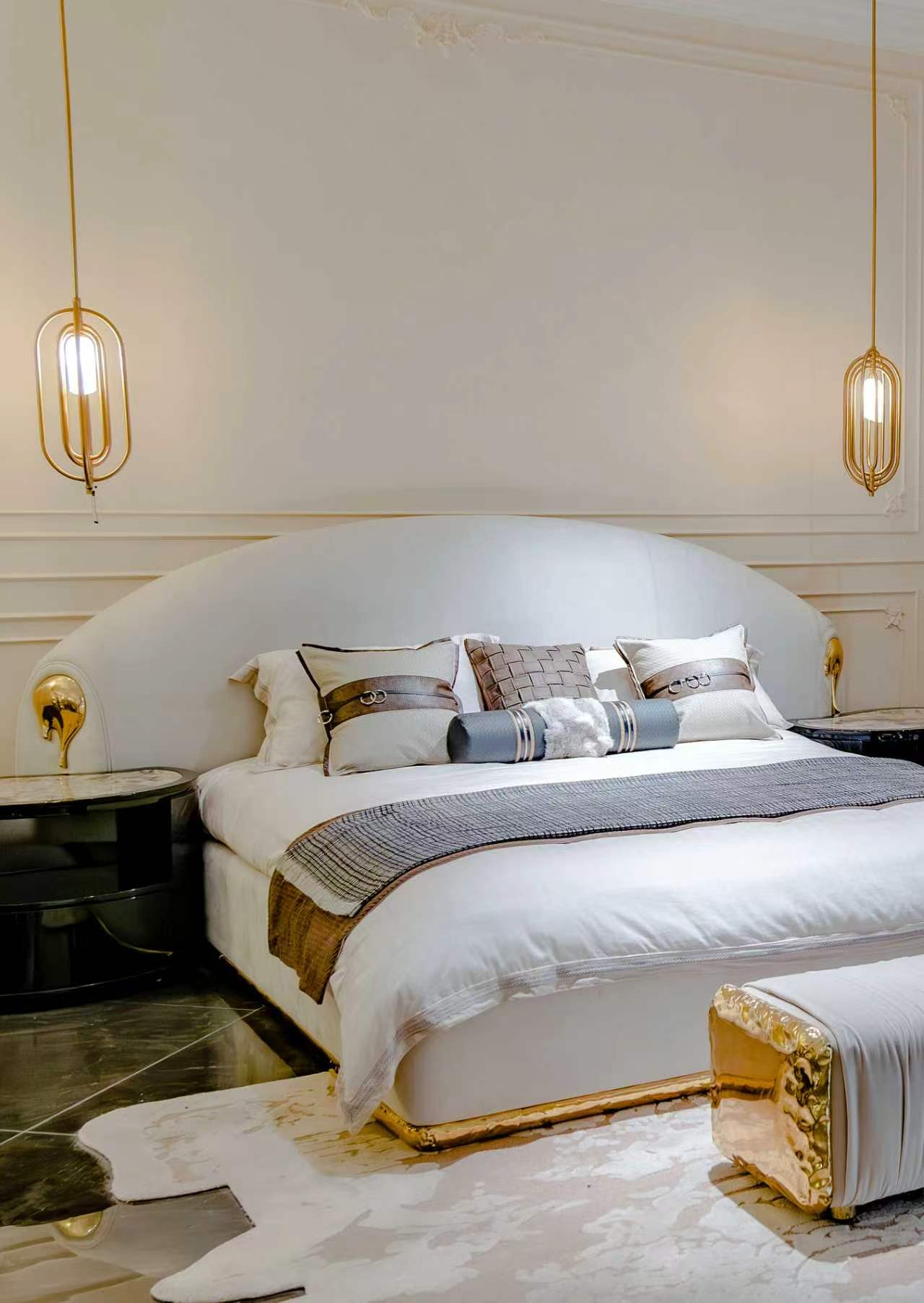
In a truly luxurious bedroom, the bed is not furniture. It is architecture. And the headboard is where that architecture announces itself.
This is why full-grain leather panels make such commanding headboards. Nappa and aniline hides carry a depth that flat or printed surfaces cannot touch — they warm with age, soften at the touch, and catch lamplight in a way that changes through the evening. A tufted or hand-stitched panel adds dimension, drawing the eye up the bed and giving the room a vertical anchor. Patchwork construction, where hides are joined in deliberate geometric fields, turns the headboard into a genuine object of craft rather than a slab you lean against.
A wall-hung leather panel offers a second, cleverer option: the bed frame slides beneath it, so the headboard seems to float and the room gains a few inches of usable depth. Whether you choose that floating treatment or a full unit, the headboard is where you spend your material budget first. It is the largest single surface in the room besides the floor and walls, and it is what a person sees the instant they walk in.
Scale the headboard to the bed, not to the wall. Too timid a panel on a king bed looks apologetic; too wide a headboard on a modest bed swallows the room. Let the headboard overhang the mattress slightly on each side, and give it real presence in height — a tall headboard reads as grandeur even in a small footprint.
Proportions and Bed Sizing, Made Honest
Before aesthetics, get the physics right. Standard widths hold for most rooms: a double bed sits near 135 centimeters across, a queen nearer 160, a king beyond 180. Match the bed to the room, not to a magazine spread. A king in a room that cannot spare the clearance turns an elegant idea into a daily inconvenience, squeezing the path around the bed and crowding the case goods.
Leave practical margins — at least sixty centimeters of clear walking space on the sides and at the foot — and let the bed be the generous object in the space. The side tables should relate to mattress height, not frame height. If the top of your nightstand sits far above the mattress top, you will reach across a canyon for your book; the ideal is nearly level, so your arm falls naturally.
Custom sizing exists precisely for rooms that defy the standard. A made-to-order suite lets the maker adjust bed width, headboard height, and case proportions to the actual footprint you have — turning a “difficult” room with a low ceiling or an alcove into an asset. This is where bespoke stops being a luxury label and becomes a practical tool.
Marble, Velvet, and the Accent Layer
With the bed and wood settled, the accent materials give the suite its character. Natural marble on a nightstand top or a dresser surface adds weight and coolness — a deliberate contrast to the warmth of leather and wood. It reads as permanent, as anchored, which is exactly what you want beside a bed that should feel immovable.
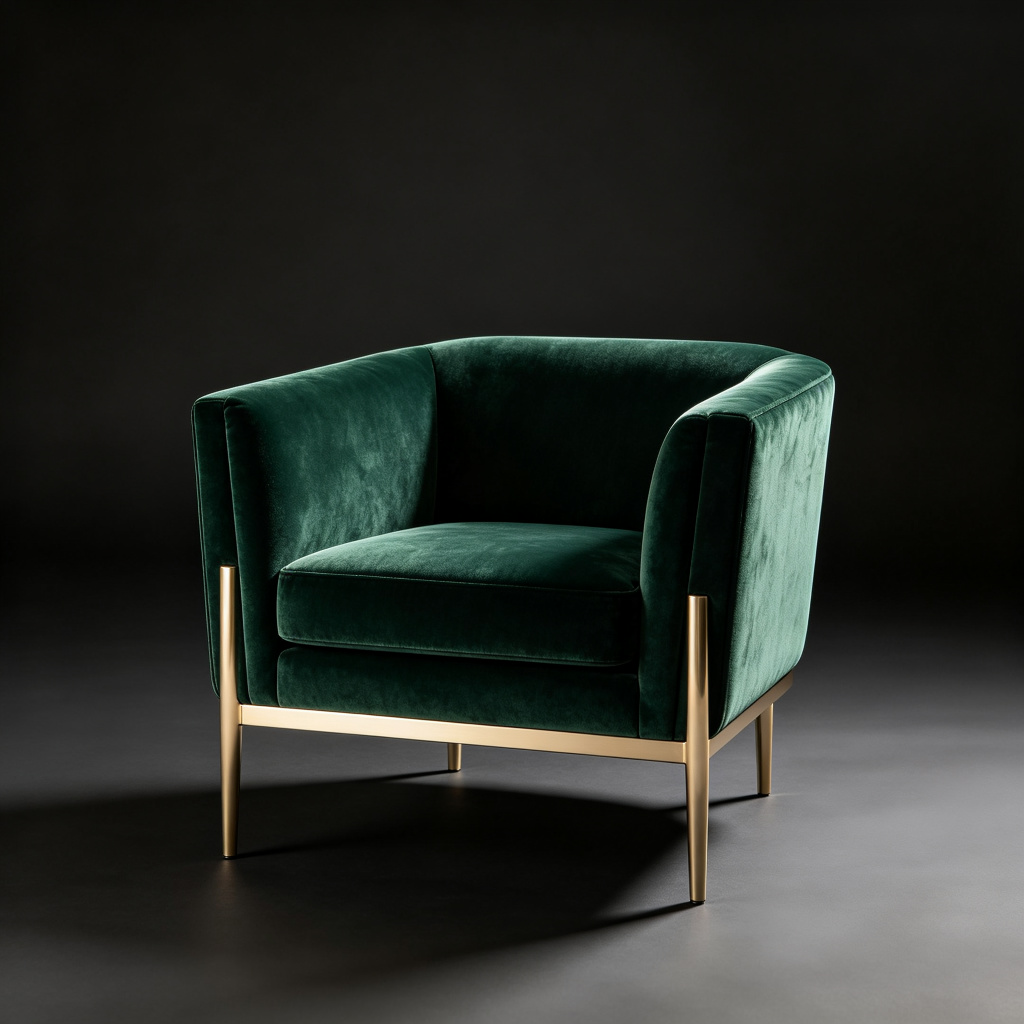
Textiles supply the softness. Velvet and bouclé appear on benches at the foot of the bed, on the upholstered seat of a dressing stool, or as panels that echo the headboard’s tufting. Because the suite’s hard pieces share one finish, you can let the soft accents vary a little — a velvet bench in a richer tone, bouclé cushions that invite touch — without the room losing its grip.
Metal is the quiet thread that ties these layers together. Brushed or antique gold on legs, pulls, and frame details lifts the composition without shouting. Restraint is the point: when the metal finish is consistent across every piece, even a small amount of it gives the room a jewelry-like finish. Marble grounds it, leather warms it, gold connects it.
How a Made-to-Order Suite Fits Your Actual Room
A showroom suite is built for a generic space. Yours is not generic — it has a certain ceiling height, an awkward beam, a window that lands exactly where the dresser wants to stand. This is the real argument for commissioning a suite rather than buying it off the floor.
The maker starts from your measurements and your light. They will ask how the sun moves through the room, whether you read in bed, how many people the storage needs to serve. From there the suite is drawn to your dimensions — the headboard rising to your ceiling line, the chests sized to hold what you actually own, the nightstands aligned to your mattress height.
Wood selection becomes a real conversation rather than a shelf decision. Walnut offers a rich, even grain; oak reads brighter and more casual; rosewood and macassar bring dramatic dark striping that suits a statement bed; the exotics deserve a room that can carry their confidence. The same logic applies to the hides — a full-grain aniline in a deep neutral for understated rooms, or a bolder patched panel when the bed is meant to be the conversation.
Every piece is built to order for the space it will occupy, which also means the proportions stop being a compromise. This is the difference between choosing from what exists and describing what should exist.
Where Hand-Finishing Shows in a Bedroom
The argument for hand-finish becomes most visible in a bedroom, because a bedroom is inspected up close. You stand at the foot of the bed, you run a hand down the headboard, you open the drawer of a chest at arm’s length. There is nowhere for a careless edge to hide.
Look for the details that machines cannot fake. The way a leather panel is stitched and pulled tight across its padding, with no ripple at the seam. The fit of a drawer front within its frame, the smooth glide of the runners, the way wood grain lines up across a tabletop as if it were a single board. Hand-applied finish on the hardwood — building up layers, rubbing them back, sealing by hand — gives the surface a depth that spray-finish can only imitate.
At scale, these details are exactly what separates a factory-run suite from a crafted one. In a workshop where every piece is finished by hand, those close inspections reward you every single night. Rosy Rose has built its craft in Foshan, China since 1996 — 200,000 square meters of production and a 10,000 square meter showroom — so that the drawer you pull open at midnight closes with the same quiet authority as the day it was made.
That is the real value of building the room around the bed. Done properly, the suite stops being a collection of objects and becomes a single instrument — one that makes the hardest part of the day, falling asleep, feel like an intentional luxury. When you commit to the centerpiece first and let every other piece answer to it, the room stops trying to impress you and starts taking care of you instead. It is not about having more in the bedroom. It is about having the right things, arranged as one thought.