A dining table is the one piece of furniture almost nobody replaces on a whim. It takes the morning coffee, the weeknight homework, the long Sunday lunches, the occasional platter set down with only seconds to spare. Choose it well and it quietly does its job for a decade or more; choose it badly and every meal is a small argument with your own decision. The marble-versus-wood question is really not about which material is “better.” It is about which one matches the way your household actually eats, drinks, works, and spills.
The rule that saves most people their regret is simple: decide on your life first, then on the stone or the timber — because the most beautiful top in the world is a burden if it punishes you every Tuesday. Get the logic of your own habits clear, and the choice between a book-matched Carrara table and a solid walnut one becomes almost easy.
Measure the room before you fall in love with a material
Every showroom table looks right in a showroom. A four-seater floats in a vast hall and whispers “cozy.” The same piece, dropped into a narrow kitchen-diner, can swallow the room. So the honest first step is a tape measure, not a mood board.
Start with the chairs, because chairs get forgotten. A person needs roughly 60 cm of seat width to sit in comfort, and you want 6 to 10 cm of breathing room between each place setting once plates and elbows are out. For the clearance behind each chair, allow about 90 cm from the table edge to the wall or the next piece of furniture — that is the space a chair needs to slide back and let someone stand up without scraping the plaster. A 160 cm table in a room under 3 metres wide will usually feel tight; a long, narrow room often suits a rectangular table that follows the line of the walls rather than a round one that demands open space on every side.
Two more numbers settle most sizing arguments. A round table for four wants roughly 90 to 110 cm of diameter; a rectangular one for the same four people sits happily at about 140 by 80 cm. Add two more guests and you jump to around 180 cm of length. These are starting points, not laws — a family that never hosts dinner parties can live beautifully with a smaller table and better proportions.
Marble: the cool, calm surface that photographs like a gallery
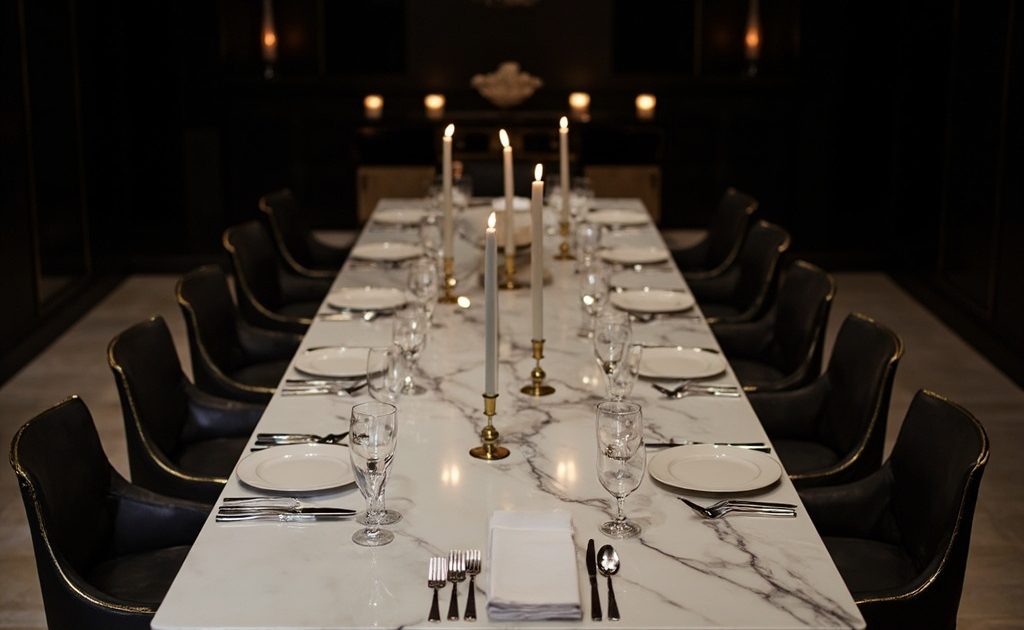
There is a reason marble tops end up in hotel suites and design magazines. A slab of Carrara or Calacatta carries a quiet formality that wood rarely matches. The pale grey veins of Carrara read as understated; the warmer, busier veining of Calacatta Gold leans more dramatic. Ask a maker what “book-matched” means and you will learn the craft behind the look: two halves of the same slab, opened like the pages of a book, so the veining runs across the seam and continues edge to edge. It is a deliberate act of nature and skill meeting, and it is genuinely striking in person.
Book-matched marble is not a surface you buy off a shelf. Because the two leaves must come from one block, the pattern is decided when the stone is chosen, and a careful workshop will show you the actual slab before it is ever cut. This is where a made-to-order table earns its keep: the top is effectively chosen for your piece, not drawn from whatever happened to be in stock.
What marble asks of you is honesty about your household. Stone is cool to the touch and stays cool — a relief in a warm climate, a shiver on a cold morning. It resists heat beautifully; a hot casserole dish will not mark it the way it will mark a lacquered surface. But it is not invincible. Acid is the enemy: lemon, vinegar, tomato, wine. A spill left on a sealed or polished top can etch a faint dull spot, and while a quality finish resists stains well, nothing makes marble “maintenance-free.” If your house runs on citrus-heavy cooking and small children who knock over glasses, treat marble as the formal surface it is — glorious, and best paired with coasters and a cloth that appears fast.
Wood: walnut and oak that warm and forgive
Hardwood earns its keep differently. Walnut brings that deep, chocolate-brown tone that shifts as the light moves; oak offers pale, open grain that takes on a honeyed glow. Both belong to a family of timbers that age with grace — a good hardwood table develops character, and honest use becomes part of the finish rather than a flaw.
Wood is forgiving in ways marble is not. Heat leaves far less trace, small scratches can often be lifted by a careful hand, and the surface reads warm the moment you sit down. A solid walnut or oak top also does something structural that matters for a family table: it can usually be re-sanded and re-finished years down the line, so a table that has hosted a decade of birthdays can look new again. That is a genuinely different ownership proposition from a stone slab.
The trade is durability of a subtler kind. Wood dents where marble would not, and it reacts to moisture and temperature swings — a solid timber top wants to live in a room with fairly steady humidity, not pressed against a radiator or in a damp, unheated space. Yet a true solid-wood top, properly dried and built, is the one you pass to the next generation. The honest question is whether you want the top to be a living surface that records your life or a calm, cool slate that holds its own above the noise.
Why made to order beats “off the rack” for a piece you keep
Here is the quiet truth of buying furniture: the table you will live with for years is rarely the one that happened to be in a warehouse this week. Made to order means your size is your size. The 170 cm table that fits your alcove exactly — not the 160 you settled for or the 180 you squeezed in — is built around your measurements, your room’s light, and the number of seats you actually host.
It also means the material is chosen for you. If you want book-matched Carrara or Calacatta, or a walnut top cut from stock selected for colour and grain, a workshop that makes each piece to order can honour that. Off-the-rack production cannot. There is a reason custom furniture commands care that mass production spreads thin: every joint, every edge, every layer of finish is given attention because the piece has one owner and no deadline to clear the showroom floor.
Rosy Rose has built its reputation on this slower path. Founded in Foshan, China in 1996, the workshop has grown to a 200,000-square-metre factory with a 10,000-square-metre showroom, yet every piece is still finished by hand and made only once it is ordered. The frame behind the surface carries a 10-year structural warranty — a confidence that comes from building furniture around your life rather than around a seasonal stock list. That guarantee says more about durability than any marketing phrase.
Care, honestly: matching the material to your week
Let the maintenance conversation decide it for you. Marble rewards a routine: wipe with a soft, damp cloth, use a pH-neutral cleaner, and keep coasters and trivets in reach. Sealing helps, and resealing every year or two is part of owning stone. Wood wants gentler treatment: a dry or barely damp cloth, coasters under sweating glasses, and an occasional nourishing oil if the maker recommends it, with sanding and refinishing held in reserve for the big moments.
Neither is hard. The trap is choosing a material that fights the pace of your household. A couple who entertains formally and eats out often can keep marble immaculate with five minutes a week. A family of six who eats every meal at the table, cooks with vinegar, and stacks hot plates mid-conversation will be happier with wood — or with a marble top they treat as the “good” table used less often.
A note on where your table comes from
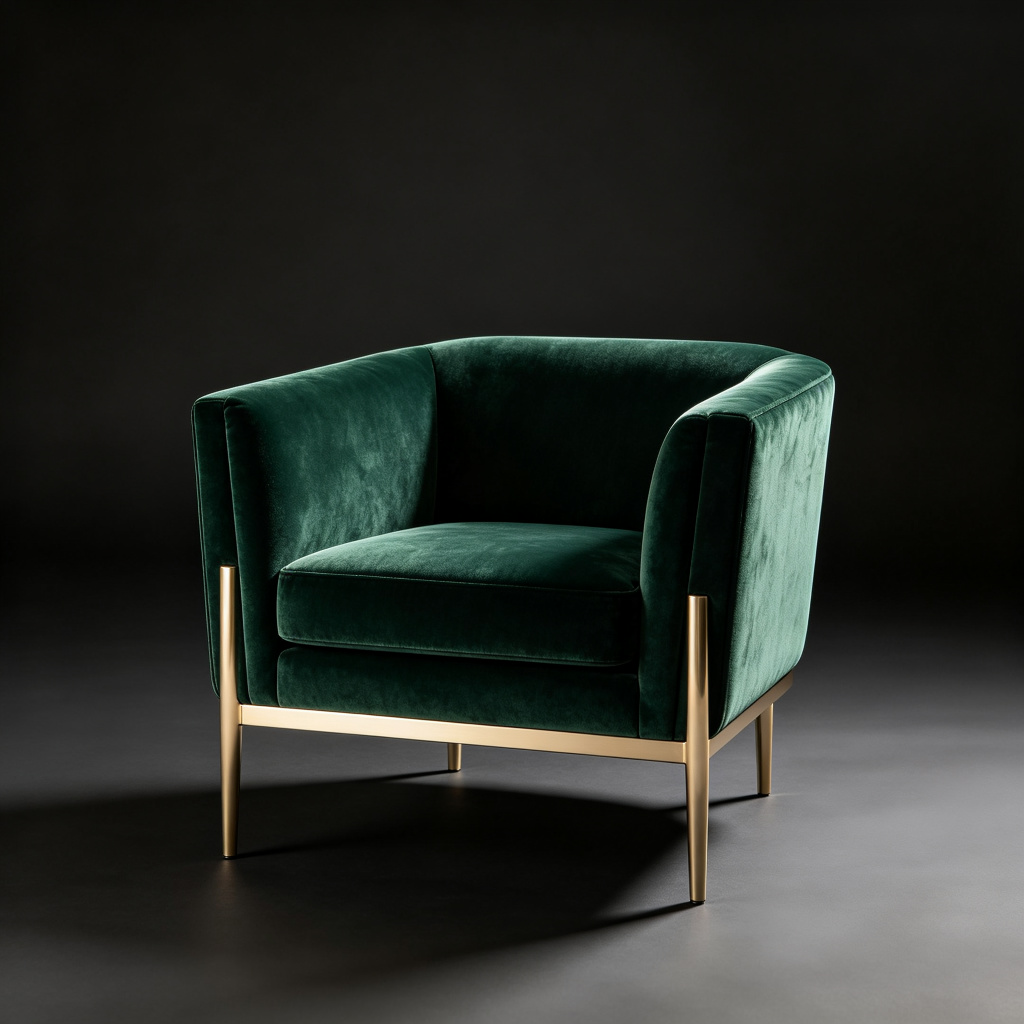
Italian-inspired design meets Chinese hand craft in the tables built by Rosy Rose, which ships to more than fifteen countries from its Foshan base. Full-grain leathers like Nappa and aniline, velvets, bouclé, book-matched Carrara and Calacatta, walnut and oak, rosewood and Macassar, brass details in brushed or antique gold — the palette is wide because the workshop is built around the single commission, not the catalogue.
If you are close to Foshan, or planning a trip, the showroom and factory can be visited by appointment. Seeing the actual slabs of marble and the grain of the walnut before you commit is worth more than any number of photographs. For everyone else, the advice is the same: measure your room, count your real guests, and be honest about whether your table will face lemons and toddlers or candlelight and adult hands. Choose the material that suits the life you actually live, and you will not be shopping for another dining table for a very long time.