A sofa is the hardest-working piece of furniture most people will ever buy. It absorbs every evening, every nap, every guest, every spill. The one you sit on tonight may still be in your living room when your children leave for university. So the real question is not which sofa looks best in the showroom lighting. It is which one will still look honest to you in twenty years.
The golden line: buy the frame, the fill, and the cover you cannot see in the photograph — the rest is decoration. Fabric trends fade. A well-built structure only gets better with age, and that is the single difference between a sofa you replace and a sofa you pass down.
That conviction is not theoretical at the Foshan workshop this guide draws on. The atelier has built seating in Foshan, China, since 1996, where every piece is made to order and finished by hand. Roughly two hundred thousand square metres of factory sit beside a ten-thousand-square-metre showroom, and those sofas already travel to the Middle East, Europe, and the United States. The proof of a durable sofa is not the polish on the outside. It is what you find when you lift the cushion.
Start with the room, not the catalogue
Most people choose a sofa backwards. They fall for a silhouette online, then discover it does not fit, or worse, that it swallows the room. Measure before you dream.
Stand where the sofa will live and note the length and depth of the wall it faces. A useful rule: leave at least forty to fifty centimetres of walking space behind the sofa if you want to reach a window or a bookcase, and roughly a metre of clear floor in front for a coffee table and foot traffic. Depth matters more than most shoppers realise — a deep seat that feels luxurious in a vast room can crowd a modest apartment to the point of discomfort.
Also measure doorways, hallways, and any staircase turn. Made-to-order sofas are built the size you ask for, which is a gift and a trap in equal measure: your dream dimensions are no use if the sofa cannot physically reach the room. Write down the widest, tallest, and longest item that must pass through each opening, and keep those numbers beside the room measurements when you order. Foam can be cut. Marble and solid wood cannot.
If a built-in couch or an awkward bay window is waiting, custom dimensions stop being a luxury and become the only sensible option. A made-to-order workshop will adjust seat depth for long legs, lower the back for a low picture rail, or extend the piece to fill an alcove exactly — no gap, no shim, no compromise.
Read the frame like a mechanic
The frame is the skeleton under every good seat, and it is where most budget sofas quietly die. Inexpensive construction often staples particle board together; it creaks, it bows, and within a few years the cushions sit on a sagging deck. The honest builders use kiln-dried hardwood — walnut, oak, rosewood, or macassar — chosen because the timber is stable and dense enough to hold joints for decades.
Ask two things about any frame. First, what is it made of and how are the corners joined? Solid hardwood with interlocking joints beats glue and staples every time. Second, will the maker guarantee it? A structural frame warranty is the clearest signal a brand stands behind what you cannot see. The atelier covers the structural frame for ten years, because a sofa built to be re-covered and re-cushioned over its life is a sofa meant to outlive the current trend in throw pillows.
The suspension is the part people forget until it fails. A quality seat uses webbing or sinuous springs that are tensioned to hold a person’s weight without ever bottoming out against the frame. Press firmly on the centre of an empty seat before you commit. It should give gently and return with control. If you can feel the rails through the padding, the build is not there.
Match the fill to how you actually sit
Cushion fill decides whether a sofa feels plush on day one and collapses by year three, or stays comfortable across a decade. The choices are a genuine trade-off, and the honest salesperson says so.
High-resilience foam cores wrapped in feather or down give that sink-in, cloud-like comfort people love, but they need regular plumping and can look tired if you skip it. All-foam cushions hold their line well but can feel stiff, especially in the first months. The middle ground — a dense foam core with a down or feather wrap and a proper fibre barrier — offers softness on first contact and structure underneath. It is why so many long-lived sofas pair a firm internal block with a soft top layer: you get the hug and the support.
Think about the seat depth in the same breath. A foam core rated for daily use will take years of evening sitting, but only if the foam density matches how the sofa is used. Ask the workshop which density they use for the seats versus the back cushions. The backs do lighter work, so they can afford to be softer; the seats carry the load and need the firmer core. A workshop that quotes different densities for the two is showing you they think in decades.
Leather versus fabric is a lifestyle decision, not a taste test
The most searched furniture argument — leather or fabric — has no universal winner, only a winner for your house. Decide on that before you look at swatches.
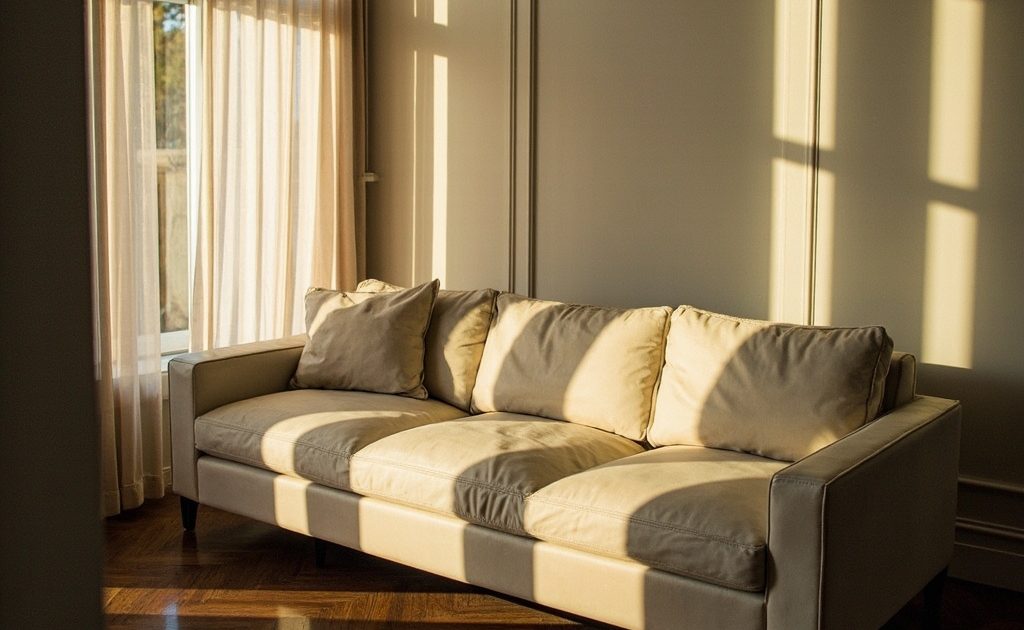
Full-grain leather, taken from the top layer of the hide, keeps its natural surface and its strength. It develops a patina over the years, darkening and softening in a way collectors prize. Rosy Rose works mostly in Nappa and aniline leathers — the softest, most natural finishes — and they are a superb match for a home that wants an heirloom that records its own history. The trade-offs are honest ones: leather is cooler in winter, warmer in summer unless it is breathable, and it asks for occasional conditioning. Aniline leather in particular absorbs moisture, so it is not the first choice for a household of toddlers and juice cups.
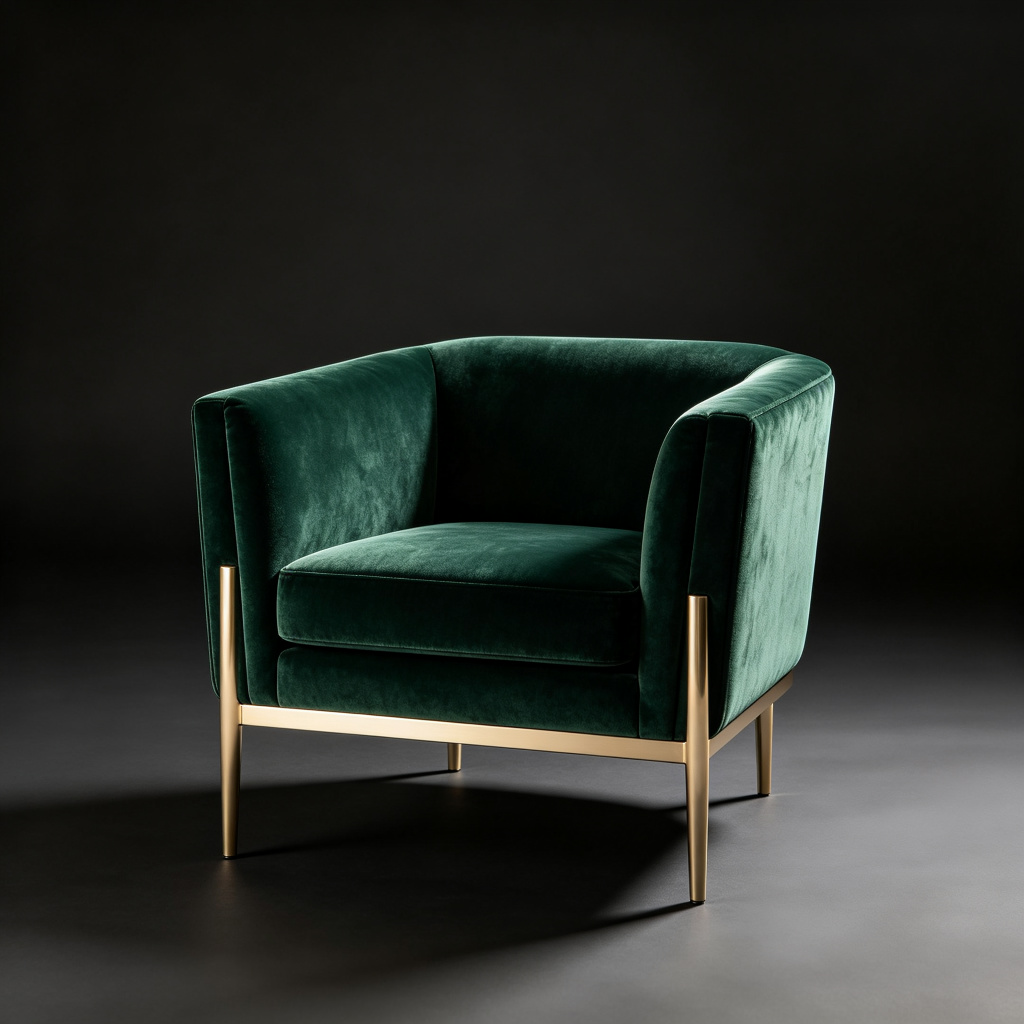
Fabric gives you warmth, softness, and a far wider palette. Velvet catches light and reads glamorous, but it shows direction and wear in high-traffic spots. Bouclé — the looped, nubby textile everywhere in recent years — is forgiving and cosy, though looped yarns can snag. The lasting rule for either: choose a tightly woven, high-abrasion fabric, and ask the workshop to treat the upholstery against stains before it ships. Re-covering a well-built frame is always possible, which is precisely why a lasting sofa is a sound investment in the leather-and-fabric debate: whichever cover you pick first, the frame underneath earns it a second life.
Why made to order beats the showroom floor
Walk into any big store and the sofa you buy is the one someone else already decided you should want. Made to order reverses that. You specify the dimensions, the depth, the fill, the cover, and the finish, and the piece is built around your answers rather than the other way around.
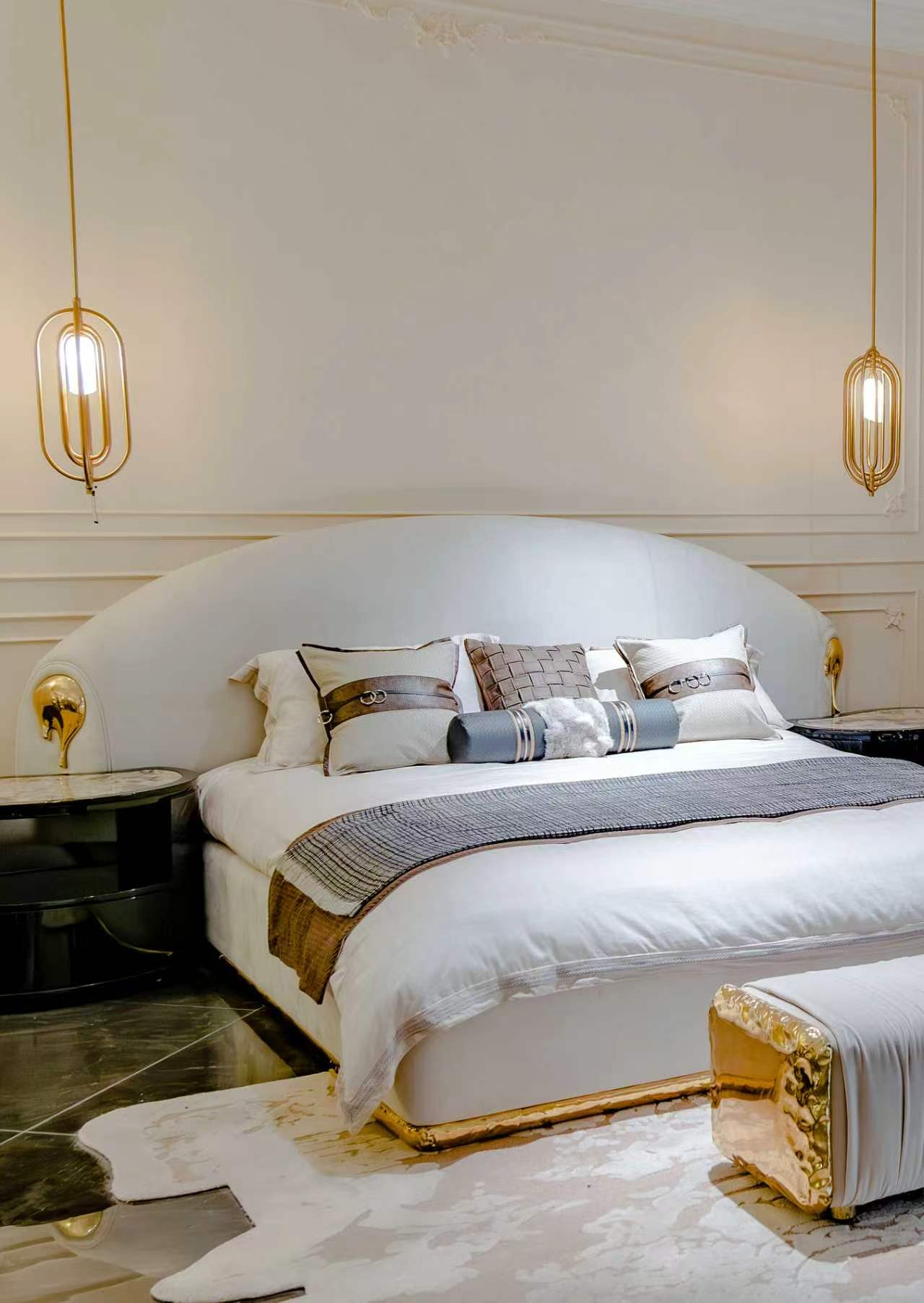
This is where the Rosy Rose design language becomes more than a label. The collections carry an Italian-inspired line — the FENDI-, BENTLEY-, and VIETRI-inspired ranges lean on tailored proportions and clean detailing — while the making stays firmly Chinese hand craft, executed at a two-hundred-thousand-square-metre Foshan factory that has been at it since 1996. Book-matched Carrara or Calacatta marble tops the tables beside walnut and macassar frames, and brushed or antique gold metalwork adds the kind of finish detail you only notice once you are looking. Every surface is finished by hand, not by line, and nothing leaves the floor as a catalogue afterthought.
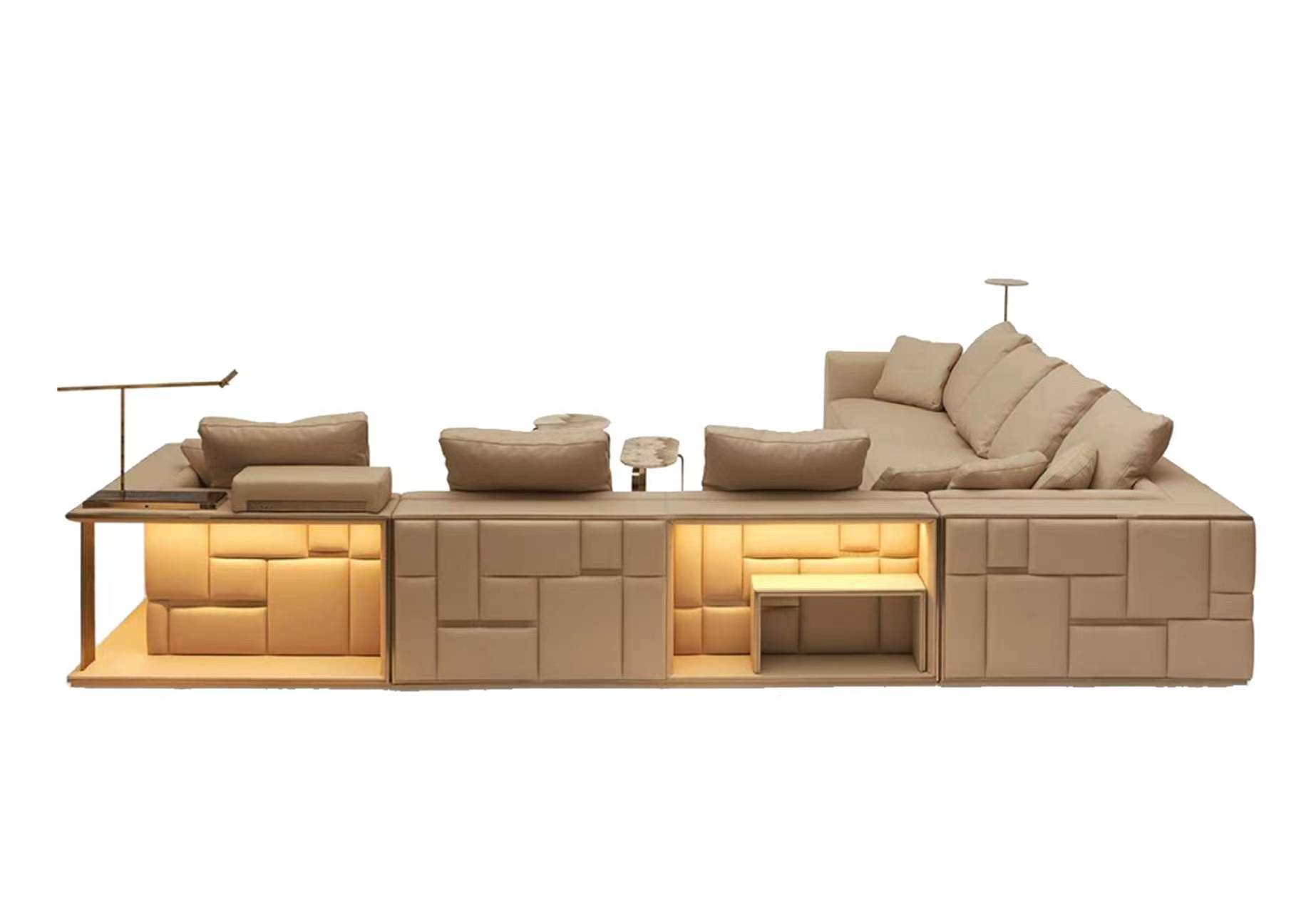
Because the build is bespoke, you can solve problems a showroom sofa cannot: a corner configuration that wraps an awkward wall, a seat height sized for someone who is six-foot-four, a cover chosen to survive a specific dog. And because the maker is the maker — not an importer relabelling a container — you can usually visit. Rosy Rose welcomes clients to the Foshan showroom and factory by appointment, so you can see the frame joints, press the foam, and run your hand over the leather before your order is cut.
A made-to-order sofa costs more than a flat-pack and it should. What you are buying is the right to have it wrong-proofed in advance and rebuilt with materials chosen to endure. Choose the maker who will stand behind the bones for a decade, and the cushion you sink into tonight will still be holding you — and your story — long after the trends in throw pillows have moved on twice.