Some furniture makers begin in a showroom with a catalogue. Rosy Rose began the other way round — in a workshop, with a roll of leather, a stack of kiln-dried oak, and a question the founder kept turning over on long nights in Foshan: why should furniture that is built to last a generation have to look like it was made to be replaced in five years?
That was the seed, back in 1996. It has grown into something far larger than the modest atelier where the first pieces were cut and seamed, but the founding instinct has never really changed. Strip away the polished gallery and the export contracts, the company is still, at heart, a workshop that refuses to rush.
The City Behind the Craft
Foshan does not advertise itself the way Guangzhou does. It is a working city in China’s Guangdong province, dense with furniture districts, timber yards, and the quiet hum of family-run factories that have supplied the country’s living rooms for decades. Walk those streets in the early 1990s and you would have found a different kind of ambition than the one shaping the coastal cities a short train ride away. The people who settled here to build furniture were not chasing fast money. They were chasing precision — the feel of a well-fitted joint, the drape of a hide cut the correct way, the patience a decent piece of casework demands.
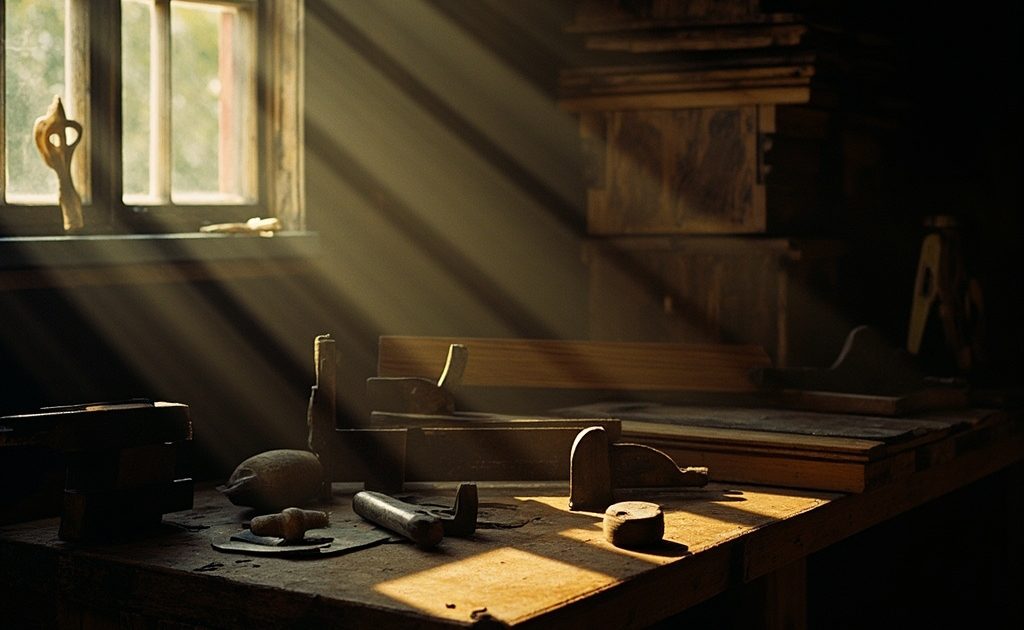
It is a good soil for learning how to make things properly, and it is where the first Rosy Rose workshop opened. Not a factory in the modern sense at first. A workshop. The distinction matters because a workshop teaches you by hand, slowly, with all the mistakes visible in front of you. The men and women who started with the company learned to read leather the way a sailor reads weather — by touch, by grain, by the way a panel bends under pressure.
Growing Without Losing the Grip
Every furniture maker who survives past the first decade reaches a fork. You can scale by cutting corners, standardising everything down to a price point, and letting the machines do what the hands once did. Or you can scale by building more workshops — more space, more skilled hands, more disciplined systems — while holding the standard fixed.
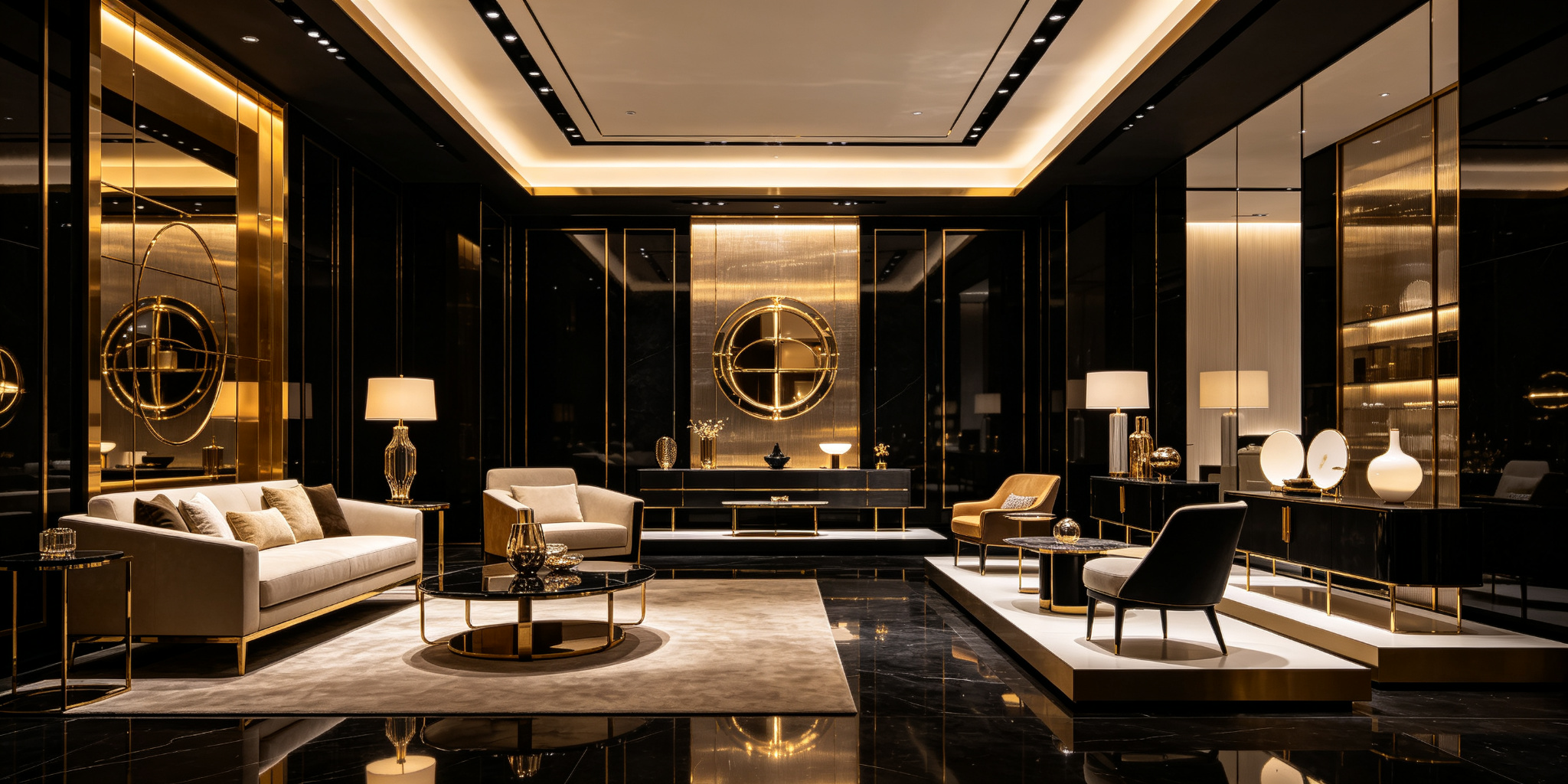
The company chose the second road, and it is the decision that gives the workshop its shape today. The campus now spreads across 200,000 square metres of factory floor, with a 10,000-square-metre showroom standing at its heart. Those are not small numbers, and it would be easy to read them as the story of a business that outgrew its craft roots. The truth runs the other way. The expansion bought the room to do things slowly at scale: racks for leather that can breathe, climate-managed stores for veneers and solids, dedicated benches where finishers can work a surface without a deadline breathing down their necks.
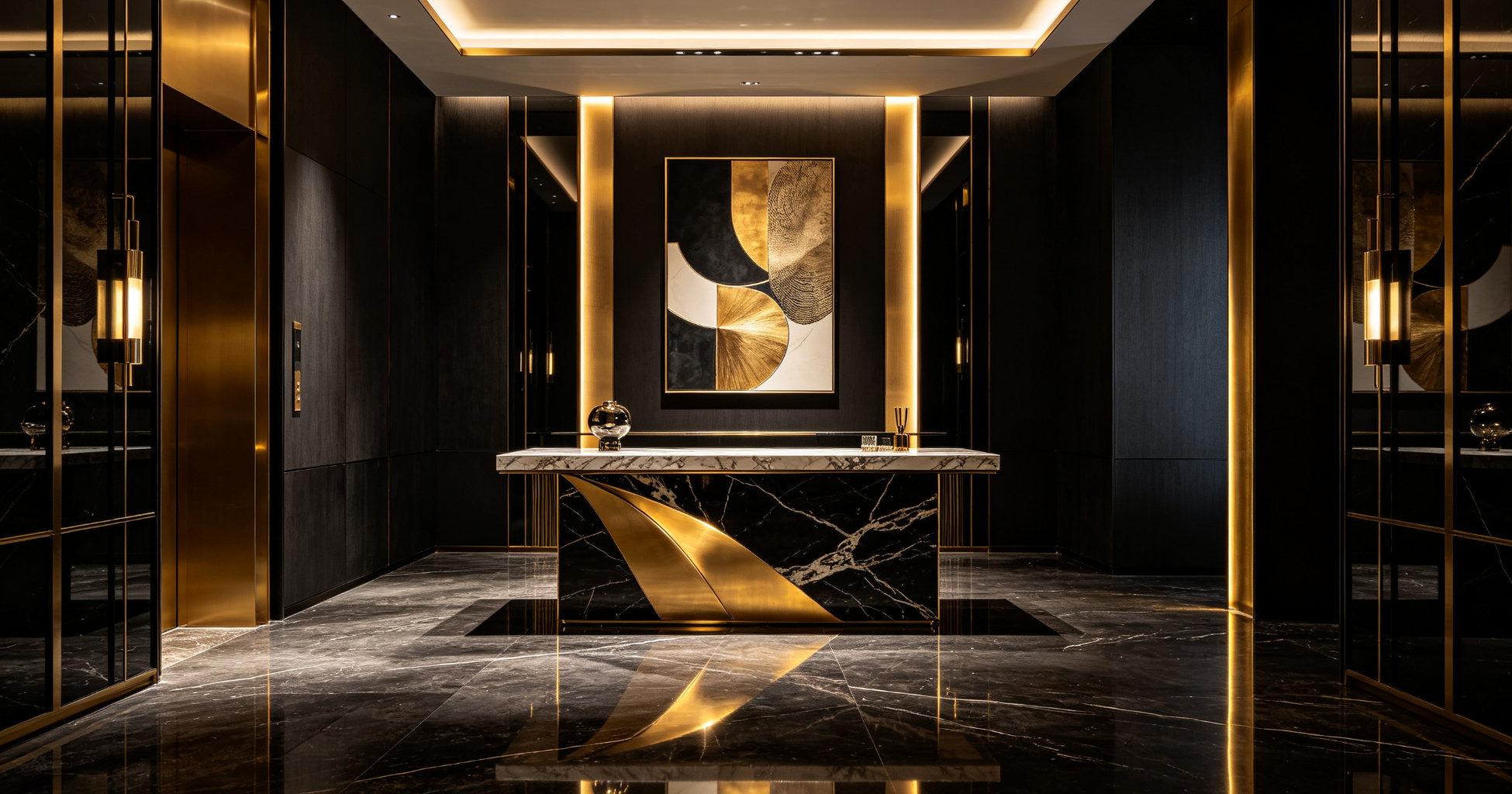
Anyone who has spent time in high-volume furniture plants knows how rare that arrangement is. Usually the showroom is where the care ends and the output begins. The showroom was built almost as a reminder to the factory floor — this is the standard you are working toward, this is how the light will fall on your seams when a client in Dubai or Los Angeles finally sees them.
One Hundred Percent by Hand
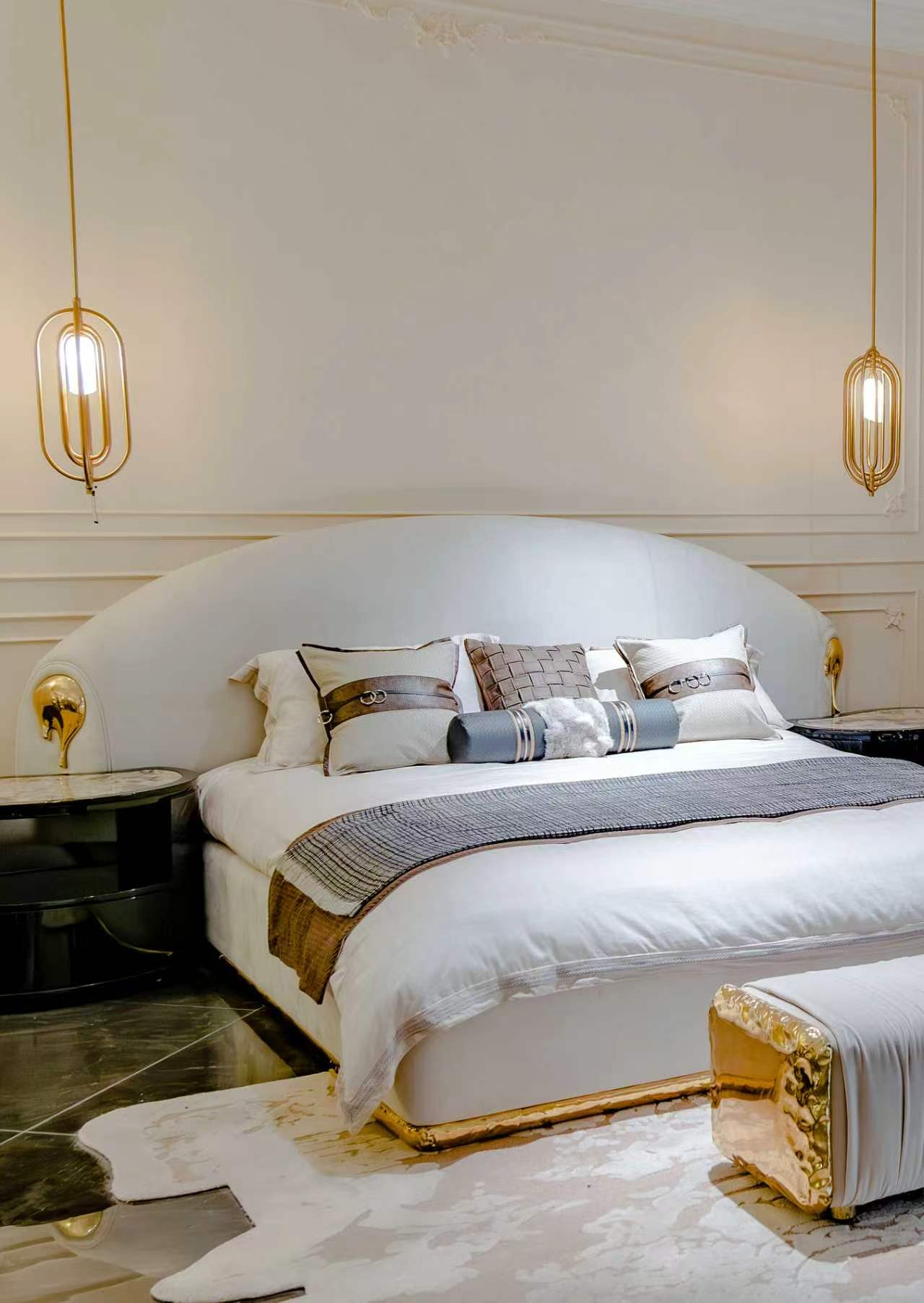
The phrase people most often quote back to us is “100% hand finished.” It is not marketing shorthand. It is a literal description of the final phase of every piece that leaves the workshop. Whatever the machines have done to rough out the form — and the machines do plenty, and do it well — the surface, the seam, the fit, the finish, the final judgment on whether a panel is good enough to show a client, all of it passes through human hands.
Hand finishing is inefficient. It is the most expensive way to make furniture that exists. It is also, in our experience, the only way to make furniture that feels alive — where a chair is not simply assembled correctly but settled, balanced, brought to a state of quiet completion that a spray booth cannot replicate. A 10-year frame warranty is easy to offer when every joint has been inspected by a person who was taught to distrust a loose mortise on sight.
Taking Foshan to the World
The export side of the business grew the way these things often do in Guangdong — piece by piece, through referrals and trade relationships rather than a single dramatic launch. Clients came first from the Middle East, drawn by a tradition that values furniture as an heirloom rather than a disposable. Then Europe, where buyers tend to be the most exacting about proportion and materials. Then the United States. Today the company ships to more than fifteen countries, and the list keeps lengthening.
What surprises many of our overseas clients is how much of Foshan travels with the furniture. They expect a Chinese factory to be a world of copy and price. They find instead a design language shaped as much by Italian elegance as by Chinese craftsmanship — the tension that runs through our FENDI-, BENTLEY- and VIETRI-inspired collections, where the outward character borrows from the great Mediterranean houses and the underlying execution stays unmistakably Foshan: disciplined, precise, allergic to shortcuts.
The best compliment we receive is not “beautiful,” though we hear it often. It is the quieter remark from an interior designer who has handled hundreds of pieces: “This one felt like it was made by someone who cared.” That is the whole history of the company in a single sentence. Since 1996, through every expansion, the goal has never been to make the most furniture. It has been to make furniture that makes the person who built it proud to sign it — and the person who owns it proud to keep it for decades.
The Materials, Honoured Slowly
Ask the people who work our floor what they are proudest of, and the answer is rarely the scale of the operation. More often it is the materials. A furniture business can be built on any number of materials that look acceptable in a brochure and degrade quietly in a home. We chose the harder road early, and it is a decision visible in every piece that leaves the campus.
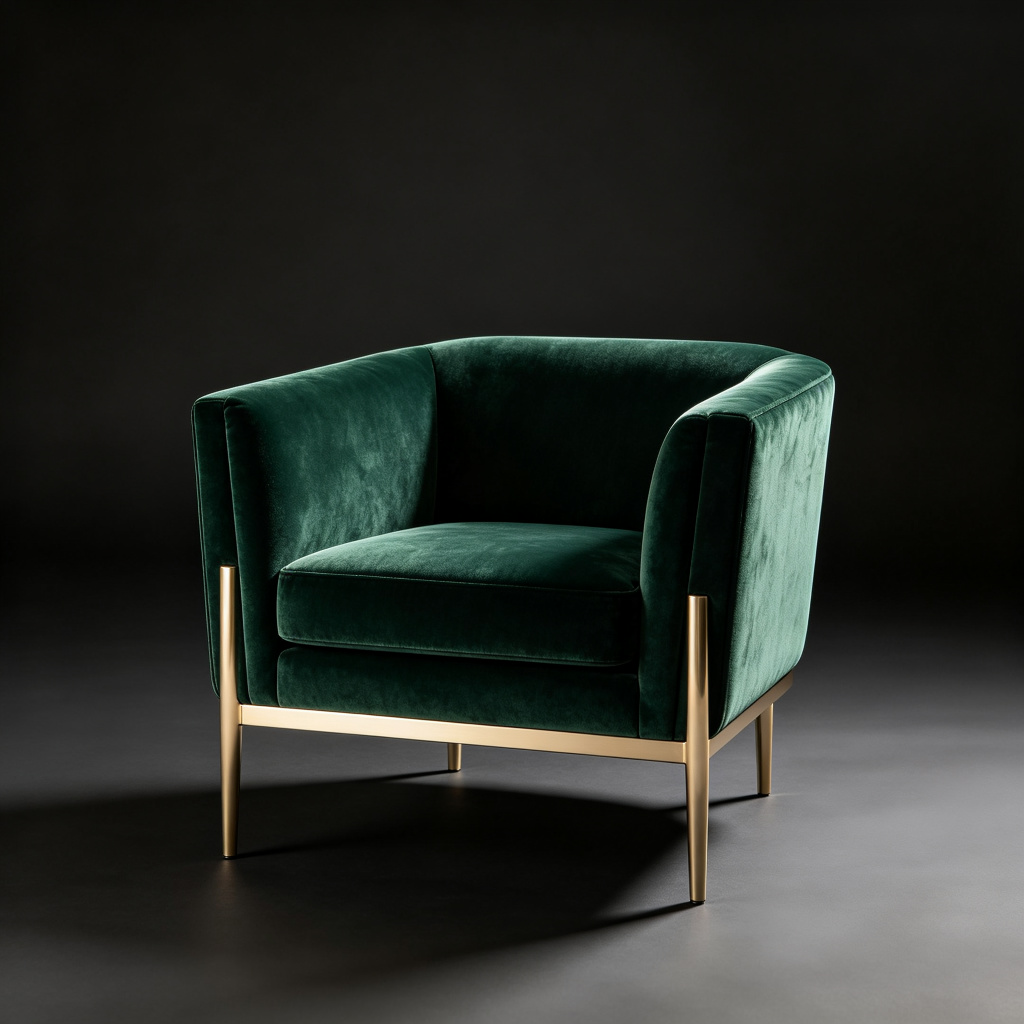
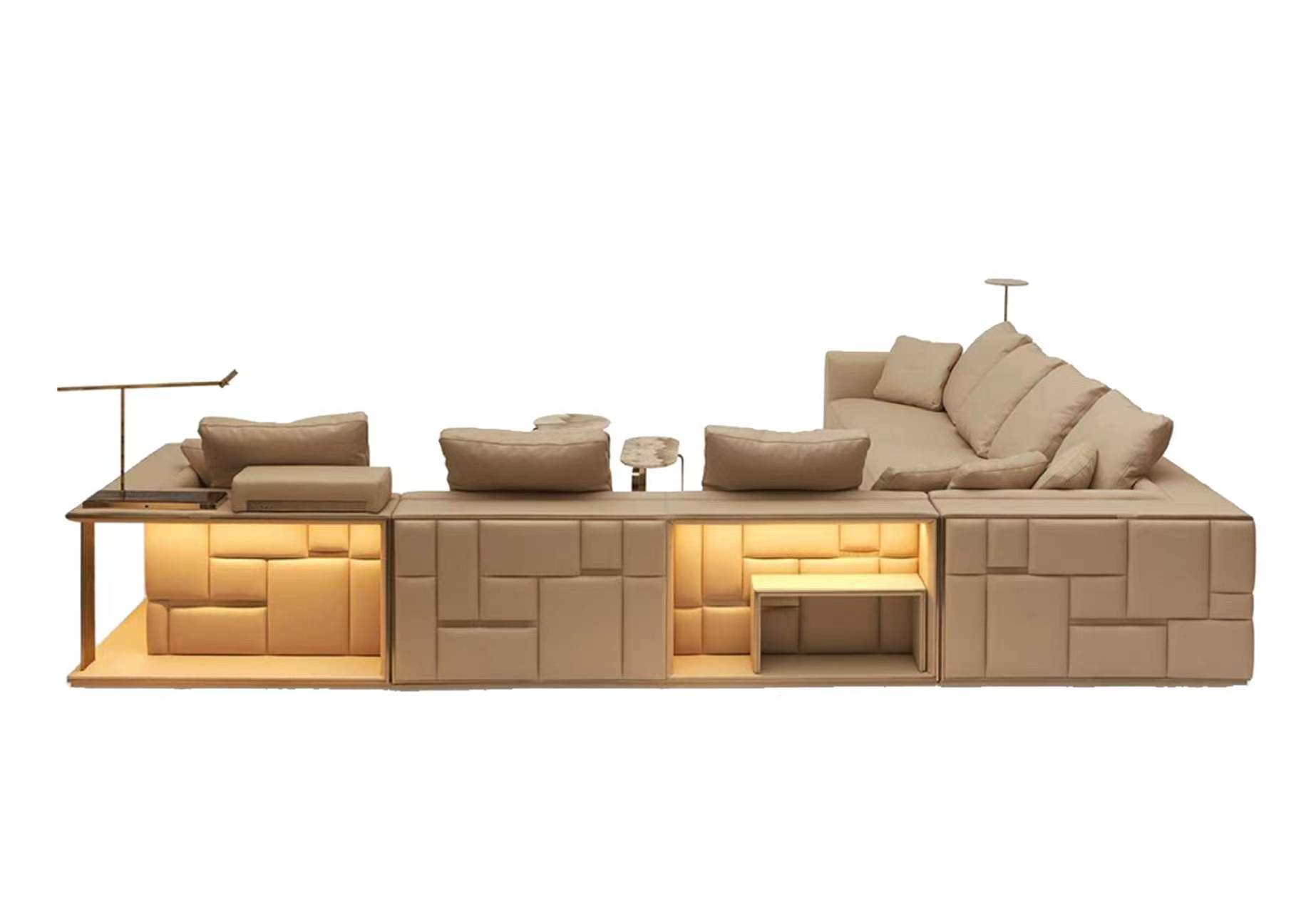
Full-grain leather — the supple Nappa that drapes over curved seating, the more translucent aniline that lets a hide’s natural markings show through untouched — is never a shortcut material. It is priced like the animal and the craft it represents, and it asks the maker to treat it with respect. Wood is the same story. The walnut, oak, rosewood and macassar ebony that form our frames and tops are selected not merely for appearance but for stability, dried and acclimatised with patience so a piece settles into a client’s climate rather than warping against it. When we reach for Carrara or Calacatta marble for a tabletop, the slab is chosen and book-matched by hand, its veining mirrored across the seam the way a collector would align a rare print.
None of this is accidental. A brand that promises a ten-year frame warranty and 100% hand finishing cannot afford materials that betray that promise in year three. The two commitments hold each other up: honest materials make handwork worthwhile, and handwork makes honest materials show their best. It is a circle we have never seen a reason to break, and it is the reason a Rosy Rose piece tends to look as considered in its materials as in its line.
Design as a Conversation
There is a stereotype that a Chinese manufacturer copies Western design and sells it cheap. It is a stereotype the brand has spent three decades quietly contradicting. The collections that carry the influence of the great Mediterranean houses — the FENDI-inspired calm, the BENTLEY restraint, the sculptural warmth of VIETRI — are not reproductions of those brands’ products, and they are not sold on price. They are the outcome of a genuine dialogue between two very different traditions.
The design language comes from one direction: the poised, proportion-driven elegance that European interiors perfected over centuries. The execution comes from the other: the disciplined, patient craft culture of Foshan, where the idea of doing a joint badly to save an hour is almost unthinkable. Most factories have access to one of these. Very few have built a culture that holds both, because the two pull against each other — elegance asks for restraint, while mass production rewards speed.
We exist in the space where those tensions resolve. It is why the pieces feel European in silhouette and unmistakably considered in execution, why a client in Riyadh and a client in New York can both recognise something of themselves in the same design, and why the brand travels across more than fifteen export markets without losing its character in translation. The furniture does not shout where it comes from. It carries both heritages quietly, the way well-made things usually do.
A Story Still Being Written
The workshop on that first Foshan street is long gone, absorbed into a city that never stops rebuilding. Its successor is a campus of twenty hectares and a showroom the size of a small warehouse, filled with marble, walnut and leather waiting for the next chapter. The tools are better, the hides arrive from further away, the orders carry addresses in languages the founder could not have read in 1996.
What remains constant is the rhythm of the work itself. Somewhere on that floor today, someone is turning a length of full-grain leather in their hands, checking the nap, deciding whether this panel is the one that gets seamed into a headboard or set aside. It is the same decision a Foshan craftsman made three decades ago, with the same patience, in a room that smelled of the same honest materials.
That continuity — more than any factory square footage — is the story of the brand. And it is the part we are most careful never to outgrow.
—
> **