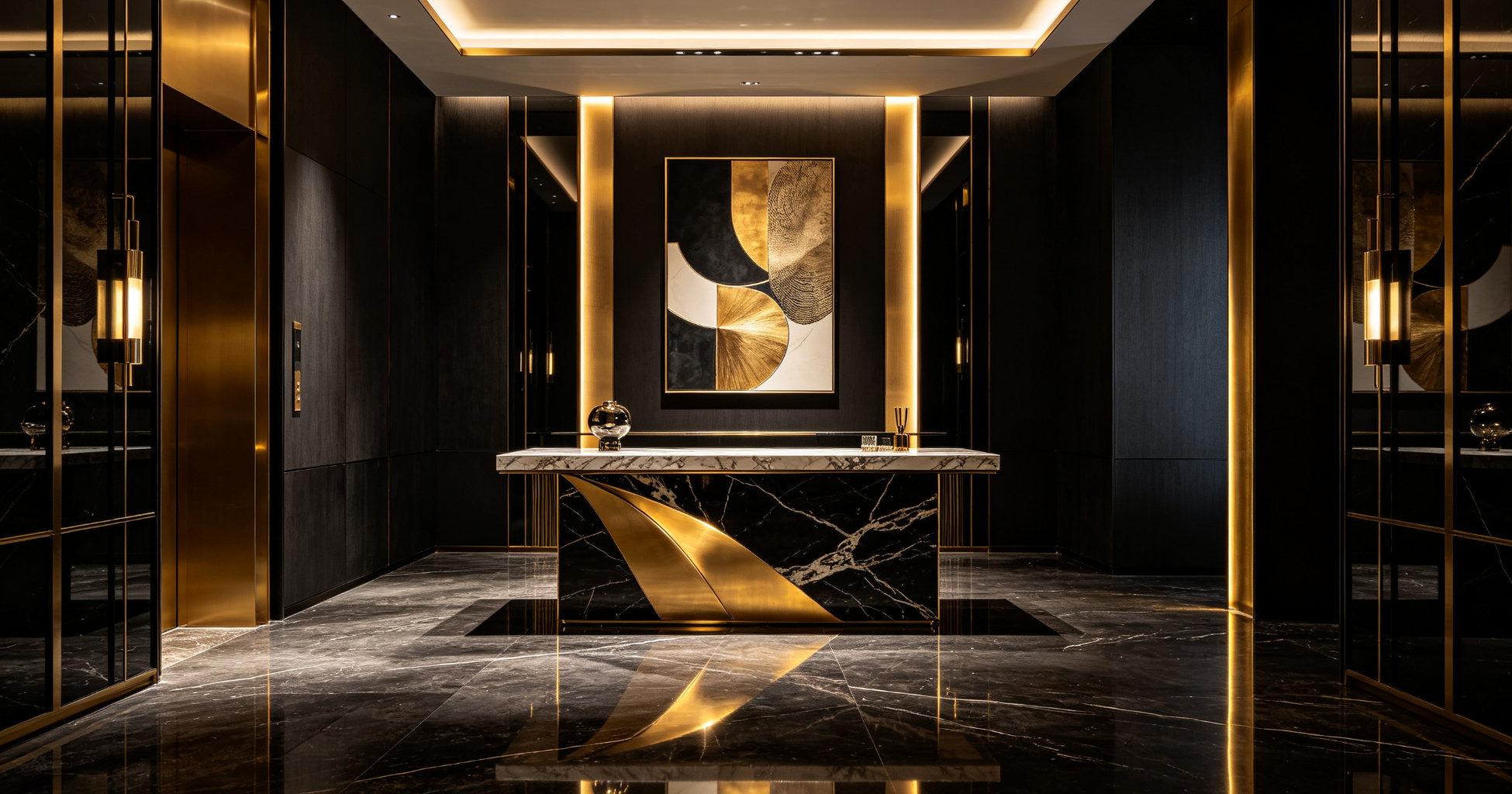
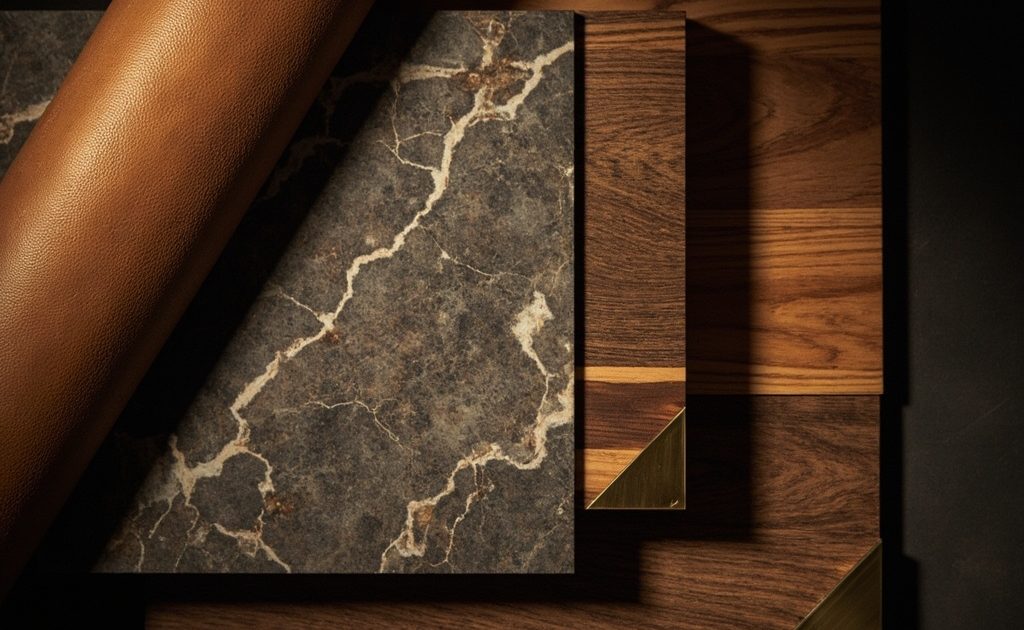
There is a question every serious furniture buyer eventually learns to ask, though few ask it out loud: what will this piece look like in ten years? Not the day it arrives, polished and perfect in the showroom lighting, but a decade in, when the house has been lived in, the light has changed rooms, and the furniture has become background to a real life.
It is a question the mass-market furniture industry would prefer you not to think about, because a great deal of that industry is designed around a single grim fact — that the product will be replaced long before it truly ages. At Rosy Rose we have built the business on the opposite assumption. We choose materials not because they photograph well on arrival but because they grow more beautiful with use. Here is what that actually means, material by material.
Leather: The Case for Full-Grain
Anyone who has owned two sofas — one in bonded leather that peeled within four years, one in full-grain that only improved — already knows the argument. The difference is not cosmetic. It is structural.
Full-grain leather keeps the outer layer of the hide intact, the dense, tightly woven surface that gives leather its strength and its character. Split or bonded leathers, by contrast, are built from the weaker inner layers and glued back together, which is why they crack and flake as they age. For furniture meant to be lived on for decades, there is no real choice.
Within full-grain, we work chiefly with two finishes. Nappa leather is tumbled and finished until it is soft and supple to the touch, with a gentle, uniform drape that makes it ideal for curved seating and headboards — a leather that feels expensive the moment you sit down. Aniline leather is the purist’s choice: dyed through with soluble colour but left essentially uncoated, so the natural markings of the hide — the grain, the scars, the variation that proves an animal lived — remain fully visible. Aniline is not for everyone. It shows its history readily, darkening where it is touched, developing a patina that records the life of the room around it. That is precisely its appeal.
This is where leather rewards patience. A well-made full-grain hide does not wear out; it mellows. It softens in the places you sit, deepens in tone where your hand rests, and develops a glow that no new sofa can fake. It will pick up marks — a drop of water, a scratch — and with aniline especially, those marks become part of the story. Clients who choose aniline are usually the same people who buy a good pair of boots and keep them for twenty years, understanding that a surface that records its history is the opposite of one that merely degrades.
Marble: Veining That Tells a Story
Marble is the material most people assume will stay pristine forever, and in one sense it does — it will outlast the room, the house, even the family that owns it. But marble does not stay new. It is stone that was once living sediment and shell, pressed and crystallised over geological time, and the veining that runs through a slab is a record of that process.
We work chiefly with the two great whites of the stone world. Carrara, with its soft grey veining on a pale field, has been quarried in Italy for over two thousand years and was the stone of Michelangelo; it reads quiet, classical, forgiving. Calacatta is rarer and bolder, its dramatic veining sweeping across a brighter white in strokes of grey and gold. Both are chosen for our tops and surfaces, and both are specified in book-matched pairs — where two adjacent slabs are cut so their veining mirrors across the seam like a reflection.
The book-match is not decoration for its own sake. It is the difference between a marble top that reads as a pattern and one that reads as a single, intentional surface, its veins flowing continuously from one edge to the other as if the stone had been folded open. It takes patience to select and lay a pair of slabs this way, and it is the kind of detail a visitor notices only as a vague sense that the top looks unusually right.
Marble does etch. Citrus, wine, and most household acids can dull a polished surface if left to sit, and we tell clients this plainly rather than pretending otherwise. But here is the part the glossy brochure omits: a honed or lightly weathered marble, its polish softened to a matte finish by years of honest use, ages into something far more interesting than the showroom slab ever was. Its character deepens, the stone seems to settle into the room, and the faint marks of use become indistinguishable from the stone’s own centuries of veining. Stone is patient. It is the one material in your home that will quite literally outlive everyone who chose it.
Hardwood: The Reward of Patience
If leather ages through touch and marble through time, hardwood ages through both — and of the three, it is the one most people misjudge. The instinct is to treat a wood surface as fragile, to protect it from every mark and water ring. The truth is that well-finished hardwood is astonishingly durable, and that its greatest beauty appears only after it has been allowed to live.
We work with a family of timbers chosen for stability and grain. Walnut, dark and warm with a handsome figuring, is the perennial favourite of clients who want richness without darkness. Oak, in its pale, open-grained character, brings a lighter, more architectural calm and takes a finish superbly. Rosewood and macassar ebony are the showier members of the family — rosewood with its reddish depth, macassar with its dramatic dark-and-light striping that makes even a simple tabletop read as a bold statement.
The craft lies in the preparation. Timber is not furniture the moment it is sawn; it must be dried and acclimatised so it will not warp or crack as it settles into a new climate — a client’s apartment in Dubai lives in very different humidity from one in Berlin, and a frame that ignores that will betray itself within a season. Only properly prepared timber can be trusted with the fine sanding and hand-applied finishes that give a Rosy Rose surface its softness, and only that preparation makes the ten-year frame warranty we offer anything other than a gamble.
Once it is in your home, hardwood repays a little forgiveness. Scratches can be coaxed out or left as character; the finish, maturing and darkening slightly over the years, deepens the wood’s colour until a new table and a table ten years in the same light are recognisably the same piece at different stages of the same life. That is the quiet miracle of good timber — it does not need to be kept in a museum case. It needs to be used, wiped, occasionally oiled, and allowed to become the seasoned, glowing centre of a room.
Choosing a Material Is Choosing an Age
Every material we work with at Rosy Rose shares one quality, and it is the quality that defines the whole brand. None of them is at its best on day one. Leather wants years of sitting, marble wants decades of light, hardwood wants to be used until its finish takes on the warmth only time can give. A piece built from these materials is a bet on the future — a bet that the person who buys it will still be living with it, and still pleased with it, long after cheaper alternatives have been quietly replaced.
It is, in other words, a bet that the buyer shares our belief about furniture: that the finest thing you can own is not the newest object in the room but the one that will still be there, more beautiful than the day it arrived, when the rest of the room has been remade around it. Since 1996, that has been the whole of our ambition — to make pieces that reward the patient, and to be the kind of maker whose furniture a family is glad it decided to keep. Choose leather, marble and hardwood with us, and you are not buying a surface. You are buying the next thirty years of a room.
Why This Belongs in a Room Meant to Last
It is worth asking why anyone should care about any of this, in an age when furniture moves in and out of homes with almost the same turnover as fashion. The answer is that the pieces we live with every day shape the rooms we live in, and the rooms we live in shape us more quietly than we admit. A table that is already showing its age beside a sofa that has just arrived tells a different story about a household than a room where everything matches and nothing has been allowed to change.
There is a kind of confidence in furniture that is allowed to age, and it is a confidence we have watched our clients discover. They stop worrying about the first scratch, because they have been told the scratch is part of the deal and part of the beauty. They start noticing, instead, how the piece settles in — how the leather softens where the family sits, how the walnut darkens toward the window, how the marble’s veining seems to grow more definite as the polish mellows. What begins as a purchase becomes, imperceptibly, a companion to the room’s life.
This is not a quality that can be photographed in a brochure, and it is why so much of the industry avoids it. You cannot advertise the way a surface will look in a decade. You can only build for it and trust that the people who understand will find you. Those people are our clients. They are why a high-end custom furniture maker in Foshan ships to more than fifteen countries, and why the brand has endured since 1996 — because there will always be households that would rather own one table they will never replace than five they will have to. That is who we build for, and that is the bet at the centre of everything we make.
—
> **